


Focal length is not a zoom-in button
Focal length and shot size are separate decisions. Shot size, from extreme close-up to wide shot, says how much of the frame the subject fills. Focal length says how wide the view is, and therefore where the camera has to stand to get that framing. Change the lens and keep the framing, and the camera has to move.
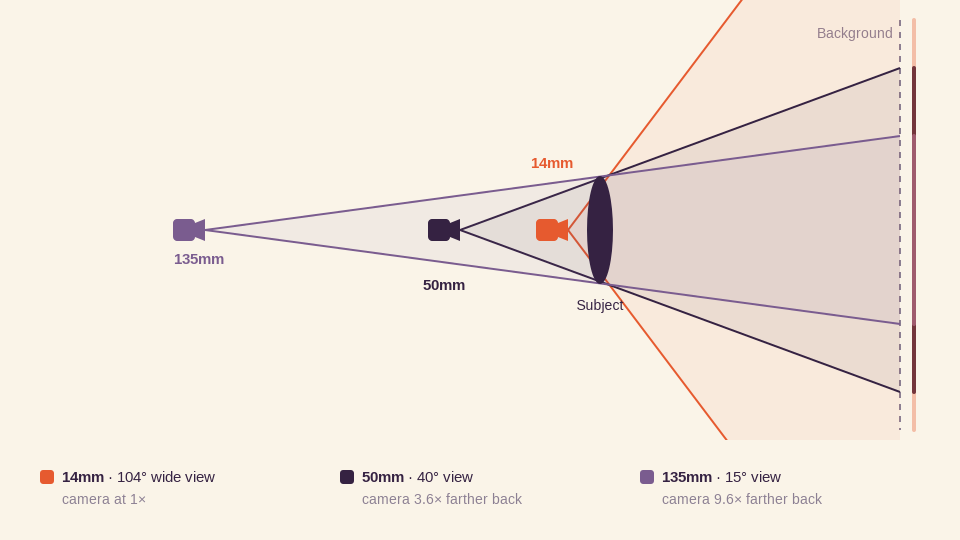
That move is what changes perspective. With a 14mm lens the camera stands close, so the background is far away by comparison: it looks small and distant, and lines converge hard. With a 135mm lens the camera stands far back, the background is relatively close to the subject and it looks larger and flatter behind them. The diagram shows the geometry for a full-frame camera.
What our early test got wrong
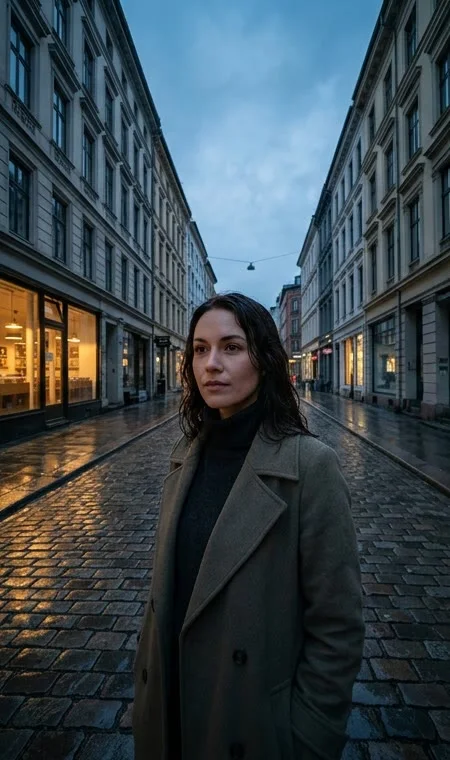
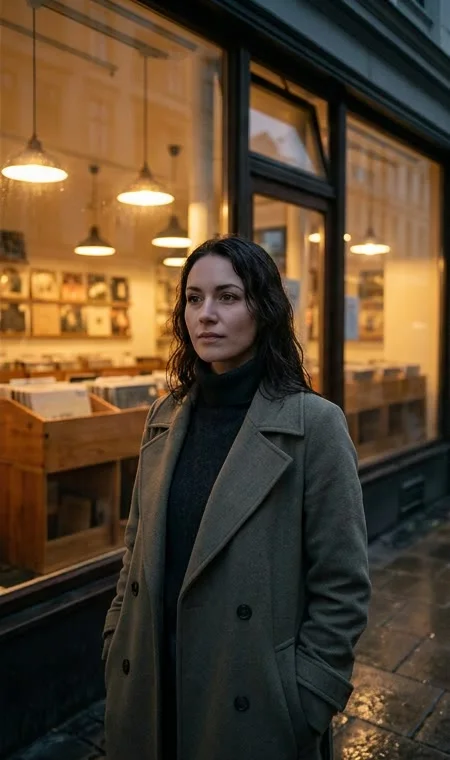
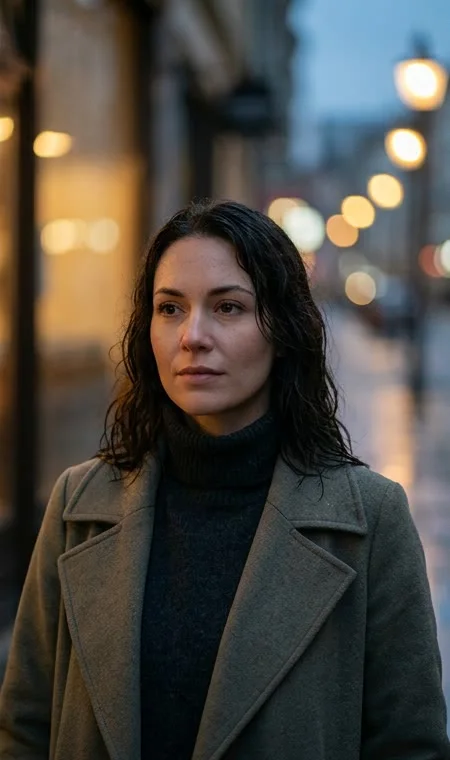
The three stills above come from an early test where we asked for 14mm, 50mm and 135mm without fixing the shot size. The model changed both: the 14mm frame became a full shot, the 50mm a waist-up shot and the 135mm a chest-up shot. You can still see the background change, but the comparison isn't clean, because two things moved at once.
That is why Cinematography Studio keeps framing in your scene description separate from focal length on the Lens dial. Describe a close-up in your scene and pick 85mm on the Lens dial so the model treats shot size and lens perspective separately.
Comparing focal lengths before you commit
In Cinematography Studio, the Lens dial gives you three core cinema focal lengths—24mm (wide), 50mm (normal) and 85mm (portrait)—paired with Everything sharp (f/8) or Soft background (f/1.4). Toggle 3× on the desk bar with the Lens dial open to run 24mm, 50mm and 85mm side by side on the same scene and pick the perspective that fits the story.
The button shows the maximum total price for the bracket before you start, and any arm that fails is refunded automatically.
Focal length and camera movement
Lens choice changes how motion feels too. Wide lenses like 24mm keep handheld and walking shots grounded and exaggerate forward dolly speed. Longer portrait lenses like 85mm compress depth and magnify camera shake, so pair them with steady, slow moves from the Move dial rather than whip pans.
A three-lens kit for one scene
Most scenes don't need seven focal lengths. The studio's three-lens kit covers a full sequence: 24mm for establishing shots and tight spaces, 50mm for natural coverage and 85mm saved for intimate portraits and close-ups.
Save your grade under Mine in the Look dial so every take keeps the same color and film texture while you switch between 24mm, 50mm and 85mm, or send your graded frames to Film Maker to assemble the scene.