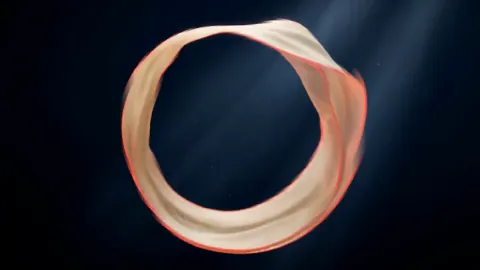
Three wavelength reflectances respond to a periodic thickness field and the viewing angle of a curved membrane. Area-light highlights and a fixed grain field give the changing interference colors a continuous surface.
- Needs
- Python 3 · FFmpeg
v1.0.0 · Updated Oct 25, 2026 · 1.9 MB · Use it for personal and client work; please don't resell or share the package.
What you get
A real 1280 × 720 MP4, poster, contact sheet and source-hash receipt
Editable local JSON and the task-specific implementation
Good for
- Macro-inspired motion backgrounds and optical color studies.
Not for
- Calibrated spectroscopy, material identification or a physically measured soap bubble.
How it works
Includes a local renderer
Prepare the actual input
The bundled project and Python/Pillow/NumPy/FFmpeg.
Apply the supported controls
Film thickness from 240 to 1000 nm as an artistic parameter. Flow amplitude from 0.05 to 0.5. Refractive-index parameter from 1.1 to 1.7.
Build and review the result
The video renderer streams frames locally, emits H.264/yuv420p with fast-start metadata, and is silent. Add separately authorized audio in an external edit only if requested.
How the workflow runs
How Soap Film Iridescence Loop works
Three wavelength reflectances respond to a periodic thickness field and the viewing angle of a curved membrane. Area-light highlights and a fixed grain field give the changing interference colors a continuous surface.
What's inside the skill
What you can change
- Film thickness from 240 to 1000 nm as an artistic parameter.
- Flow amplitude from 0.05 to 0.5.
- Refractive-index parameter from 1.1 to 1.7.
What to review before delivery
- The selftest checks exact-period pixels and the loop-boundary difference.
- Changing thickness must visibly change the color bands.
See the package files
These are selected working files from this edition, with their actual role. The complete download also contains instructions and applicable license notices.
Evaluates periodic thin-film thickness fields, wavelength colors and membrane highlights.
scripts/scene.pyLocal validation, protected output and artifact construction.
scripts/render.pyRunnable example with actual supported controls.
examples/project.jsonMechanism-specific limits and visual review criteria.
references/production.md
Why use this skill
Start with this package
Three wavelength reflectances respond to a periodic thickness field and the viewing angle of a curved membrane. Area-light highlights and a fixed grain field give the changing interference colors a continuous surface. The package supplies the working example, bounded inputs and export route so these do not need to be designed from a plain prompt.
Compare the options
A prompt, your own skill, or this workflow?
Start with a prompt
Your agent can create from a plain request. The brief, visual rules, asset choices, output format and review process still need to be established for that project.
Write your own skill
You choose and maintain the reusable instructions, defaults, file structure and checks. This is useful when your process needs different rules or integrations.
A workflow created for PopNow
This workflow was built for PopNow. Its source files, included dependencies and applicable notices are part of the package; the scope described below belongs to this edition.
Guide reviewed Oct 25, 2026
What will this cost?
The bundled procedural or font-based example runs locally without media generation. Computer time and the agent or external viewer you use are outside PopNow generation charges. New optional media requested later needs its own quote.
The supplied route runs locally. A new-media request is a separate choice. Free skill. New media is quoted before it runs.
The skill package
Free to install under your account's download allowance. The package license covers your own and client work; redistribution is excluded.
Existing assets and local work
Reusing suitable assets, editing files and running local assembly do not call a PopNow generation model. Your computer and any required runtime still do the work.
Your agent and hosting
Any subscription, hosted computer, deployment or other provider fee belongs to that service. Installing this skill does not include those services.
How PopNow billing works
Connections using a PopNow API key, including API-key MCP connections, spend from the separate API balance in USD. A ChatGPT or Claude connection authorized through OAuth spends website credits. These balances are separate; the quote shown by your connection is the approval basis.
Download allowances and current account conditions apply. A free package does not mean unlimited free generation.
How to use it
You say
Use the PopNow skill "Soap Film Iridescence Loop" (soap-film-iridescence-loop) for this: Render flowing iridescent colour from a periodic thin-film thickness field across a luminous curved membrane. Start with the bundled project, make the requested edits and inspect the actual output.
Then try
Film thickness from 240 to 1000 nm as an artistic parameter.
Flow amplitude from 0.05 to 0.5.
What to have ready
- The bundled project and Python/Pillow/NumPy/FFmpeg.
- No photograph or generated clip is required.
Similar skills
View all →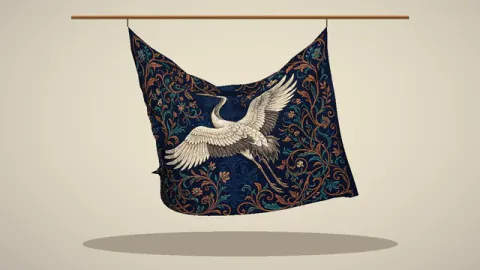 Video
Cloth Wind Memory
+25Hang your artwork as a woven cloth that catches the wind, folds and settles on a warm studio stage.
 Video
Shadow Theatre Rescue
+25An articulated fox catches a falling moon and lifts it home on a warm shadow-theatre stage.
 Video
Ink Marbling Story
+25Stir fine gold and teal pigment bands into evolving marble swirls without losing their texture.
 Video
Ribbon Knot Flight
+25Send a satin-like ribbon through a spatial knot, with real surface crossings, shaded folds and an editable camera.
 Video
Photo Cutout Adventure
+25A pet or object escapes a photograph and hops across a paper landscape.
 Video
Light Painting Butterfly
+25A moving light draws a butterfly, which opens its wings and flies into the night with fading trails.
 Video
Kaleidoscope Motion Loop
+25Fold one rich texture into a rotating, mirrored rosette with a closed mathematical loop.
 Video
Sand Drawing Metamorphosis
+25Gold sand forms a shaded whale, is swept away, then gathers into a crane with spread wings.
 Video
ASCII Glitch Hype Film
+25Glyph-cell ASCII frames, tracking boxes and dot-matrix words cutting every tenth of a second to your logo.
 Video
Liquid Logo Reveal Sting
+25A glassy bead carries your mark, unreadable, then bursts and leaves the crisp lockup.
 Video
Cinematic Dark UI Teaser
+25Your UI adrift in a black void: a gliding camera, one sharp line of focus, a typed command, a glowing name.
 Video
Product Launch Film
+25A 20-40 s launch video from your URL or README, with ready-to-post copy and three aspect ratios.
 Video
Mechanical Flip-Dot Film
+25Turn a brass-colored dot pattern into your short message or image with a traveling mechanical flip.
 Video
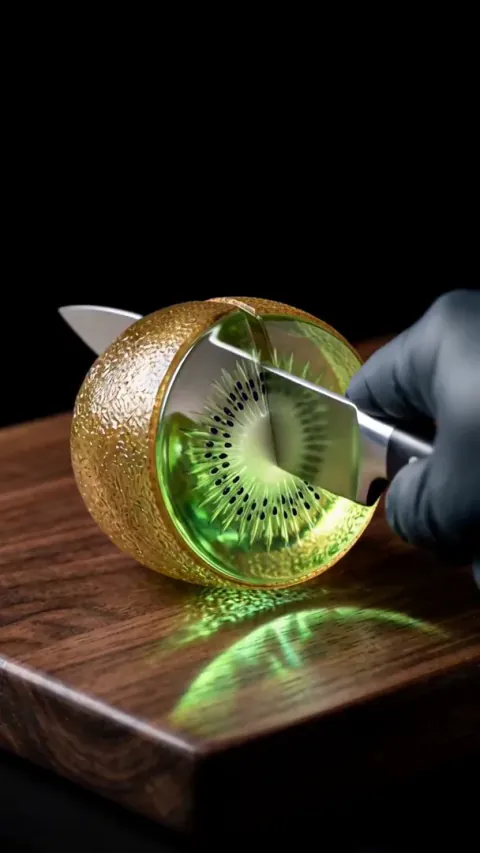
ASMR Satisfying Video Maker
+25Slow-motion ASMR shorts like glass fruit cutting, with sound generated from the picture and a loop-treated version.
 Video
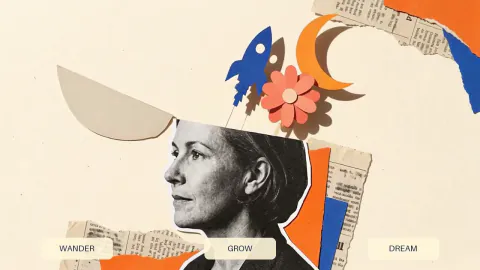
Surreal Mind Collage
+25A hinged paper portrait opens onto three surreal thoughts, followed by playful detail shots.
 Video
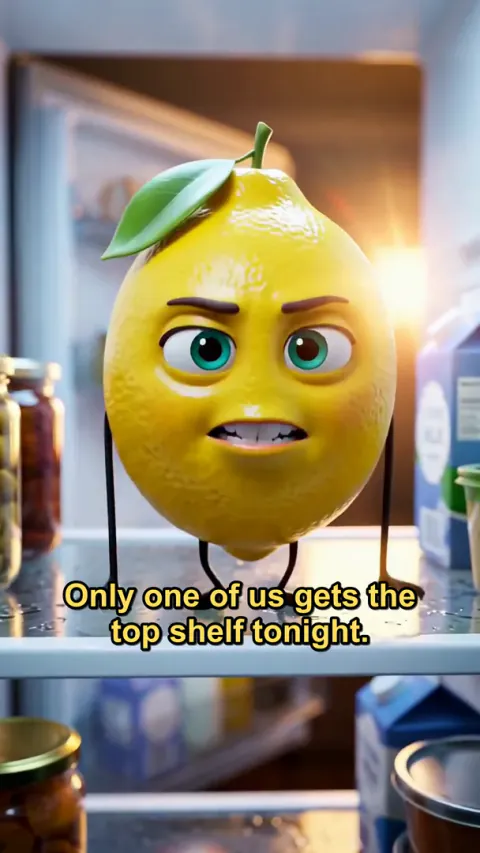
Talking Object Drama Series
+25Vertical micro-drama episodes starring talking fruit or objects, with fixed character looks and voices.
 Video
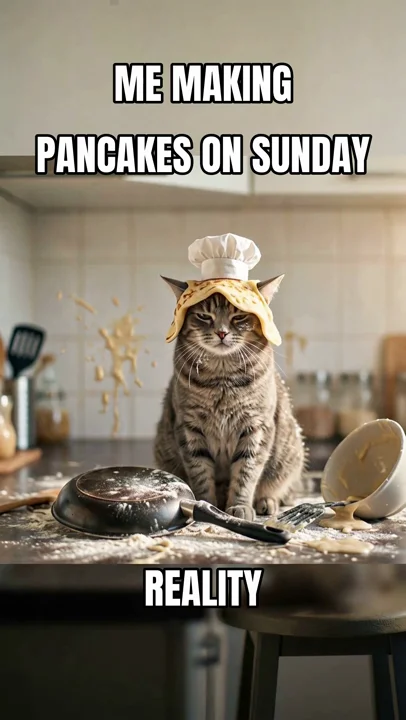
Video Meme Maker
+25Original meme videos: an AI character acts out a known meme format, with real meme captions and sound.
 Video
History POV Video Maker
+25First-person 'you wake up in ancient Rome' shorts with a sourced facts sheet, narration and ambient sound.
 Video
Soft Sticker Impact Film
+25Drop a textured character onto a surface and let a constrained mesh squash, bounce and settle.
 Video
Flocking Silhouette Reveal
+25Gather hundreds of independently steered birds into a clear butterfly or your own bright silhouette.
 Video
Needle and Thread Embroidery Film
+25Turn an original motif into thousands of ordered coloured stitches and follow its construction with a moving needle.
 Video
Shape Match-Cut Relay
+25Connect three real clips through explicitly aligned circular features and deliberate editorial cuts.
 Video
Page Curl Memory Film
+25Turn three portrait photos into a tactile album film with curved pages, occlusion and two visible turns.
 Video
Lenticular Prism Picture Film
+25Rotate triangular picture prisms to reveal two original artworks through actual face visibility and shading.
 Video
Ferrofluid Magnet Dance
+25Move a virtual magnet under a glossy black pool and raise a traveling cluster of metallic spikes.
 Video
Chladni Sand Theatre
+25Let golden grains settle onto standing-wave nodes, then reorganize them into a second vibrating pattern.
 Video
Domino Cascade Reveal
+25Knock down a sculptural domino chain and test how spacing or a missing tile interrupts the cascade.
 Video
Black Hole Postcard
+25Bend a star field around a dark horizon and a glowing tilted disk in an editable cosmic motion study.
 Video
Cinematic Dolly Zoom
+25Keep a sculpture's center plane steady while a three-dimensional hall stretches and compresses behind it.
 Video
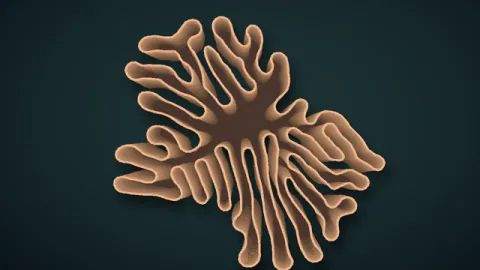
Differential Coral Growth
+25Grow a small closed contour into a layered coral-like form with uneven folds and fine branching edges.
 Video
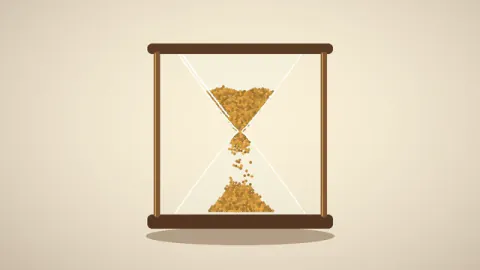
Hourglass Granular World
+25Pour individual golden grains through a narrow glass neck and watch them collide and form a lower pile.
 Video
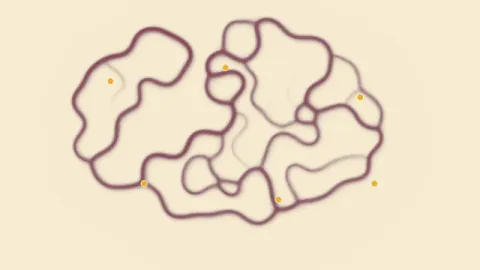
Physarum Trail Garden
+25Grow a changing network of ink-like trails as small agents sense, follow and reinforce nearby paths.
 Video
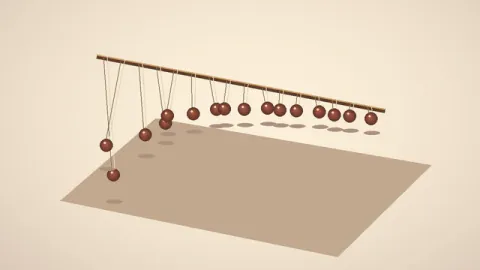
Pendulum Wave Ballet
+25Let suspended pendulums drift into traveling waves and return to alignment on an editable rhythm.
 Video
Optical Flow Paint Film
+25Measure motion in your video and use its local velocity to carry painted strokes through the scene.
 Video
Elastic Letter Bounce
+25Drop a short word as soft connected letter meshes that deform on contact and recover their shape.
 Video
Collision Music Machine
+25Send a marble down tuned bars and hear notes triggered at its actual calculated contact times.
 Video
Raking Light Relief Film
+25Sweep light across an artistic height field to reveal fine engraved texture, directional shading and metallic highlights.
 Video
Suspended Mobile Ballet
+25Balance a hanging sculpture and animate its damped, coupled response to a gentle initial breeze.
 Video
Capillary Ink Bloom Film
+25Reveal fine botanical linework through directional paper wetting, pigment transport and gradual drying.
 Video
Seam Carving Timefold
+25Remove real low-energy pixel paths, protect the main subject and replay the image transformation forward and back.
 Video
Agent Crew Launch Video
+25Glossy helper characters on warm dotted paper, live phone tasks and a skill that hatches a brand-new helper.
 Video
AI Chatbot Demo Video
+25A narrated demo inside a dark chat app: switch on your integration, ask, get the result and a count-up.
 Video
AI Jingle Maker
+25An original jingle and audio logo kit: intro, outro, sting, loopable bed and voice tag, level-matched.
 Video
AI Music Video Maker
+25A beat-cut music video for your song: storyboard first, style-locked shots, 16:9 and 9:16.
 Video
Agentic Product Launch Film
+25A calm keynote-style launch film built from your product's real site and interface, cut on the beat.
 Video
Anamorphic Object Reveal
+25Scattered colored objects resolve into one image only from a precisely registered viewpoint.
 Video
Animated Checklist Product Demo
+25A paper-note checklist beside a phone screen; each box ticks the moment its step happens on screen.
 Video
Mobile App Promo Video
+25A 10-13 second app promo where seven product beats flow as one camera move, coded in HTML and GSAP.
 Video
Arcade Character Intro
+25An original character jumps into an arcade stage and lands in a title pose.
 Video
Before-and-After Comparison Launch Video
+25Near-black canvas, mono file names, one electric accent: your content as a still page, then as a film.
 Video
Blueprint Spec Promo Video
+25Your claim drawn on a near-black spec sheet: framed figures, hatching, leader lines and a title block.
 Video
Blueprint to Daydream
+25A drawn mechanical fish becomes a living watercolor creature and leaves the page.
 Video
Branching Engraving Growth
+25Draw a branching botanical structure over time and let extracted engraved leaves grow at its tips.
 Video
Changelog Explainer Video
+25Turn a real pull request into a 30-second film for people who will never read the diff.
 Video
One-Thread Chat Launch Video
+25One chat window on warm paper that never resets: ask about the wait, ask for the fix, watch it run.
 Video
Chronophoto Motion Study
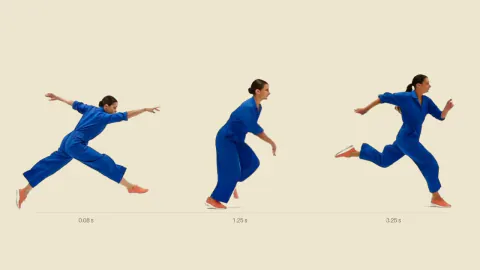
+25Extract complete poses from a plain-background clip and compose a timed photographic movement study.
 Video
Claymation Food Loop
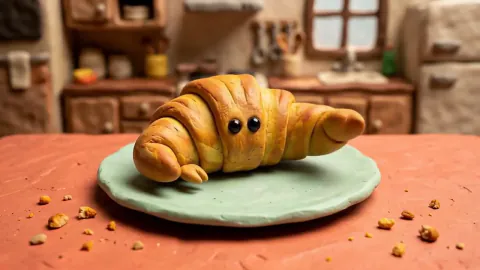
+25A playful clay pastry waves, then reverses back to its resting pose in a boomerang loop.
 Video
Depth Wiggle Parallax
+25Add a restrained depth wiggle to one image using editable, hand-authored depth regions.
 Video
Developer Tool Launch Reel
+25One prompt typed in four places, a beat-cut reel of real results, then your install command.
 Video
SaaS Product Video with Device Mockups
+25Your real app screen on a neutral device in a dark studio, then one live action and a bright reveal.
 Video
Warm Paper Editorial Launch Video
+25Oversized type on warm paper, one accent per frame, a lifted product card and an ink-black turn.
 Video
Explainer Motion Graphics Kit
+25122 code-built charts, diagrams, type and chapter effects; your agent picks one per line of your script.
 Video
Faceless Product Ad Maker
+25Hands-only unboxing, demo or orbit ads from your product photos, with several hook variants to test.
 Video
Complaint-to-Feature Launch Video
+25Open on the complaint your users keep posting, then prove the new feature makes it false.
 Video
Funny Problem-Solution Video
+25A small annoyance plays as a gag, polite requests pile up, then one orange pill becomes the fix.
 Video
Glass Caustic Message
+25Ripples scatter a short light message, then settle until the projected letters become readable.
 Video
Halftone Canvas Launch Video
+25A launch film on one living dot canvas that moves a beat before every line of text.
 Video
Hand-Drawn Infographic Video
+25Felt-tip panels on one long poster, a drawn route the camera follows, then a pull-back to the whole sheet.
 Video
Kinetic Scrapbook Story
+25A ticket opens into a map and photos arrive as events along a visible route.
 Video
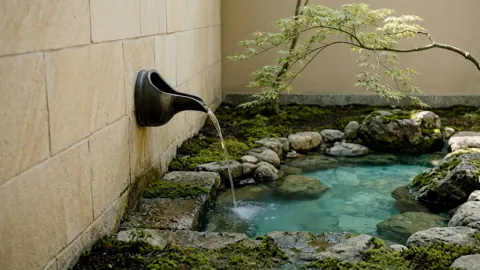
Living Still Cinemagraph
+25Keep a courtyard still while water moves inside a hand-drawn, softly feathered region.
 Video
Lyric Video Maker
+25Song and lyrics in, a synced lyric video out in 16:9 and 9:16, words lighting up as they are sung.
 Video
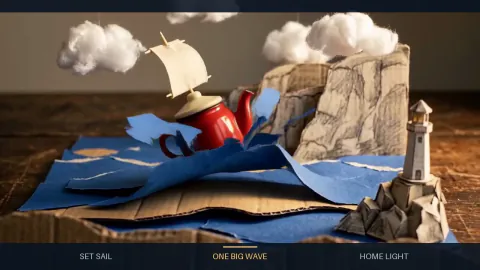
Miniature Object Odyssey
+25An everyday object sails through a miniature world with a clear departure and arrival.
 Video
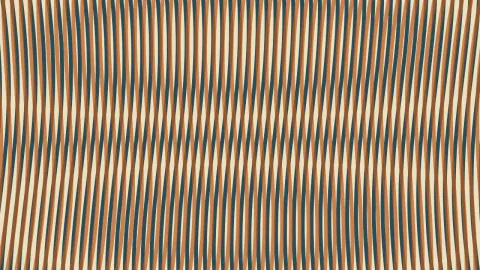
Moiré Wave Motion
+25Create slowly traveling optical waves from two finely drawn, independently warped stripe fields.
 Video
Moodboard Reel Video
+25A 9:16 moodboard reel: three photo boards hard-cut on the beat, then snap into one share board.
 Video
Multi-Style Keynote Launch Video
+25Each capability in its own world: a blue chart, a cream serif page, a dark light field, a poster grid.
 Video
Multilingual Launch Video
+25Your product name holds still while each language rolls in, in its own script, voiced and captioned.
 Video
Narrated Explainer Video
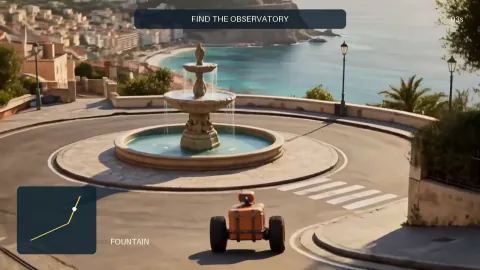
+25A 45-120 second explainer with voiceover and word-synced captions, in collage, whiteboard or data style.
 Video
Open World City Trailer
+25A fictional city becomes a short discoverable world with locations and a simple travel objective.
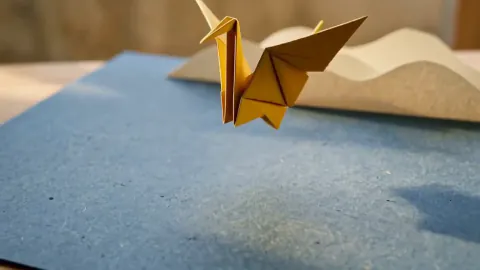 Video
Origami Creature Awakening
+25A folded paper creature wakes up, stretches and takes its first step or flight.
 Video
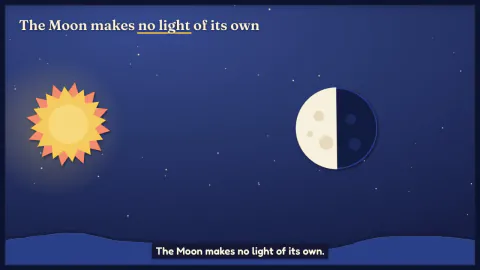
Paper-Cut Science Animation
+25Shadow-box paper layers, a cut-paper Sun and Moon, labels swinging on strings: one science idea, narrated.
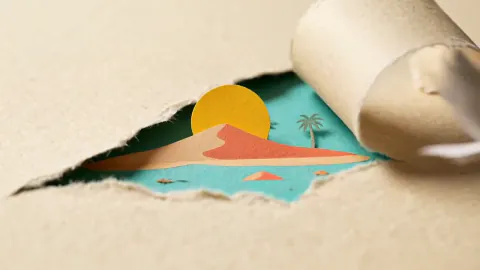 Video
Paper Portal Reveal
+25A tear in an ordinary paper surface opens into a tiny moving landscape.
 Video
Partnership Announcement Video
+25A presenter in a bordered window, two logos on one card, a typed three-step setup, verbs rolling on cue.
 Video
Pinscreen Memory Sculpture
+25Your image rises from a field of individual metallic pins, then settles back into the board.
 Video
Pixel Art Promo Video
+25A retro pixel-art film about your product, drawn frame by frame from your link, pitch or story.
 Video
Pixel Sort Ribbon Film
+25Stretch a photograph into luminous pixel ribbons by sorting real luminance-selected pixel runs.
 Video
Plush Character Launch Video
+25Felt plush characters ride cursors and build your promo live in a team editor, every cut on the beat.
 Video
Podcast Clip Maker
+25Finds the best moments in an episode and turns them into captioned vertical and square podcast clips.
 Video
Reaction Diffusion Organism
+25Grow intricate coral-like forms with a deterministic, editable reaction-diffusion simulation.
 Video
Recursive Window Journey
+25Travel through three nested worlds in one continuous, precisely aligned camera journey.
 Video
Slit-Scan Time Ribbon
+25Stretch real movement into flowing ribbons by giving each image strip a different source time.
 Video
Silence-to-Sound Reveal Promo
+25A button pressed three times in total silence, then the same shot again with sound, then with music.
 Video
Square UI Morph Promo
+25On warm paper a button stretches into a prompt card, then the view zooms out to a wall of sessions.
 Video
Paper Storybook Animation
+25A picture book that moves: felt-and-clay cut-outs, layered paper hills and words that pop on one by one.
 Video
Testimonial Video Maker
+25Portrait plates with a raised quote card on warm ruled paper, one teal accent, a calm crossfade per customer.
 Video
Text Behind Person Title
+25A giant headline punches in behind the person on camera, then owns the frame after a clean cut.
 Video
Text Message Story Video
+25Vertical chat story videos: messages pop in, dots show typing, and sounds land on every bubble.
 Video
Material Texture Type Promo
+25Headline letters cut from terrazzo, brick and steel, swapping surface every 3 frames over a warm moodboard.
 Video
TikTok Slideshow Maker
+25Matching 9:16 slides with exact text in the safe zone, as a TikTok photo set and a video with music.
 Video
Triangular Photo Shatter
+25Break a photograph into textured triangular pieces, then rebuild the exact original image.
 Video
Video Chapter Title Cards
+25Stamp-in chapter cards for long videos, numbered from one list, with the timestamp list for your description.
 Video
Cinematic Sound Effects for Video
+25Sound design for silent or poorly recorded videos: synced effects per shot, ambience, score and a clean mix.
 Video
Whiteboard Animation Video
+25A marker pen draws the whole lesson on one board, erases the myth, then pulls back to the finished board.
 Video
Wooden Cam Automaton
+25One crank drives three eccentric cams that make a wooden bird nod, flap and lift its tail.
 Video
Woven Photo Transition
+25Interlace two photographs as alternating paper ribbons with visible over-and-under crossings.
 Video
YouTube End Card & Intro Maker
+25A matching channel intro, a 20 second YouTube end card and stream screens, laid out around YouTube's elements.
 Video
Zoetrope Loop Theatre
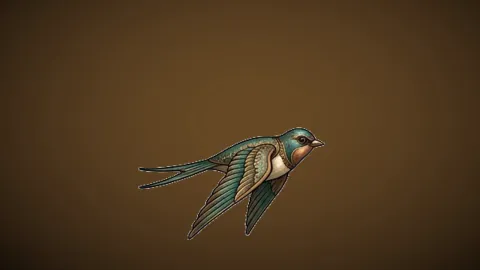
+25A ring of illustrated bird poses turns in an antique workshop, then resolves into a repeating wingbeat.
 Video
Animated Timeline Video
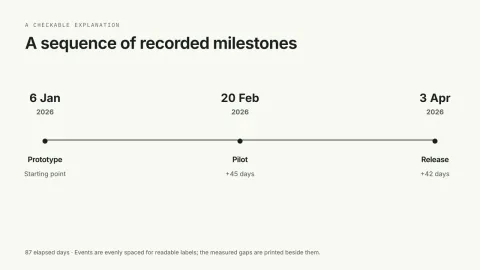
+25A dated, sourced sequence with measured date gaps and a milestone narration.
 Video
Annotated Screen Tutorial
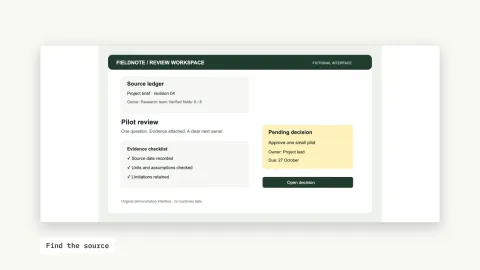
+25A sourced screen walkthrough with normalized focus regions and redaction checks.
 Video
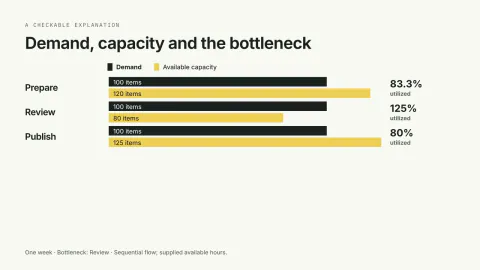
Budget Breakdown Video
+25A reconciled cost film with recurring costs, one-off costs and contingency.
 Video
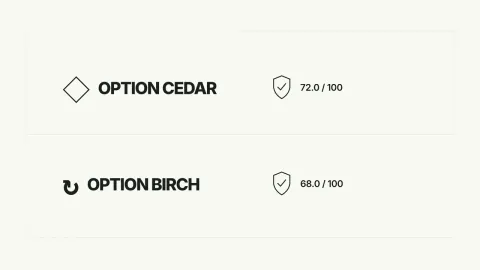
Capacity Planning Video
+25A demand-versus-capacity film with utilization and bottleneck calculations.
 Video
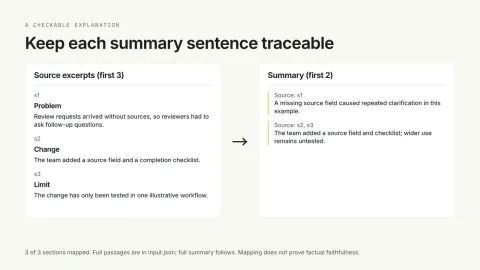
Decision Matrix Video
+25A weighted decision film with cost direction, tie handling and sensitivity.
 Video
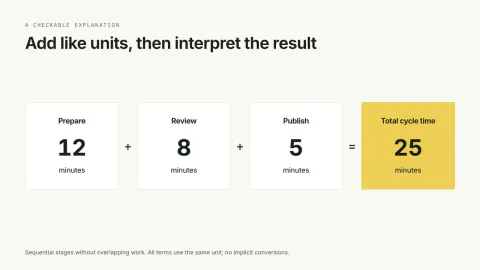
Document Summary Video
+25A traceable document summary with paragraph mapping and coverage limits.
 Video
Equation Explainer Video
+25An additive equation film with units, arithmetic and a reproducible result.
 Video
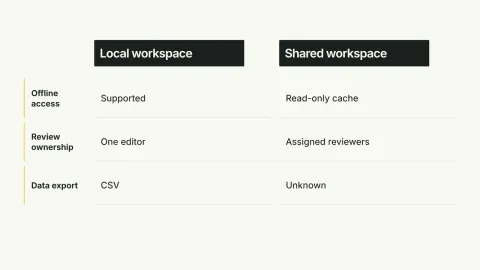
Feature Comparison Video
+25A dated feature matrix with evidence, unknown states and audience tradeoffs.
 Video
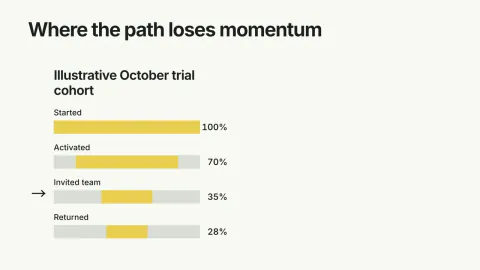
Funnel Drop-off Video
+25A cohort-based funnel story with step conversion and largest-loss analysis.
 Video
AI Assets for HyperFrames
+25Hero stills, B-roll, music beds and voiceover for HyperFrames videos, quoted first and filed in assets/.
 Video
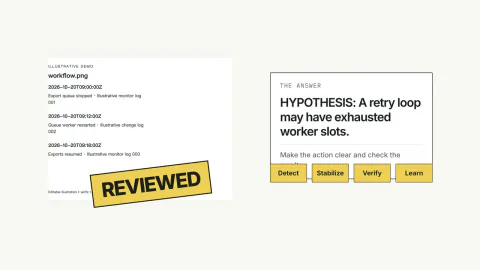
Incident Postmortem Video
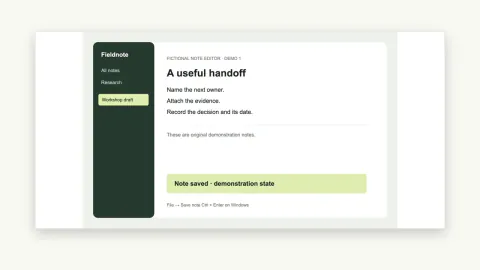
+25A blameless incident narrative with impact, evidence and owned follow-ups.
 Video
Keyboard Shortcut Tutorial
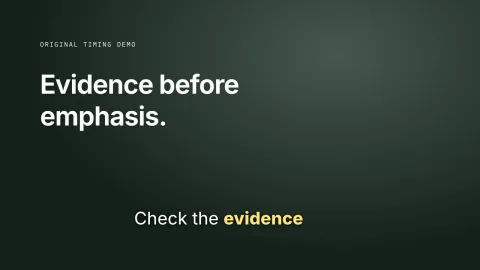
+25A platform-specific shortcut film with menu fallback and before/after evidence.
 Video
Timed Kinetic Captions
+25Word-timed captions with reading-speed checks, safe zones and editable subtitles.
 Video
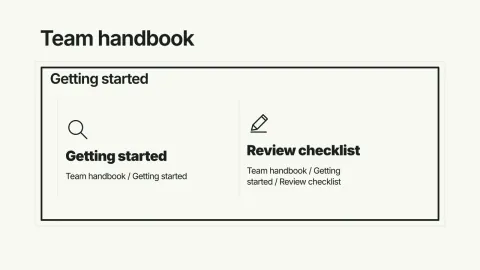
Knowledge Base Walkthrough
+25A permission-aware navigation film with breadcrumbs and declared search results.
 Video
Meeting Agenda Video
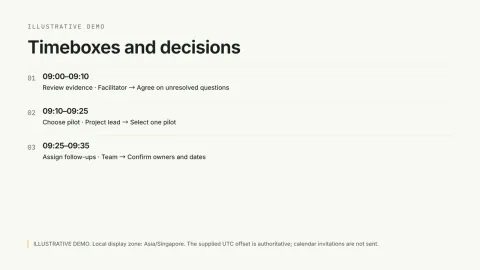
+25A timeboxed meeting brief with owners, decisions and an overflow check.
 Video
Mind Map Animation
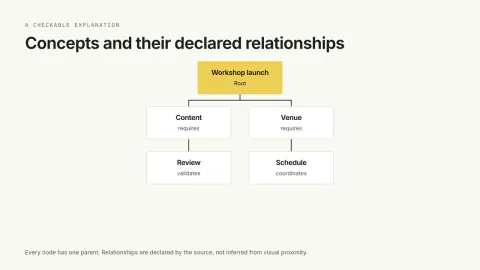
+25A verified concept tree with bounded depth and explicit relationship labels.
 Video
Mobile App Tutorial Video
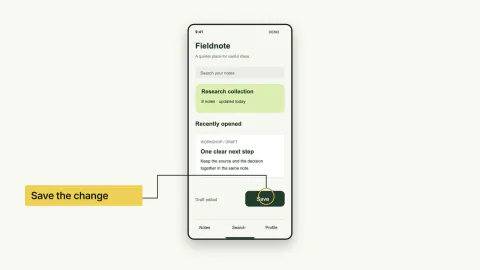
+25A touch-target walkthrough with exact tap order, safe zones and expected states.
 Video
Onboarding Checklist Video
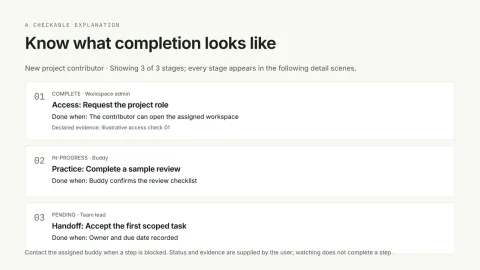
+25A role-specific onboarding sequence with evidence-based completion gates.
 Video
Org Chart Animation
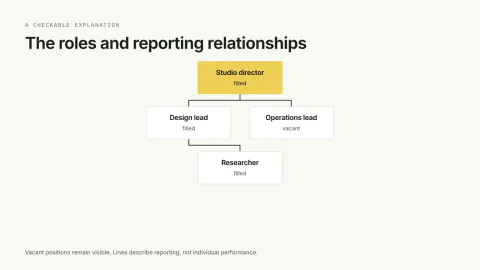
+25A validated reporting tree with role scope and vacant positions clearly marked.
 Video
Pricing Comparison Video
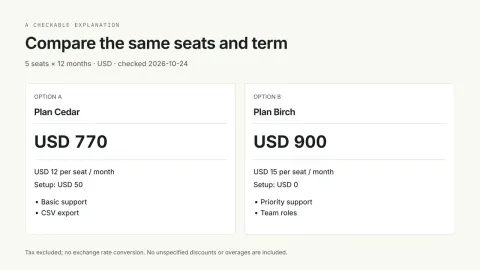
+25A comparable total-cost video with seats, periods, setup fees and scope.
 Video
Process Cycle Animation
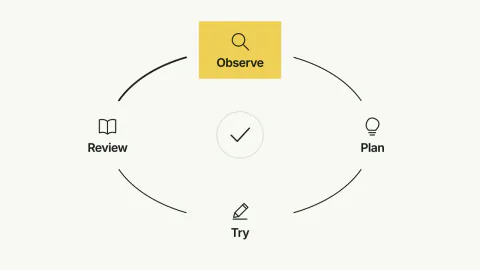
+25A closed operating cycle with owners, handoff criteria and a failure exit.
 Video
Prompt Evaluation Video
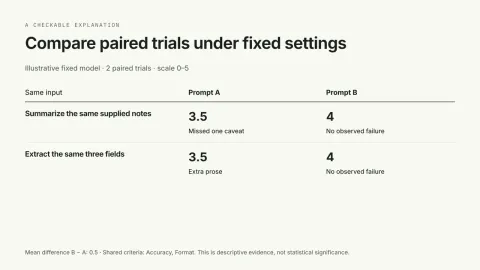
+25A controlled prompt comparison with paired scores, failures and reproducible settings.
 Video
Quote Highlight Video
+25An exact quotation with attribution, source locator and permission record.
 Video
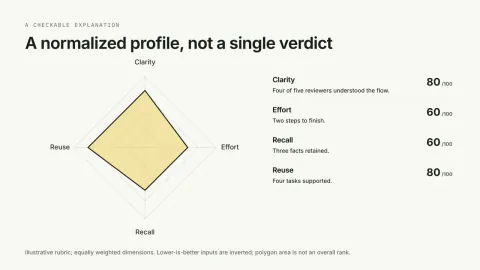
Radar Profile Video
+25A score profile with explicit scale direction and rejection of missing scores.
 Video
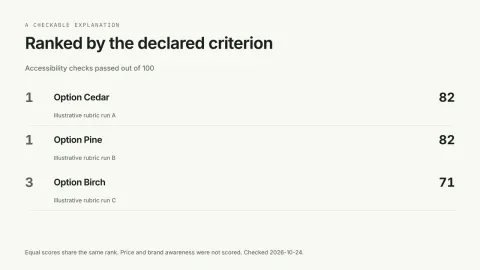
Ranked List Video
+25A transparent ranking film with declared scores, ties and exclusions.
 Video
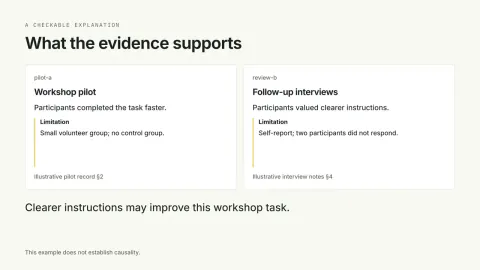
Research Evidence Video
+25An evidence-led explanation with study limits and claim-to-source mapping.
 Video
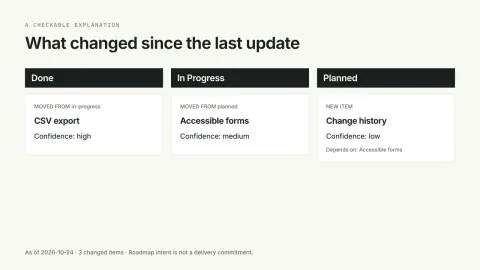
Roadmap Update Video
+25A change-focused roadmap with dependencies and confidence labels.
 Video
ROI Explainer Video
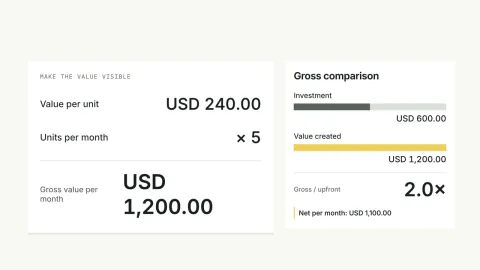
+25An auditable return calculation, payback estimate and assumptions film.
 Video
Supply Chain Explainer
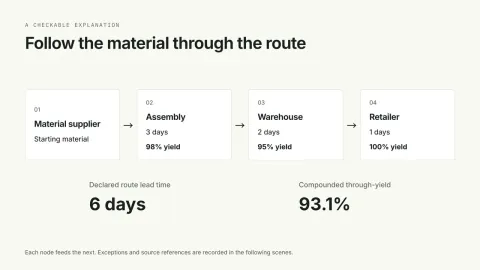
+25A material-flow film with lead time, yield and exception notes.
 Video
Survey Results Video
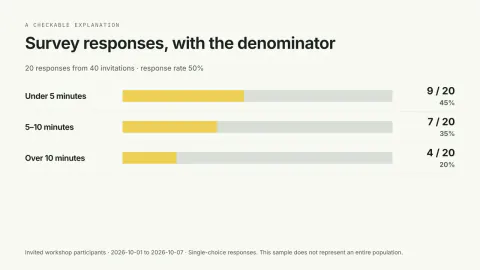
+25A denominator-aware survey film with exact counts, rounding and limitations.
 Video
Swimlane Process Video
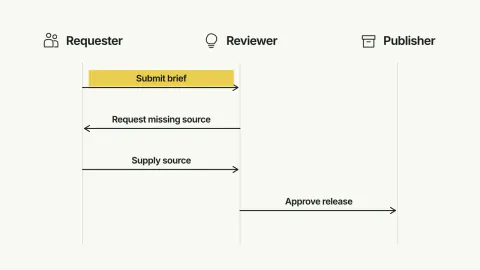
+25An actor-by-actor handoff film with waiting time and ownership checks.
 Video
Terminology Explainer Video
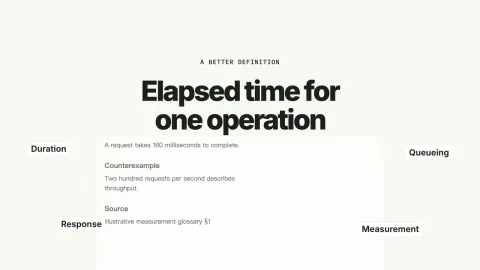
+25A sourced definition with a misconception, example, counterexample and scope.


Questions
What makes the loop repeat?
Every moving thickness term uses a complete periodic phase. The selftest compares the exact period endpoints and the final-to-first frame change against ordinary neighboring motion; encoded playback still needs inspection.
Does the bundled example require paid generation?
No. The included assets or procedural inputs run locally. If you ask for new images, clips or sound, use PopNow with an exact quote and approval before generation; API USD and OAuth website credits are separate.
What is already packaged in Soap Film Iridescence Loop?
Evaluates periodic thin-film thickness fields, wavelength colors and membrane highlights. Local validation, protected output and artifact construction. Runnable example with actual supported controls. Mechanism-specific limits and visual review criteria.
Which parts of Soap Film Iridescence Loop can add a charge?
The bundled procedural or font-based example runs locally without media generation. Computer time and the agent or external viewer you use are outside PopNow generation charges. New optional media requested later needs its own quote. Connections using a PopNow API key, including API-key MCP connections, spend from the separate API balance in USD. A ChatGPT or Claude connection authorized through OAuth spends website credits. These balances are separate; the quote shown by your connection is the approval basis.
How does Soap Film Iridescence Loop differ from writing a prompt or my own skill?
Three wavelength reflectances respond to a periodic thickness field and the viewing angle of a curved membrane. Area-light highlights and a fixed grain field give the changing interference colors a continuous surface. The package supplies the working example, bounded inputs and export route so these do not need to be designed from a plain prompt.