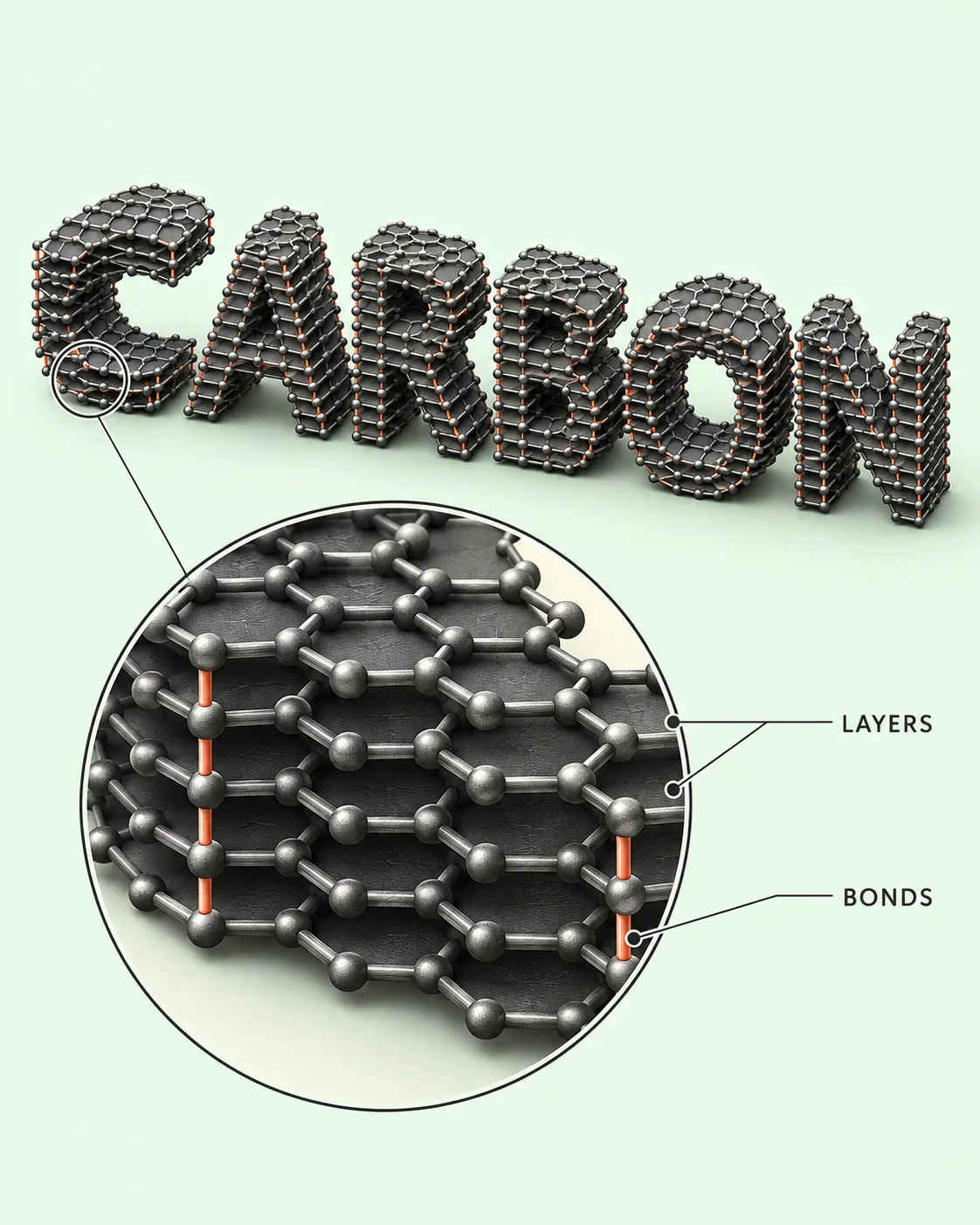
Carbon In Layers, made with GPT Image 2.5 Sunburst
Example made with GPT Image 2.5 Sunburst

Text to imageInfographics & diagrams

GPT Image 2.5 Sunburst infographic promptCarbon In Layers

The exact text-to-image prompt behind this picture, made with GPT Image 2.5 Sunburst.

Prompt

Vertical 4:5 portrait frame. An educational word poster spells "CARBON" in substantial letterforms assembled from stacked graphite honeycomb lattices, with one enlarged corner revealing orderly hexagonal sheets. Use charcoal rods, coral bond accents and cream negative space rather than decorative molecular clutter. Precise scientific vector illustration with soft isometric shading, pale mint background, clear restrained leader lines labeled "LAYERS" and "BONDS", tactile printed finish, no other text.

Prompts are kept in their original English to help reproduce the example. Copy one as it is, or adapt it for your project.

Opens GPT Image 2.5 Sunburst with this prompt and the settings below filled in.

135 tested GPT Image prompts →

Settings

Mode
Text to image
Aspect ratio
4:5
Quality
high
Price
From 2 credits

The exact price shows before you generate.

Make your own version

  1. The words in quotes, "CARBON", are printed in the picture. Keep them short and change them to your own.
  2. Precise scientific vector illustration with soft isometric shading sets the whole feel of the shot. Swap it for another camera style to change the vibe.

Where this idea comes from

Inspired by an idea from @Gdgtify, collected in Evolink-AI/awesome-gpt-image-2-API-Prompts under CC0 1.0. PopNow wrote this prompt and made the example above.

Style prompt guide

Style traits to keep

Graphite lattice typography forms a clean, textbook-style infographic that spells "CARBON" using layered geometric sheets. GPT Image 2.5 Sunburst renders the lettering with crisp typographic control and precise isometric lines, keeping the technical labels legible while balancing soft vector shading against a pale mint poster background.

This style marries modern educational editorial graphics with technical isometric drafting, balancing minimalist vector clarity against textured print quality.

Palette
Uses matte charcoal, punchy coral accents, cream voids, and a pale mint wash, avoiding glossy gradients or neon lab colors.
Line
Features sharp vector edges, disciplined hexagonal lattices, and minimal straight leader lines that mimic precise architectural blueprint guides.
Texture
Applies soft isometric tonal shading and a subtle tactile printed paper finish, lending a risograph or screen-print feel to digital vector shapes.
Composition
Prioritizes generous negative space and a disciplined isometric angle, preventing complex scientific lattices from crowding the vertical frame.

What defines this look

  1. framing and main typographyVertical 4:5 portrait frame. An educational word poster spells "CARBON" in substantial letterforms

    Sets the vertical print format and demands large, legible letters instead of loose background scenery. Changing this to regular text prompts causes the AI to scatter small unreadable typography across the canvas.

  2. structural construct and calloutassembled from stacked graphite honeycomb lattices, with one enlarged corner revealing orderly hexagonal sheets.

    Directs the model to build letter shapes out of chemical geometry while spotlighting structural depth. Dropping this clause yields flat block letters without the structural graphene lattice aesthetic.

  3. palette and element restraintUse charcoal rods, coral bond accents and cream negative space rather than decorative molecular clutter.

    Establishes a strict three-tone scheme while explicitly forbidding chaotic stray spheres or tangled bonds. Without the negative space instruction, background noise overtakes the clean infographic style.

  4. vector medium and backdropPrecise scientific vector illustration with soft isometric shading, pale mint background,

    Prevents photorealistic 3D rendering or messy sketch lines, giving the artwork a calm, screen-printed textbook look. Altering the mint backdrop shifts the tone away from modern risograph educational prints.

  5. annotations and paper textureclear restrained leader lines labeled "LAYERS" and "BONDS", tactile printed finish, no other text.

    Instructs GPT Image 2.5 Sunburst to generate exactly two legible diagram labels and suppress gibberish filler words. Omitting "no other text" often produces random fake scientific captions along the borders.

Same style, new subjects

Isometric Transit Hub

Swaps chemical typography for isometric transit architecture when creating structural engineering prints.

Prompt

Vertical 4:5 portrait frame. An educational architectural poster displaying a subway station cutaway assembled from stacked concrete arches, with one enlarged corner revealing train tracks. Use charcoal beams, coral directional accents and cream negative space rather than decorative structural clutter. Precise scientific vector illustration with soft isometric shading, pale mint background, clear restrained leader lines labeled "PLATFORM" and "CONCOURSE", tactile printed finish, no other text.

Espresso Machine Anatomy

Applies the clean vector blueprint look to mechanical kitchen hardware for culinary design wall art.

Prompt

Vertical 4:5 portrait frame. An educational technical poster displaying a manual espresso machine assembled from stacked metallic components, with one enlarged corner revealing the internal boiler cylinder. Use charcoal steel rods, coral valve accents and cream negative space rather than decorative clutter. Precise scientific vector illustration with soft isometric shading, pale mint background, clear restrained leader lines labeled "BOILER" and "PORTAFILTER", tactile printed finish, no other text.

Human Ear Acoustics

Translates biological systems into high-contrast vector infographics without clinical mess.

Prompt

Vertical 4:5 portrait frame. An educational medical poster displaying human inner ear anatomy assembled from stacked acoustic chambers, with one enlarged corner revealing the coiled cochlea. Use charcoal cartilage outlines, coral nerve accents and cream negative space rather than clinical clutter. Precise scientific vector illustration with soft isometric shading, pale mint background, clear restrained leader lines labeled "COCHLEA" and "CANALS", tactile printed finish, no other text.

Model and settings

Stick to the 4:5 aspect ratio because it gives the vertical diagram enough headroom to breathe while framing the stacked isometric geometry. Keep the high quality setting enabled so that the model renders crisp typography, straight lattice corners, and readable leader lines without letter distortion. If adapting this prompt for landscape presentation slides, shift the aspect ratio to horizontal while maintaining high quality to avoid blur in the hexagonal sheets.

  • Nano Banana ProChoose Nano Banana Pro if you plan to expand the infographic with denser technical annotations, as its layout-first planning ensures complex diagram labels stay orderly and sharp.

When the style drifts

Letters render as shiny CGI chrome or glossy plastic instead of a printed scientific vector.
Reinforce "vector illustration with soft isometric shading" and add "matte flat color, risograph print texture" while removing any reference to reflective or 3D surfaces.
Incomprehensible pseudo-text or illegible scribbles appear across the diagram borders.
Emphasize "no other text" at the end of the prompt and ensure label instructions specify only the exact words inside quotes.
Cluttered molecular bonds engulf the letters and turn the word "CARBON" unreadable.
Change "substantial letterforms" to "extra thick bold block letterforms" and strengthen "cream negative space rather than decorative molecular clutter".

Questions about this style prompt

How do I get GPT Image 2.5 Sunburst to spell the word correctly?

Put the exact word inside double quotation marks and explicitly ask for substantial letterforms or bold typography. GPT Image 2.5 Sunburst excels at short single-word titles when given plenty of negative space and clean contrasting borders.

Can I change the pale mint background to another color?

Yes, simply replace pale mint background with another muted tone such as pale oat background or soft sage background. Avoid dark or vibrant neon colors, which can overwhelm the soft isometric shading and charcoal linework.

What if the leader lines point to random empty spots?

Specify which feature each label attaches to, for example: leader line labeled LAYERS pointing to the lattice sheets. Explicit positional instructions prevent the model from floating annotation text in blank margins.