


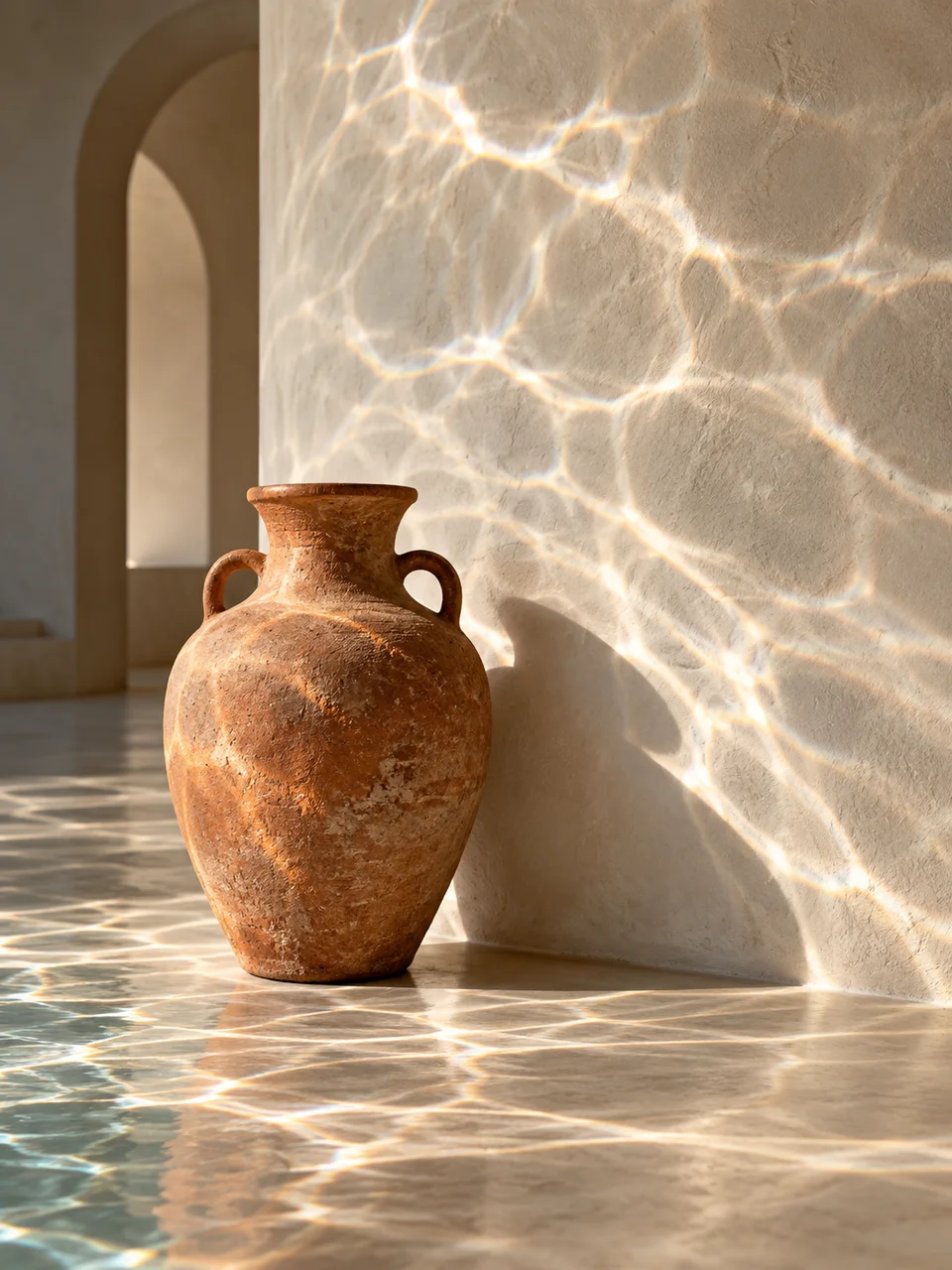
Water Reflection AI Photo Generator: Projected Water
One reflected water pattern moves across solid architecture.
- From a description only
- Best shape: 3:4 · 4:5 · 1:1
Works on
- Seedream 5.0 Pro
- Qwen Image 3.0
- Nano Banana 2.1
- Seedream 5.0 Flash
About Projected Water
Projected Water places the moving-light character of water onto solid, dry architecture. Reflections from a nearby water surface create bright curved networks across plaster, stone or a ceiling. Their scale and intensity change with distance, while the room retains its own material color. This photographic look focuses on reflected light patterns, often called caustics, using a quiet architectural frame to make their direction and irregular rhythm visible.
A plaster alcove with a stone bowl, a concrete stair beside a pool and a white wall behind a wooden chair give the pattern room to unfold. A single column in a shaded courtyard works too. Describe the receiving surface and where the nearby water would be, even if it stays unseen. The page uses a written description to construct this relationship between architecture and reflected light.
Start with “a stone bowl in a plaster alcove lit by reflections from an unseen pool” or “a concrete stair with rippling pool light across its lower wall.” A quieter line is “a wooden chair beside a white wall receiving reflected water light.” A smoother wall makes each ribbon easier to follow; rough stone breaks the pattern into small fragments, giving the surface more texture and visual weight.
Tips
- Keep the room dry and place the water nearby so the pattern reads as reflection across architecture.
- Choose one main wall or ceiling plane for the strongest caustics instead of covering everything equally.
- Use neutral plaster or concrete to retain the difference between material color and reflected light.
- Position a simple object outside the brightest pattern when you want both the object and light readable.
- Describe the pool's direction so the bright ribbons share a plausible origin and falloff.
What the style adds
Your words go where it says “your subject”. Everything else is added for you.
your subject. Cast reflected water caustics onto a dry architectural surface from a nearby unseen water plane. Keep the pattern direction, falloff and changing scale physically coherent. Use a quiet neutral room with one clear focal object, without turning every surface aqua or adding underwater props.
Models and price
- Seedream 5.0 Pro36 credits
- Qwen Image 3.030 credits
- Nano Banana 2.148 credits
- Seedream 5.0 Flash29 credits
One 1K image from a description. The button always shows the exact price before you spend anything.
How to use Projected Water
- Describe itWrite who or what should be in the picture. A small action and a clear place work best.
- Pick a shapeKeep the suggested ratio and model, or change them in the bar at the bottom.
- Paint itPress “Paint it”. The price is on the button before you spend anything.
Questions about Projected Water
Can I use Projected Water on my own photo?
Not yet. This style works from a description: write what you want to see and the style adds the look.
How much does one Projected Water image cost?
29 credits for one 1K image on Seedream 5.0 Flash. 2K costs more, and the button shows the exact price before you run it.
Will the room look underwater?
It is meant to remain a dry architectural space receiving light reflected from nearby water. Mention a pool outside or below the room and keep furnishings ordinary to reinforce that distinction.
How is this different from Prism Sunlight?
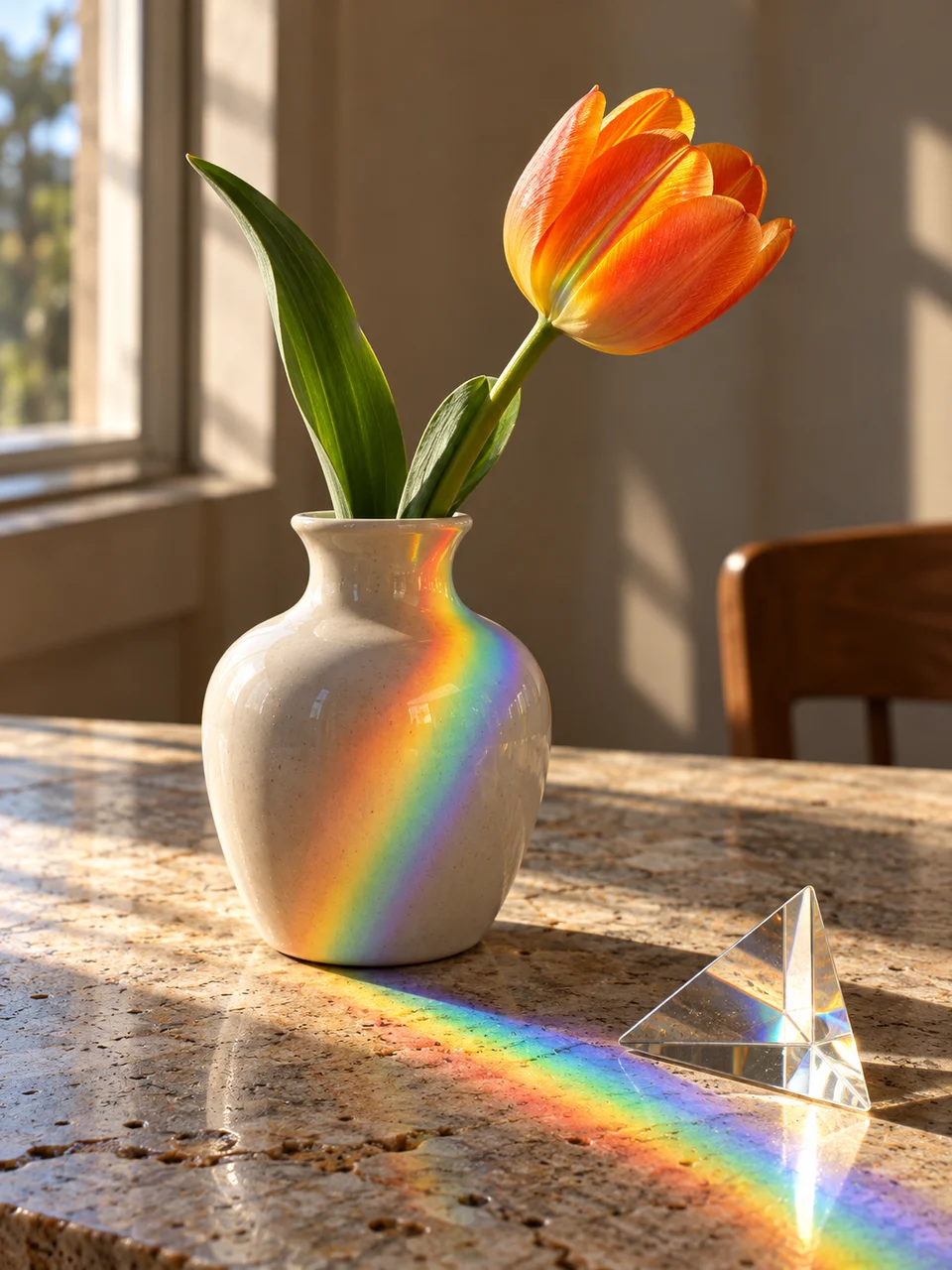
Prism Sunlight uses spectral color as its main feature. Projected Water creates curved bright patterns from water reflection, allowing the wall or ceiling to keep its neutral color and solid character.
Can I use a textured stone wall?
Yes, though the reflected pattern will appear more broken than it does on smooth plaster. Describe broad stone surfaces with modest joints so the wall texture supports the light rather than overwhelming it.
Similar styles
 Prism Sunlight
 Negative Fill
 Book Light
 Hard Fresnel
Bring it to life
Effects that turn a still in this look into a short video.
 Cinemagraph
 Slider Parallax