

Rainbow Light AI Photo Generator: Prism Sunlight
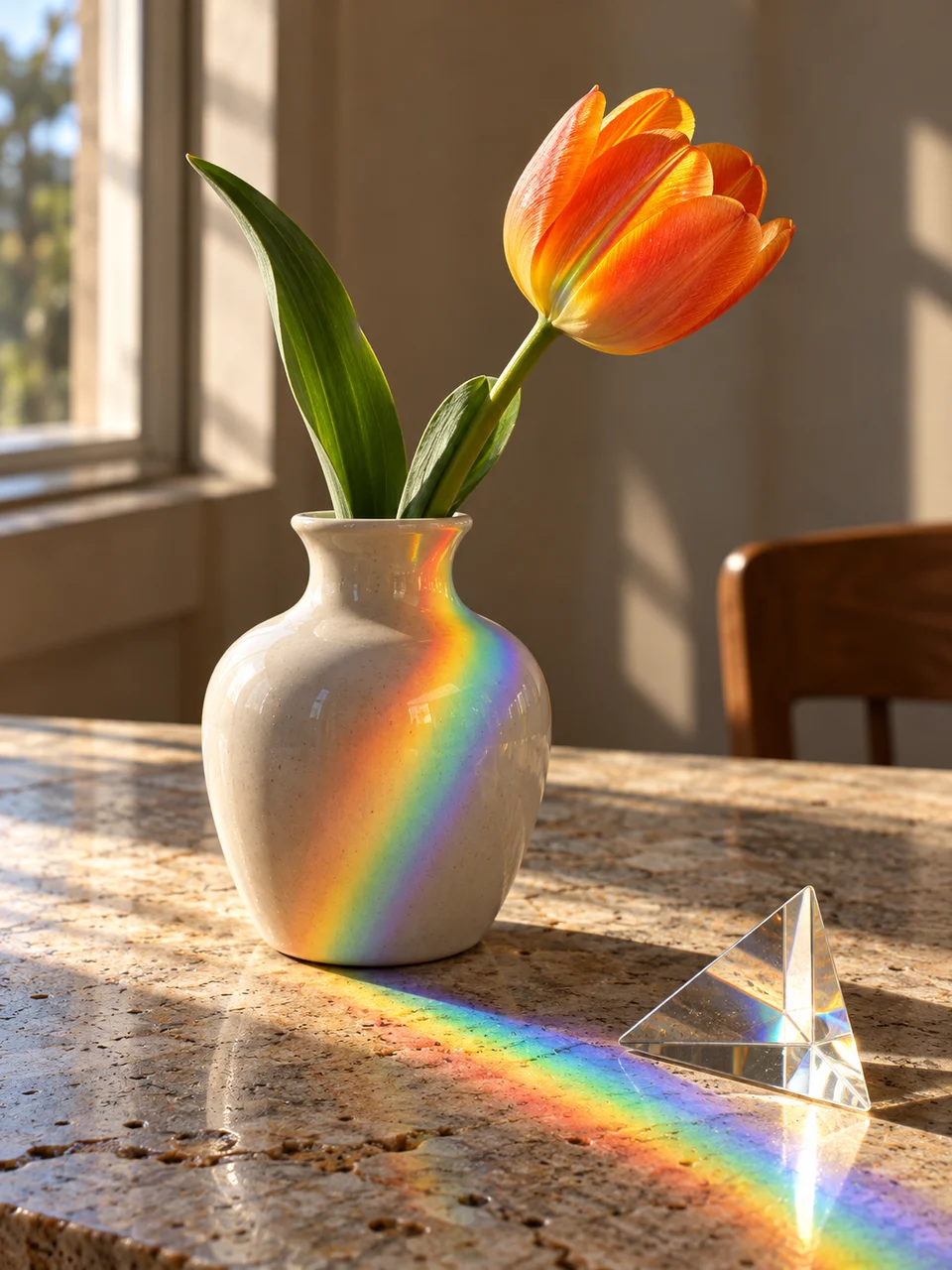
A small spectral ribbon crosses a real daylight scene.
- From a description only
- Best shape: 3:4 · 4:5 · 1:1
Works on
- Seedream 5.0 Pro
- Qwen Image 3.0
- Nano Banana 2.1
- Seedream 5.0 Flash
About Prism Sunlight
Prism Sunlight brings a small optical event into an otherwise ordinary daylight photograph. A clear prism separates direct sunlight into a narrow spectrum that travels across a cheek, a piece of paper, or a tabletop. This look comes from photographic experiments with refraction, keeping the rainbow tied to the surfaces it touches. Most of the scene retains its natural color, with contact shadows and modest highlights giving the colored ribbon a believable place to land.
Smooth, pale surfaces make the spectrum easy to see. Consider a face beside a sunny window, a white ceramic cup on a table, a folded sheet of paper, or a pear on a light stone counter. Describe the subject and where the ribbon crosses it, especially if it continues onto another surface. This option works from a written description, letting you build the placement of the prism light around a clearly defined scene.
Try “a white ceramic cup on a pale table, a thin rainbow crossing the cup and tabletop” or “a person beside a sunny window, a small spectrum across one cheek”. For an object study, use “a folded white paper sculpture with a narrow rainbow along its lower edge”. Matte white materials show the color cleanly; darker surfaces absorb more light and make the ribbon quieter. A diagonal band adds movement without filling the whole frame with color.
Tips
- Locate the spectrum on a specific surface, such as the cup’s handle or the lower cheek, so the rainbow has a clear destination.
- Choose a pale matte area beneath the ribbon. Highly patterned cloth can make the separate bands difficult to distinguish.
- Keep the rainbow narrow relative to the subject. A small band leaves room to see the original material color beside it.
- Use a scene with direct window sunlight; a heavily overcast setting provides less visual explanation for a strong prism spectrum.
- For connected surfaces, describe the band crossing their shared edge. The change in angle helps the light reveal the object’s form.
What the style adds
Your words go where it says “your subject”. Everything else is added for you.
your subject. Refract direct sunlight through one clear prism, placing a narrow physically coherent spectrum across the subject and nearby surface. Keep the rest of the image naturally lit with realistic skin or material color. Preserve spectral order, contact shadows and a restrained luminous highlight.
Models and price
- Seedream 5.0 Pro36 credits
- Qwen Image 3.030 credits
- Nano Banana 2.148 credits
- Seedream 5.0 Flash29 credits
One 1K image from a description. The button always shows the exact price before you spend anything.
How to use Prism Sunlight
- Describe itWrite who or what should be in the picture. A small action and a clear place work best.
- Pick a shapeKeep the suggested ratio and model, or change them in the bar at the bottom.
- Paint itPress “Paint it”. The price is on the button before you spend anything.
Questions about Prism Sunlight
Can I use Prism Sunlight on my own photo?
Not yet. This style works from a description: write what you want to see and the style adds the look.
How much does one Prism Sunlight image cost?
29 credits for one 1K image on Seedream 5.0 Flash. 2K costs more, and the button shows the exact price before you run it.
Will the whole image become rainbow colored?
The intended effect is a localized spectrum within natural daylight. Specify a thin ribbon on one part of the subject and keep surrounding surfaces neutral. Broad rainbow fog or colored lighting throughout the room would change the character of the look.
How does Prism Sunlight differ from Color Bounce?
Prism Sunlight separates light into an ordered ribbon of spectral colors. Color Bounce uses reflected color from a nearby surface to tint the subject. Choose the prism effect for a small rainbow with distinct bands crossing an object or face.
Can the rainbow sit across a face naturally?
Yes, a small patch on a cheek or forehead can work well while the rest of the skin remains naturally colored. Keep the band away from both eyes if you want an expression that is easy to read.
Similar styles
 Negative Fill
 Book Light
 Hard Fresnel
 Color Bounce
Bring it to life
Effects that turn a still in this look into a short video.
 Slider Parallax
 Slow Push-In