


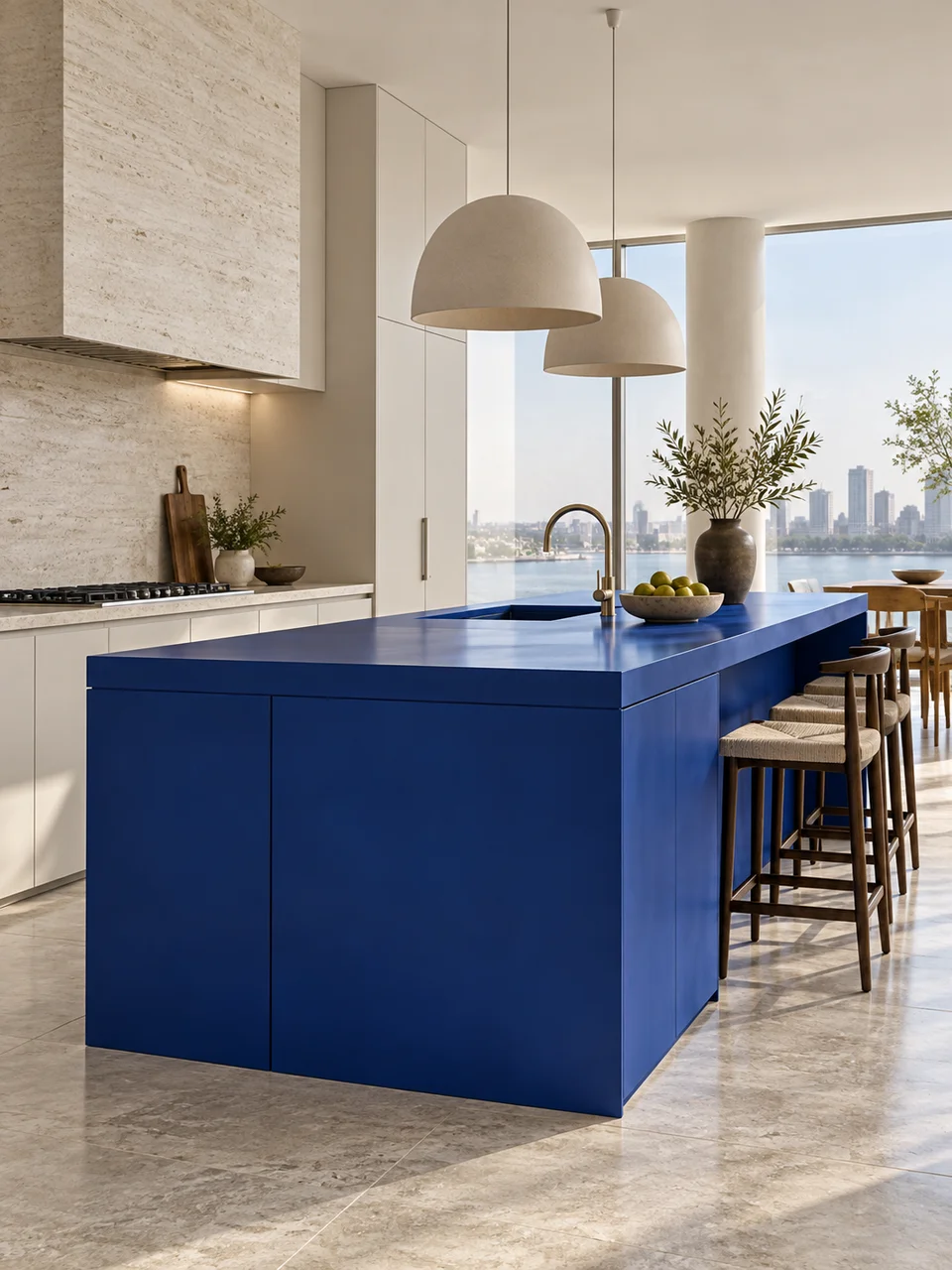
Color Room AI Image Generator: Compressed Color Interior
One saturated volume sits inside a neutral architectural shell.
- From a description only
- Best shape: 3:4 · 4:5 · 1:1
Works on
- Seedream 5.0 Pro
- Qwen Image 3.0
- Nano Banana 2.1
- Seedream 5.0 Flash
About Compressed Color Interior
Compressed Color Interior concentrates strong color into one architectural element. A stair enclosure, storage core, or compact room-within-a-room becomes the saturated focus inside a pale shell. Color boundaries follow actual corners, panel joints, and openings, so the result retains convincing depth. The reference is architectural color blocking and the use of inserted volumes in contemporary interiors. Diffuse daylight and matte finishes keep the color substantial rather than glossy or dependent on dramatic lighting.
Write about a room that needs one clear colored anchor. A cobalt stair core in a white loft, a red kitchen block inside a gray studio, a green reading enclosure in a pale library, or an ocher storage volume near an entry can each work. Explain what the volume does and where people pass around it. Leaving the floor and surrounding walls quiet makes the concentrated color feel intentional and spatial.
Try “a white loft containing one matte cobalt stair enclosure with a clear walkway beside it” or “a pale studio organized around a compact red kitchen block.” You can also use “a quiet library with one deep green reading enclosure.” A dark saturated volume feels heavier and more enclosed; a brighter yellow or coral block reflects more light into its surroundings and makes the same footprint feel more buoyant.
Tips
- Assign the strong color to one functional volume, such as a stair or kitchen core, rather than every wall.
- Mention the edges where the color stops so corners and door reveals remain precise.
- Keep movable furniture neutral if you want the architectural insertion to dominate.
- Show a path around the colored block to establish its real depth within the room.
- Use a corrected corner view that reveals two faces of the volume and part of the neutral shell.
What the style adds
Your words go where it says “your subject”. Everything else is added for you.
your subject. Design a contemporary room where one saturated architectural volume contrasts with an otherwise neutral shell. Keep color boundaries aligned with actual planes, joints and circulation. Use diffuse daylight, matte materials and a corrected perspective, avoiding multicolored clutter or an abstract flat color-block image.
Models and price
- Seedream 5.0 Pro36 credits
- Qwen Image 3.030 credits
- Nano Banana 2.148 credits
- Seedream 5.0 Flash29 credits
One 1K image from a description. The button always shows the exact price before you spend anything.
How to use Compressed Color Interior
- Describe itWrite who or what should be in the picture. A small action and a clear place work best.
- Pick a shapeKeep the suggested ratio and model, or change them in the bar at the bottom.
- Paint itPress “Paint it”. The price is on the button before you spend anything.
Questions about Compressed Color Interior
Can I use Compressed Color Interior on my own photo?
Not yet. This style works from a description: write what you want to see and the style adds the look.
How much does one Compressed Color Interior image cost?
29 credits for one 1K image on Seedream 5.0 Flash. 2K costs more, and the button shows the exact price before you run it.
Can I use several bright colors?
The clearest result comes from concentrating saturation in one volume. Several equally strong colors divide the focus. You can use subtle tonal differences in the surrounding room while letting the main architectural block carry the color.
How is this different from Rammed Earth Retreat?
Rammed Earth Retreat derives its character from layered earth walls and deep shade. Compressed Color Interior uses the contrast between a saturated inserted volume and a neutral shell, making color placement part of the room’s organization.
Will the image look like a flat abstract poster?
The intended result is a spatial room with material surfaces, corners, and circulation. Describe the colored volume’s function and show two of its faces so the color belongs to a three-dimensional architectural element.
Similar styles
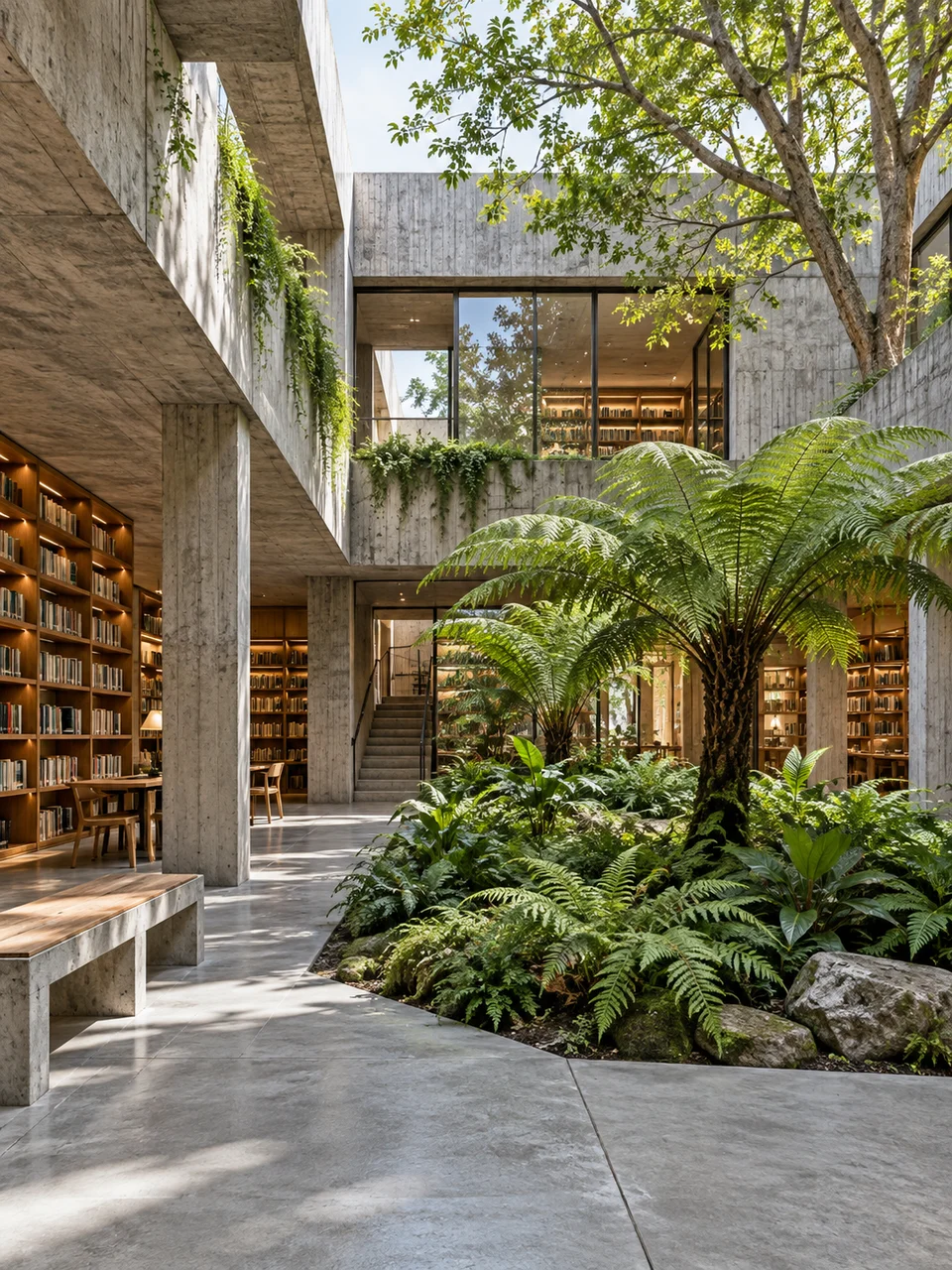 Biophilic BrutalismHeavy concrete and living plants share a precise spatial rhythm.
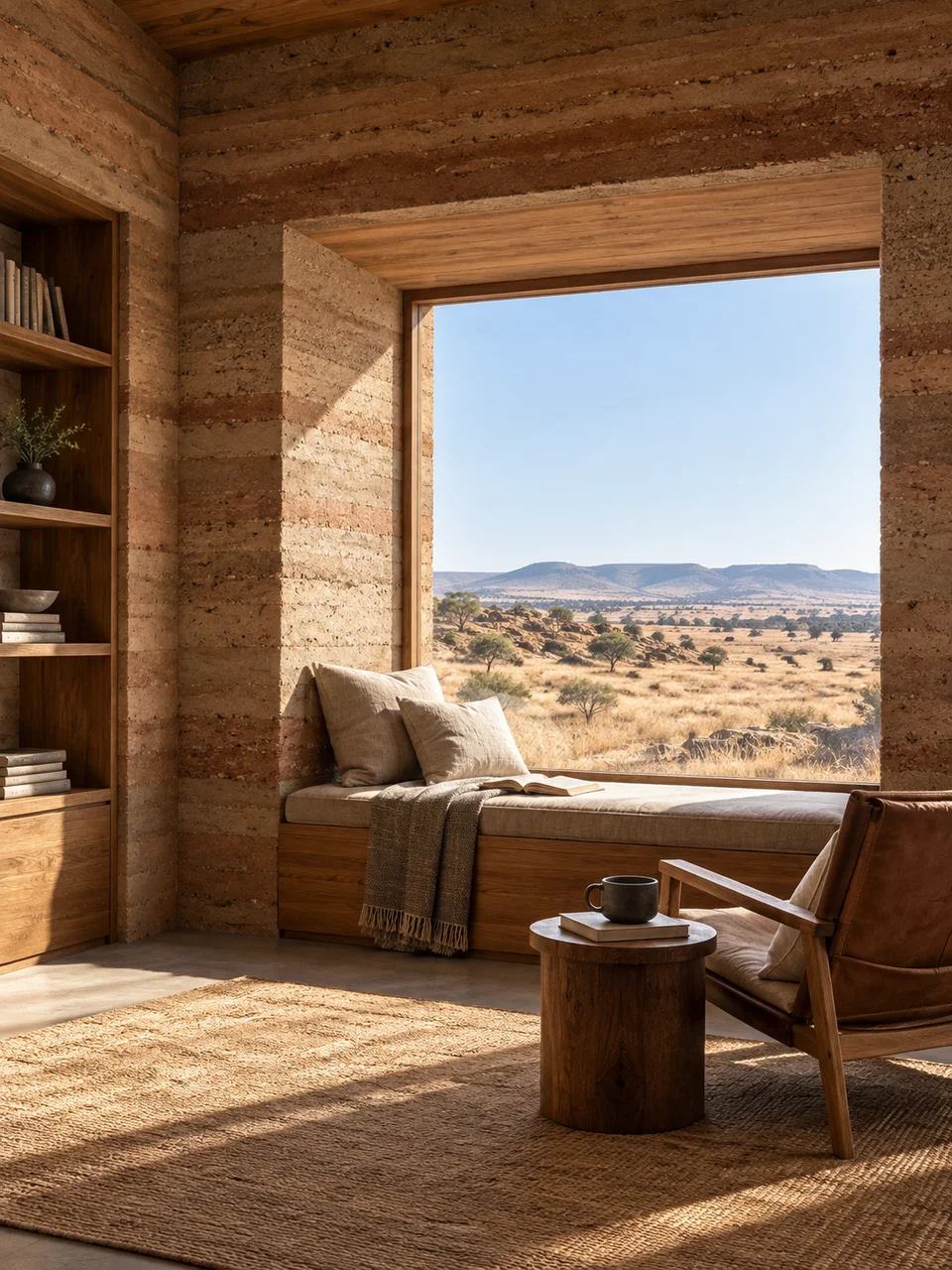 Rammed Earth RetreatStratified earthen walls hold cool, quiet interior space.
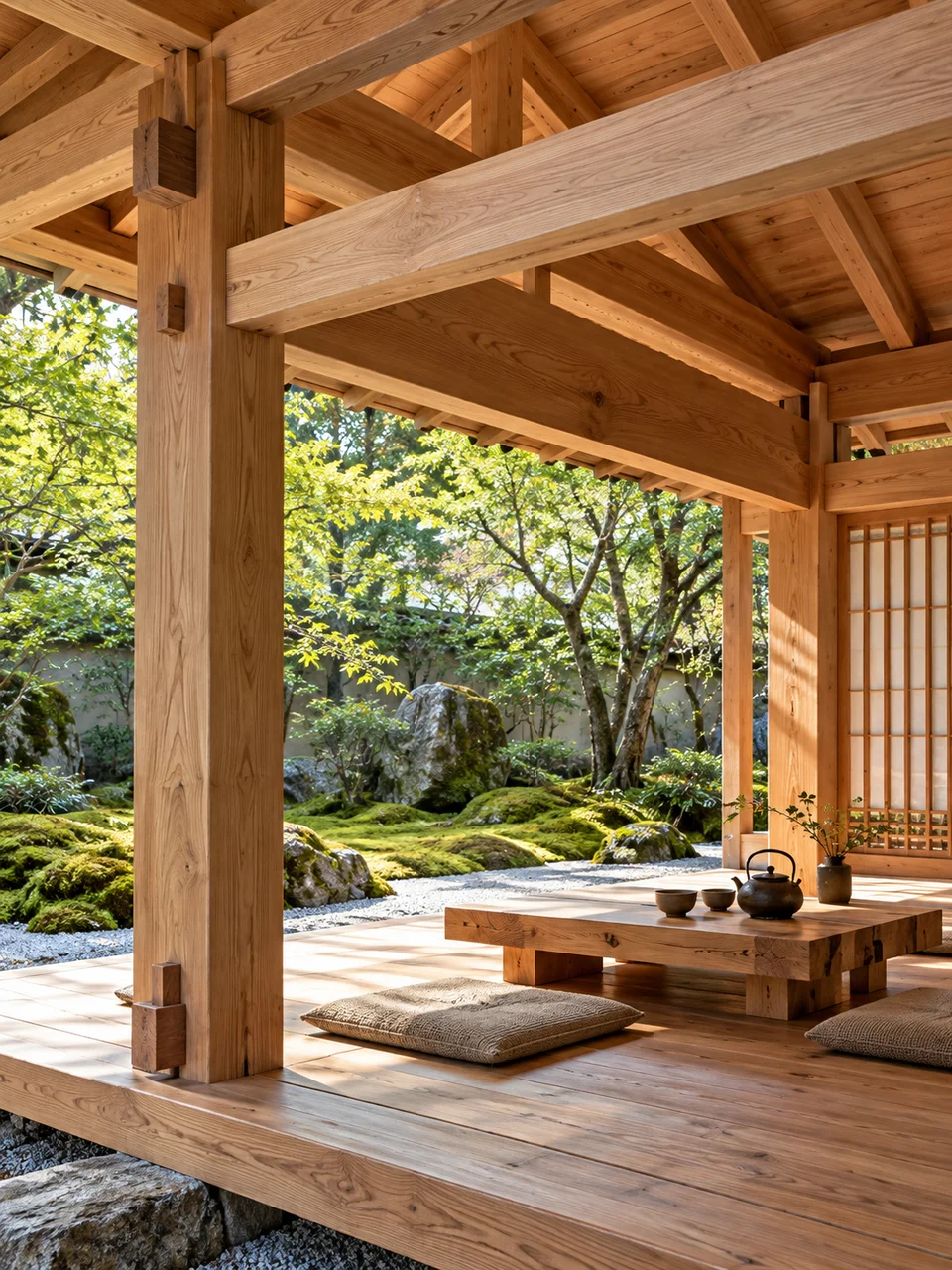 Timber JoineryExposed wooden connections establish the architecture.
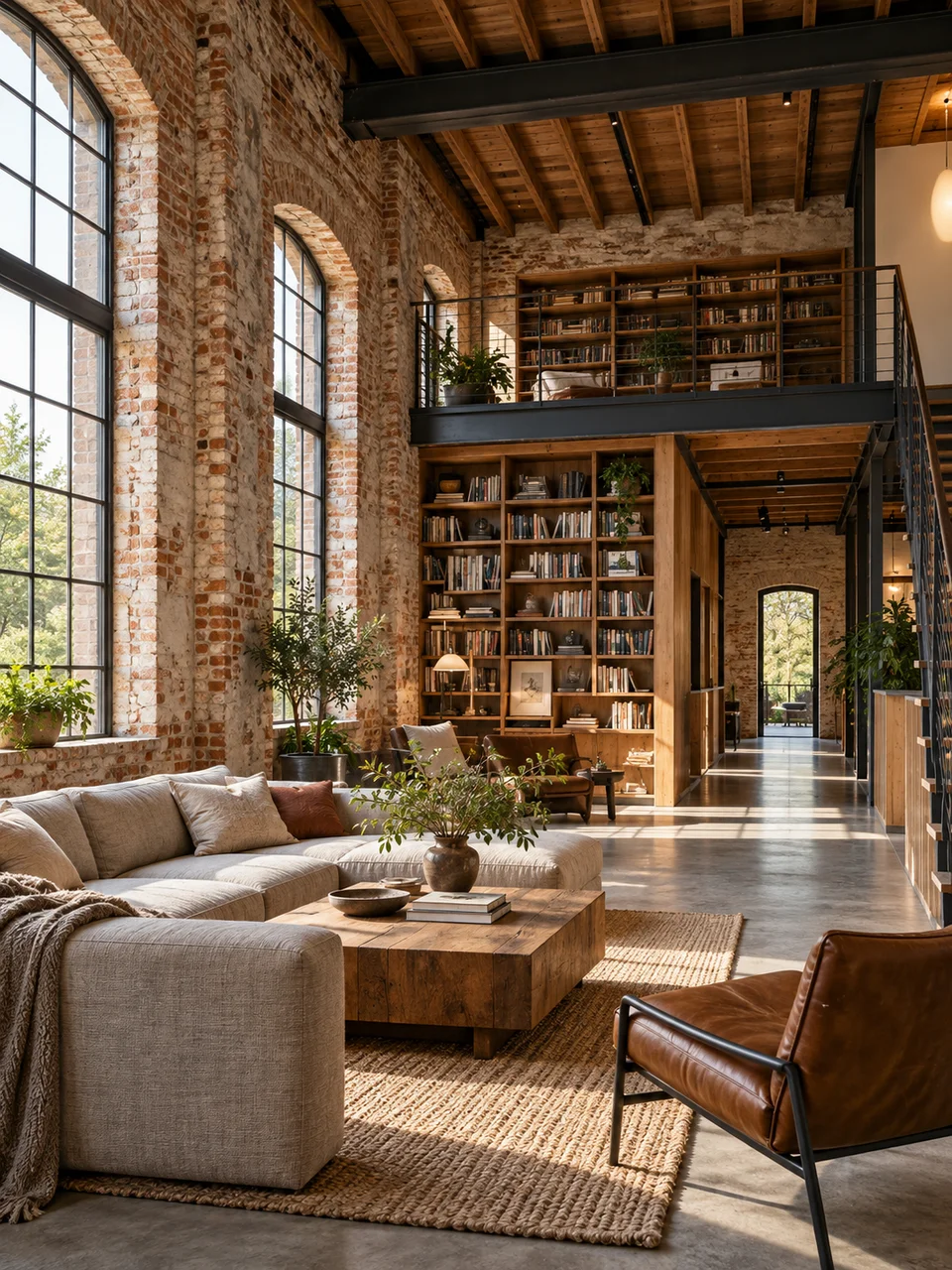 Adaptive Reuse LoftOld structure and new insertions remain visibly distinct.
Bring it to life
Effects that turn a still in this look into a short video.
 Slider Parallax
 Through the Window