


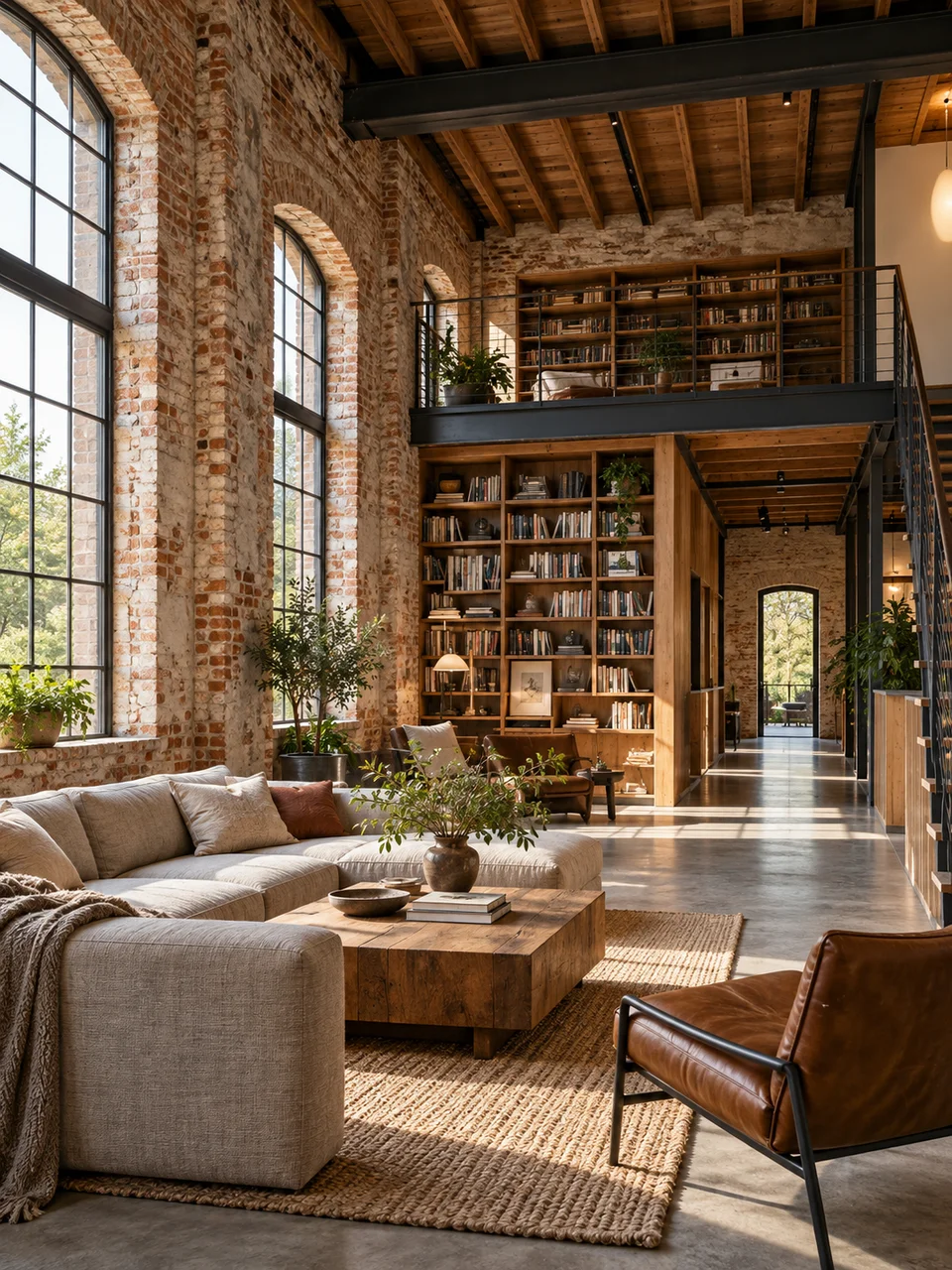
Warehouse Loft AI Image Generator: Adaptive Reuse Loft
Old structure and new insertions remain visibly distinct.
- From a description only
- Best shape: 3:4 · 4:5 · 1:1
Works on
- Seedream 5.0 Pro
- Qwen Image 3.0
- Nano Banana 2.1
- Seedream 5.0 Flash
About Adaptive Reuse Loft
Adaptive Reuse Loft makes the difference between existing structure and new construction visible. Old masonry or concrete retains repaired patches and signs of use, while contemporary timber and metal additions have cleaner edges and deliberate joints. This reflects adaptive reuse in architecture: giving an existing building a new purpose while working with its fabric. Soft daylight makes age readable without turning the room into a ruin or exaggerating every scratch into industrial drama.
Describe the old building and its new activity in writing. A former workshop converted into a reading room, a brick warehouse with a timber meeting pod, a mill hall containing a small kitchen, or an old depot turned into a shared studio all offer useful contrasts. Explain where new partitions stop and how people move around them. Existing columns, windows, and service routes should remain legible behind the new use.
Try “a former brick workshop converted into a reading room with a freestanding timber enclosure” or “an old concrete warehouse with a precise black metal stair and shared studio tables.” Another option is “a mill hall with repaired masonry and a compact new oak kitchen.” Keeping new additions pale makes the old shell more prominent; darker metal insertions create a sharper graphic distinction between the building’s successive layers.
Tips
- Identify one preserved feature, such as a brick pier or patched concrete column, to anchor the building’s history.
- Place new partitions slightly apart from old walls so the insertion reads as a separate intervention.
- Keep windows and walkways open instead of filling every bay with furniture.
- Describe repaired surfaces with restraint; a few visible patches communicate age without making the room derelict.
- Use a viewpoint that includes both an original structural element and a new timber or metal connection.
What the style adds
Your words go where it says “your subject”. Everything else is added for you.
your subject. Photograph an adaptive-reuse interior that preserves old brick or concrete structure while adding precise contemporary timber and metal insertions. Keep service routes and circulation plausible. Soft daylight reveals repaired surfaces and honest age without ruin imagery, showroom clutter or overprocessed industrial grit.
Models and price
- Seedream 5.0 Pro36 credits
- Qwen Image 3.030 credits
- Nano Banana 2.148 credits
- Seedream 5.0 Flash29 credits
One 1K image from a description. The button always shows the exact price before you spend anything.
How to use Adaptive Reuse Loft
- Describe itWrite who or what should be in the picture. A small action and a clear place work best.
- Pick a shapeKeep the suggested ratio and model, or change them in the bar at the bottom.
- Paint itPress “Paint it”. The price is on the button before you spend anything.
Questions about Adaptive Reuse Loft
Can I use Adaptive Reuse Loft on my own photo?
Not yet. This style works from a description: write what you want to see and the style adds the look.
How much does one Adaptive Reuse Loft image cost?
29 credits for one 1K image on Seedream 5.0 Flash. 2K costs more, and the button shows the exact price before you run it.
Will the space look abandoned?
The aim is an occupied, adapted interior with evidence of age and repair. Describe its current purpose and usable circulation. A reading table, working kitchen, or carefully fitted enclosure can make the new life of the building clear.
What distinguishes it from Biophilic Brutalism?
Biophilic Brutalism balances substantial concrete and mature planted areas. Adaptive Reuse Loft centers on the contrast between an older shell and newer insertions, so repaired masonry and contemporary construction carry the main visual story.
Can I choose a building other than a warehouse?
Yes. Former mills, workshops, depots, and small industrial halls can all work. Mention the original structural material and one specific new use so the image has a clear reason for combining old surfaces with new elements.
Similar styles
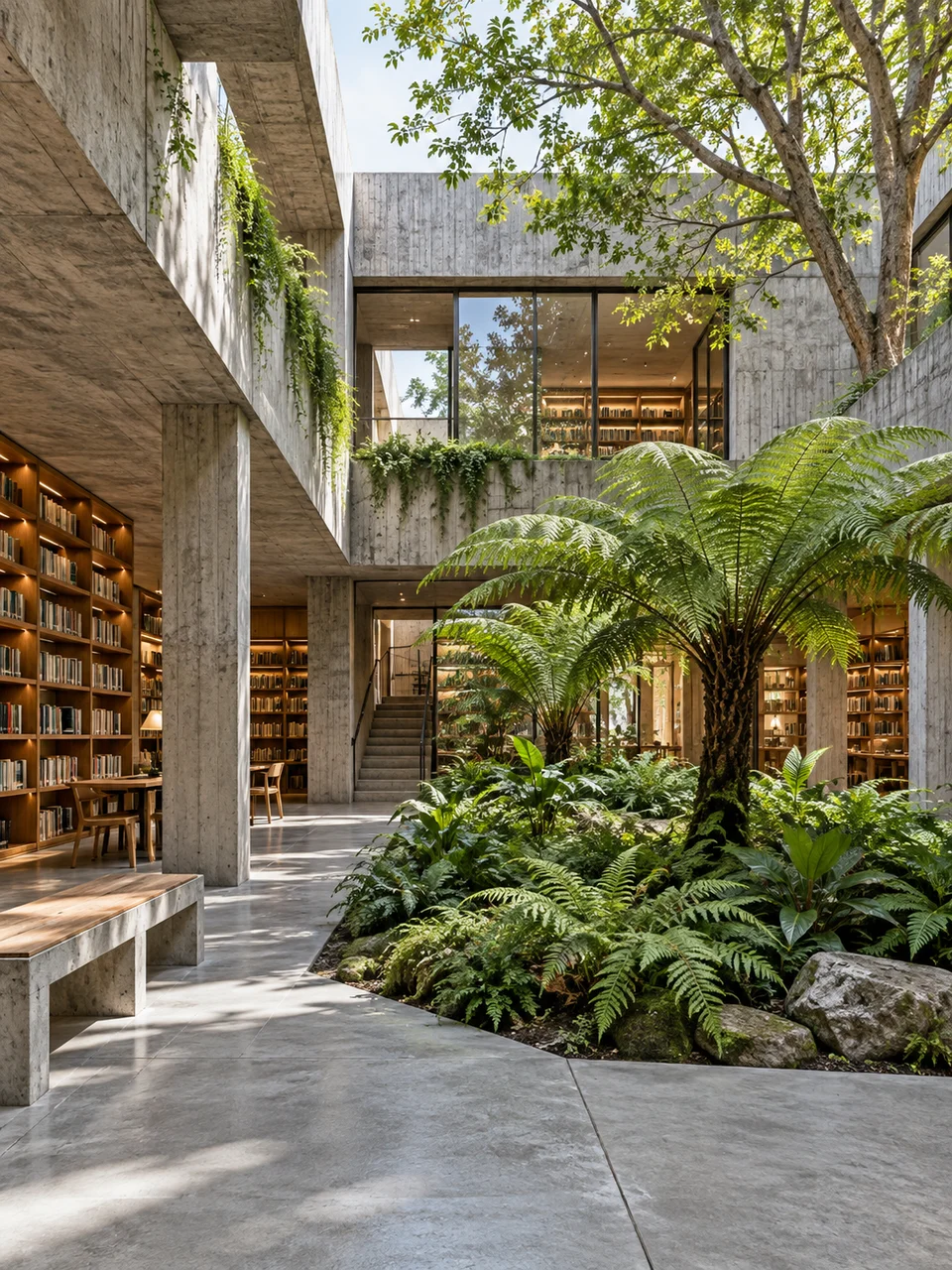 Biophilic BrutalismHeavy concrete and living plants share a precise spatial rhythm.
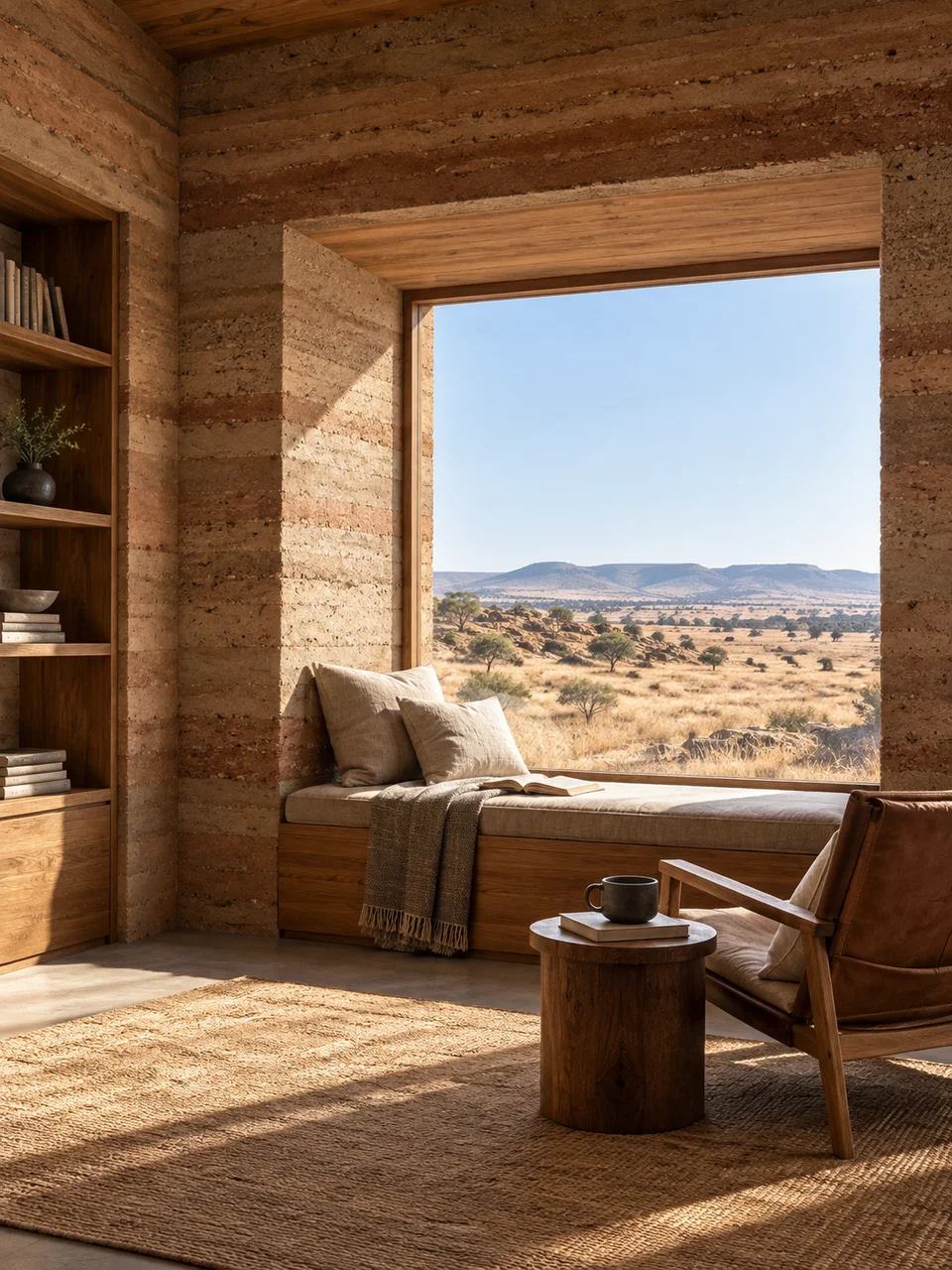 Rammed Earth RetreatStratified earthen walls hold cool, quiet interior space.
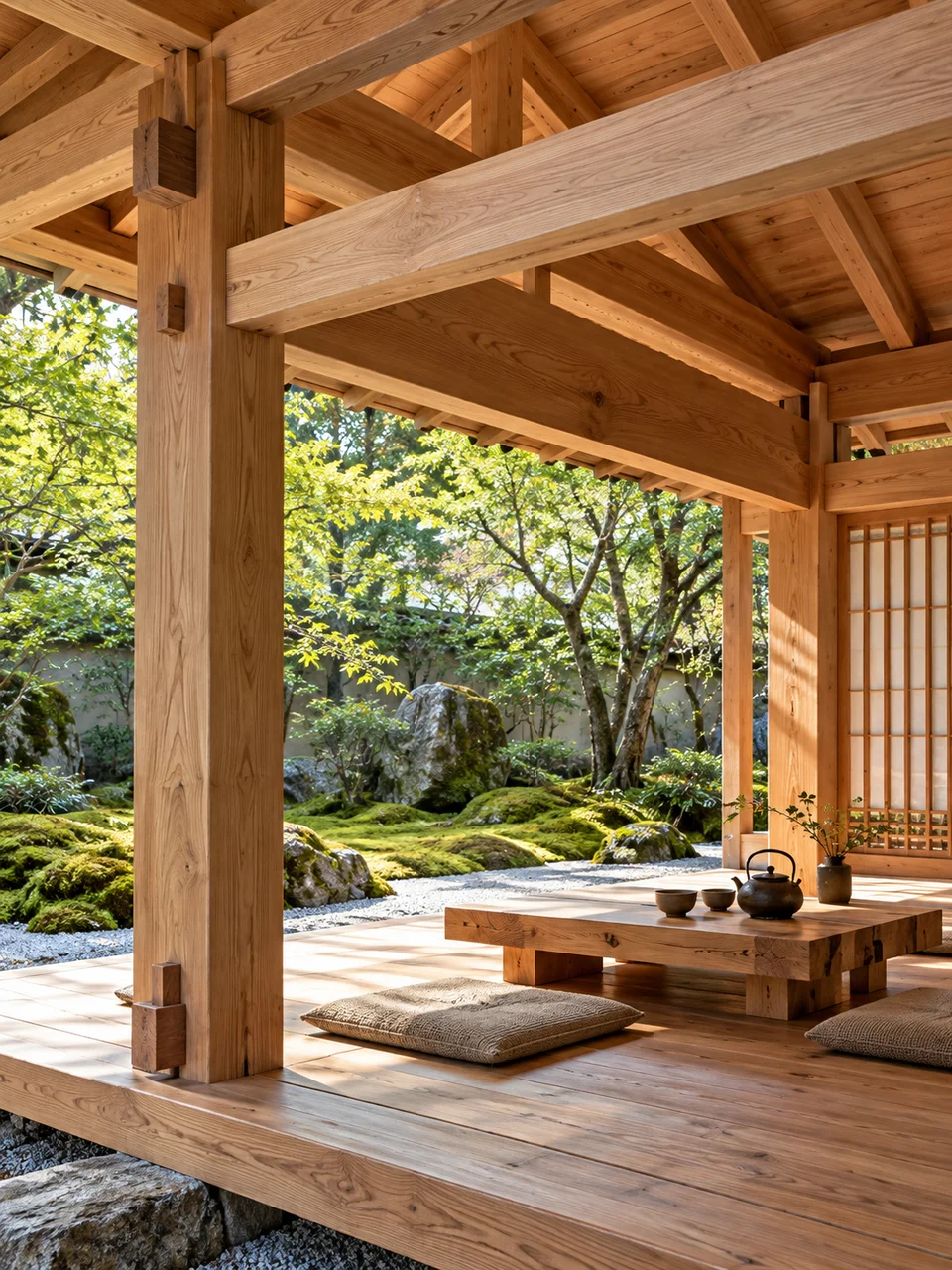 Timber JoineryExposed wooden connections establish the architecture.
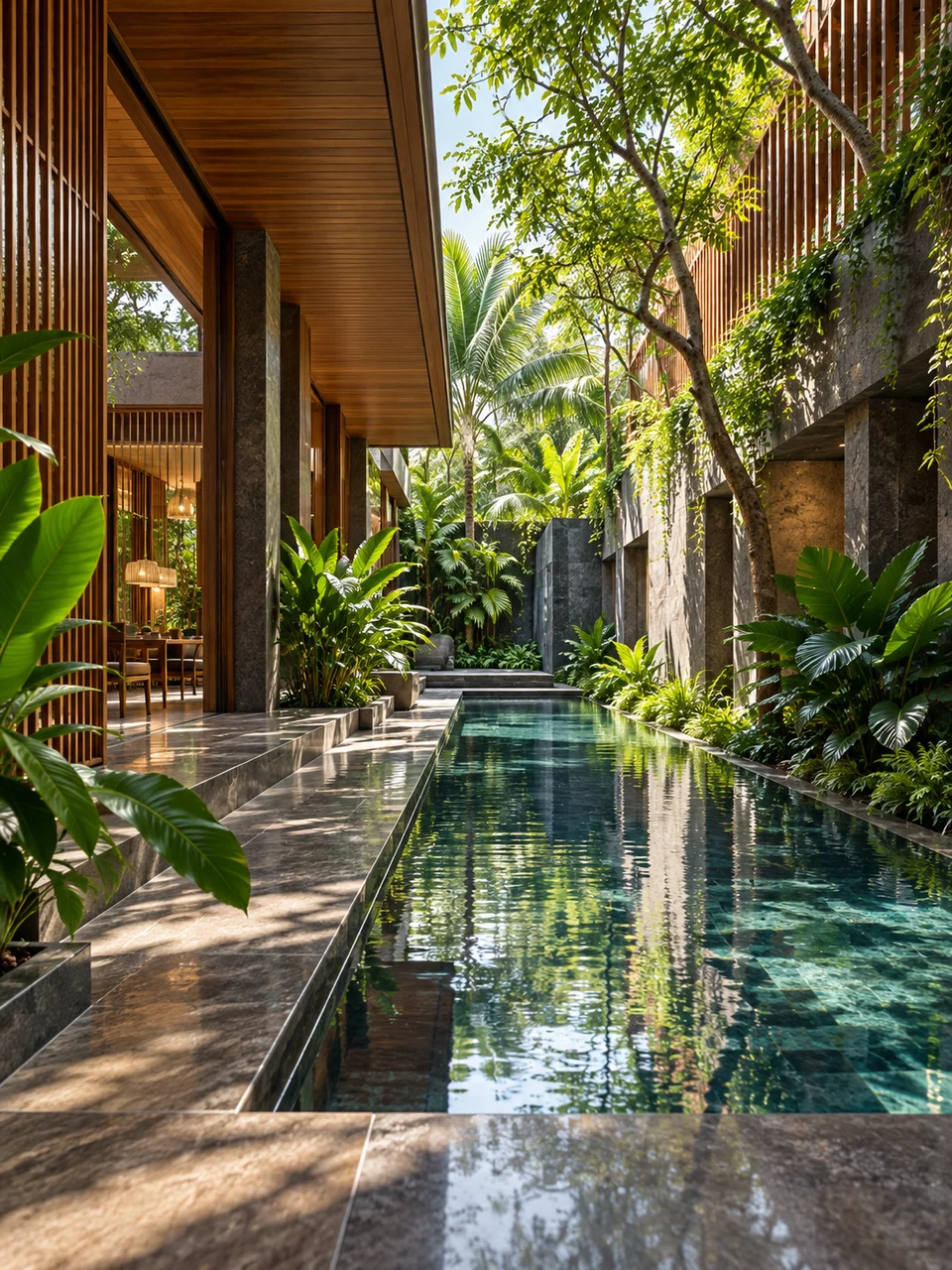 Tropical ModernismDeep shade, breezeways and planted edges shape the space.
Bring it to life
Effects that turn a still in this look into a short video.
 Slider Parallax
 Day to Night