
Build a five-direction client pitch with supplied oil, glass, shadow, clay and ink studies, five prompts, a concrete recommendation and a next test.
Build one five-direction pitch page, with an editable brief, five full English prompts, a useful trade-off for each direction and a recommendation someone can act on. The oil, glass, shadow, clay and ink images are existing production examples from Poppie: a PopNow short film. Prompts below are translated from our original prompts.
The anonymous public Image controls were recorded on November 7, 2026. GPT Image 2.5 Sunburst is the current reproduction option shown here; the exact historical image backend was not recorded. The course narration uses Gemini 3.8 Flash TTS, Puck. Use the supplied stills to complete the pitch without requesting a new image or video.
Exercise files
Download the pitch kit · English recipe · Editable HTML worksheet
The kit contains five unchanged PNG studies, poppie-reference.png, pitch-board.html and recipe.json. Unzip it before opening the worksheet. Keep the HTML beside its images. The files are prepared locally; public download verification is pending before publication.
Step 1: Hold the brief still
Write Personal imagination opens into handmade worlds. The connecting pink bubble, visible craft and a clear story action are the shared requirements. Change material, light behaviour, depth and how the world reveals the idea.
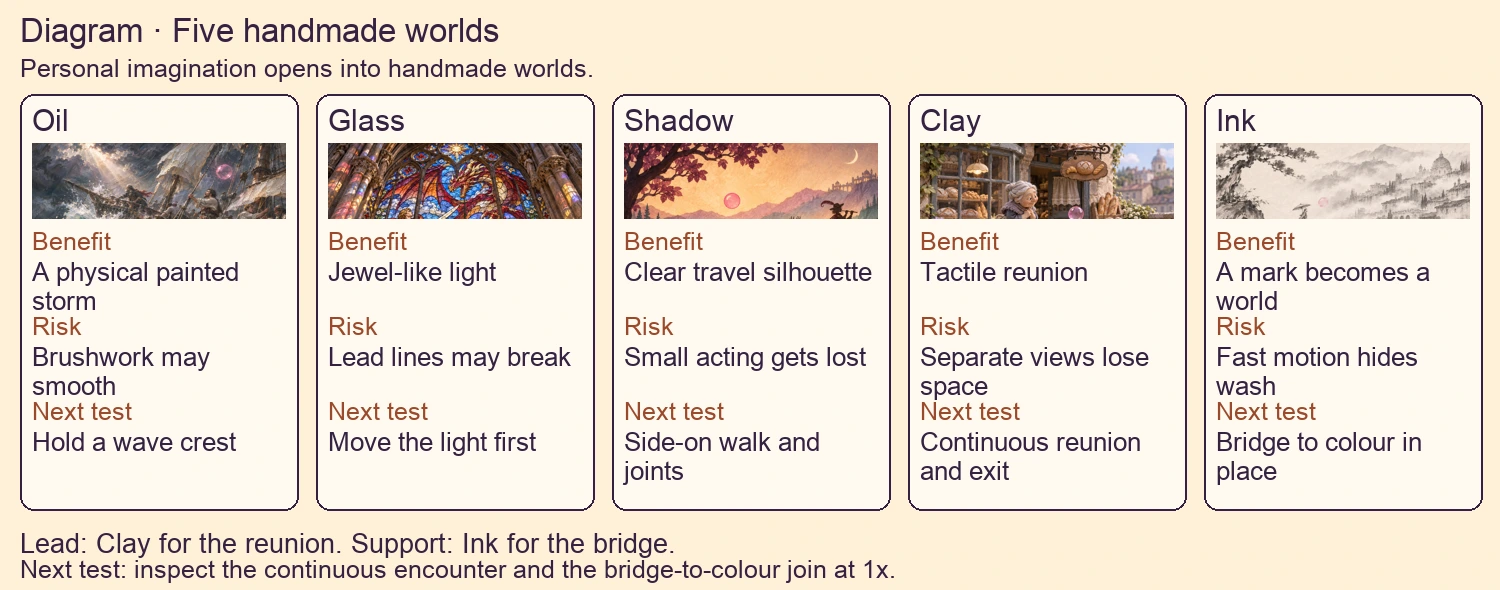
The supplied standalone HTML is the worksheet tool. It is separate from PopNow's generator. Its local operation was not recorded in this session: the lesson uses labelled diagrams and original source inspection in place of an online worksheet capture.
Step 2: Give every direction a story job
Open each full image before discussing a detail crop. Write Benefit, Risk and Next test in each card. A material name alone gives the client little to judge.
| Direction | Benefit | Risk that changes the next test |
|---|---|---|
| Oil | Makes a storm feel physical through raised paint. | Fast movement can turn brushwork into a smooth surface. Next: Hold a wave crest while paint texture remains visible. |
| Glass | Gives the world jewel-like light and a strong frame. | A moving character can break the fixed lead-line structure. Next: Move light across the window before moving the depicted figures. |
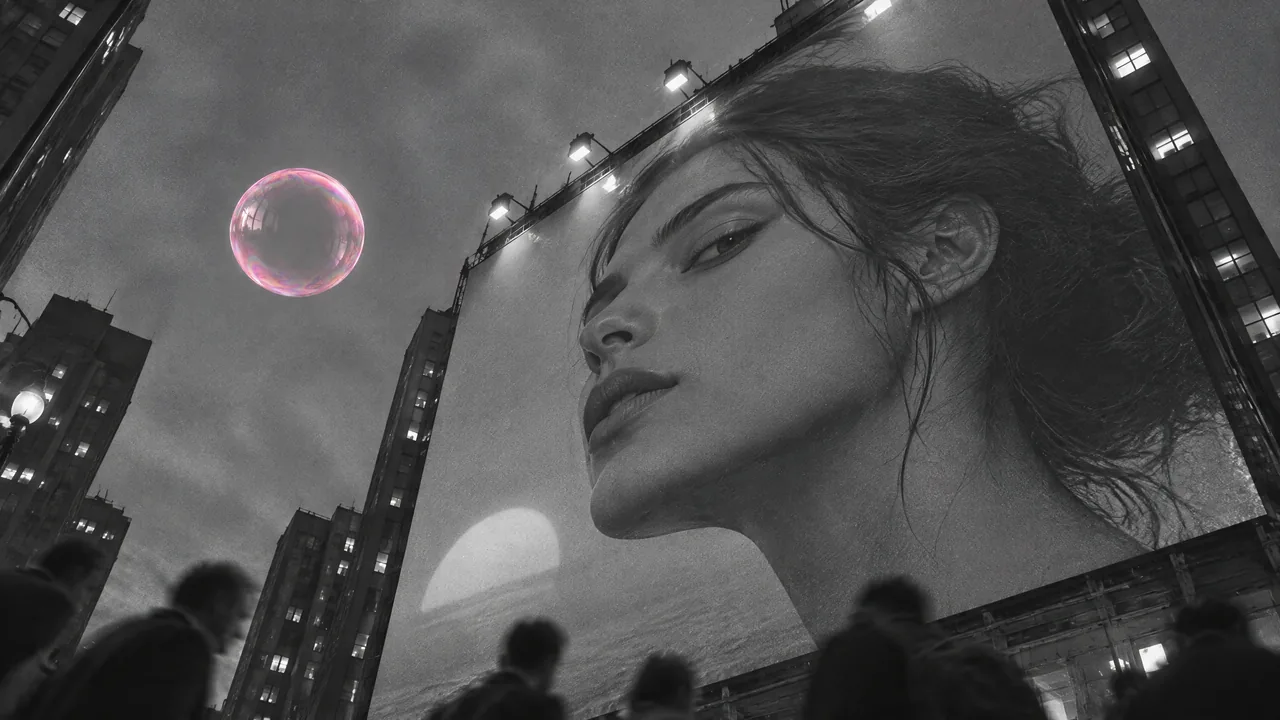
| Shadow | Makes silhouettes and travel direction immediately legible. | Small acting details are hard to read in silhouette. Next: Test a clear side-on walk with readable joints. |
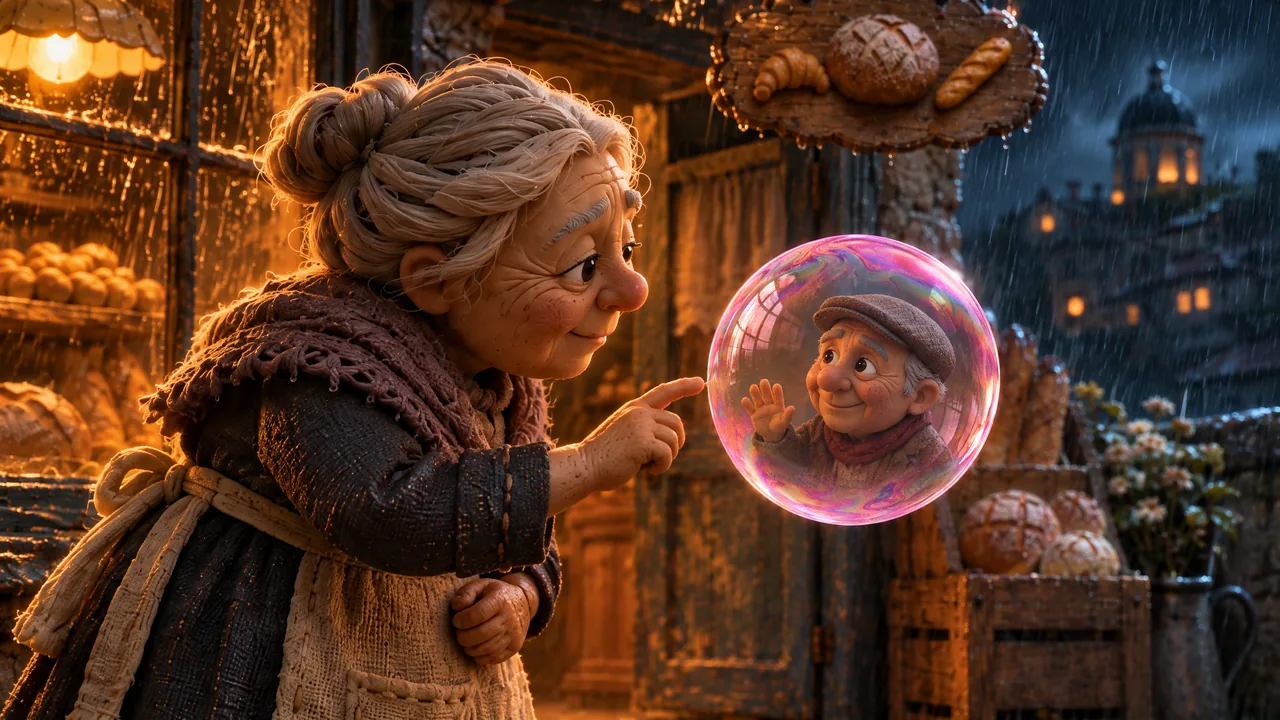
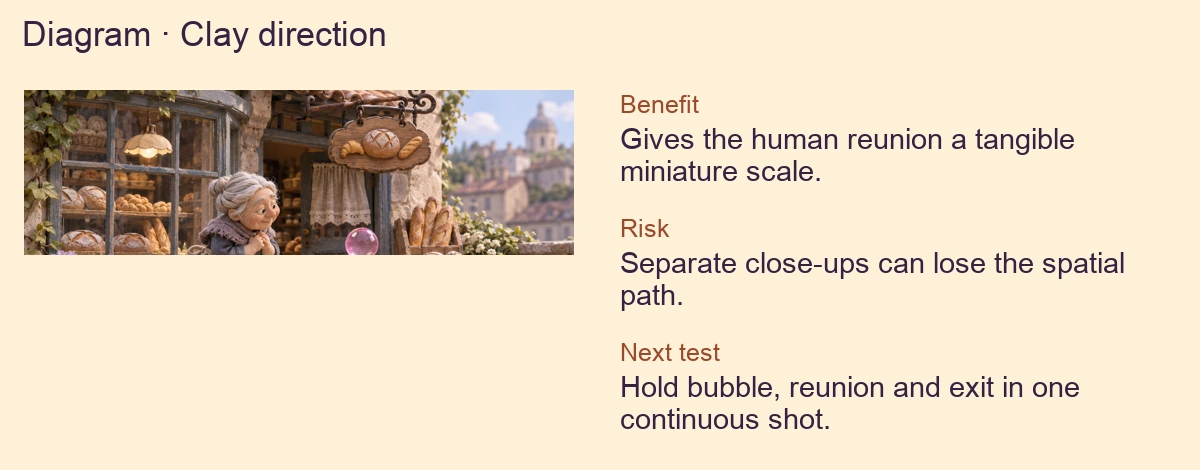
| Clay | Gives the human reunion a tangible miniature scale. | Separate close-ups can lose the spatial path. Next: Hold bubble, reunion and exit in one continuous shot. |
| Ink | Lets a material change grow into a world. | Rapid movement can hide the delicate wash and empty space. Next: Let black ink become colour without changing bridge position. |
Oil source · Glass source · Shadow source · Clay source · Ink source
Step 3: Keep a complete prompt reproducible
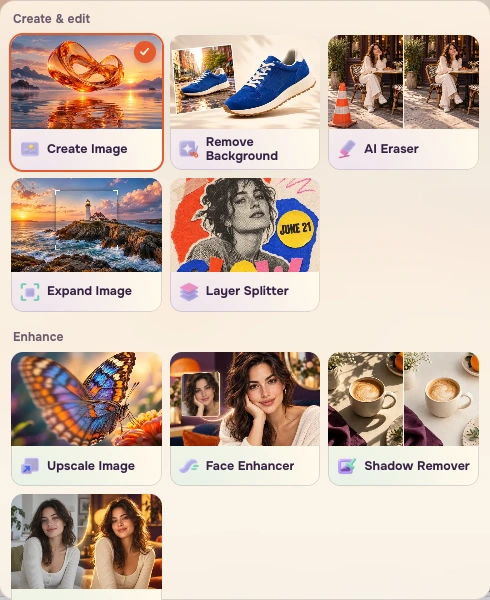
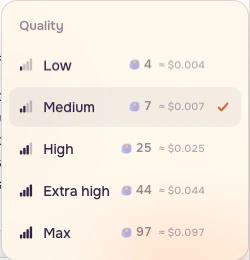
Open Image. The tool menu calls the workspace Create Image. Choose GPT Image 2.5 Sunburst; Photo to edit is the reference upload entry. For your own optional test, attach the supplied reference, then paste one complete prompt below. The recorded session shows the entry and supplied reference separately; no reference was uploaded and no generation was submitted.
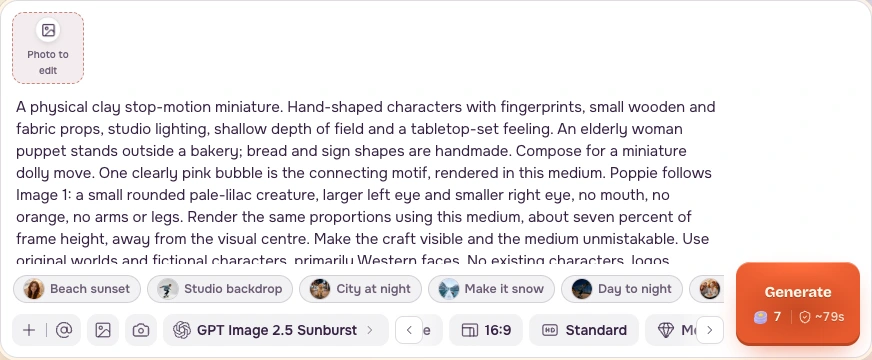
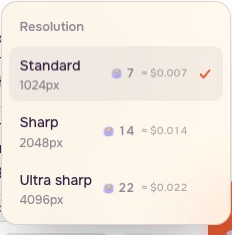
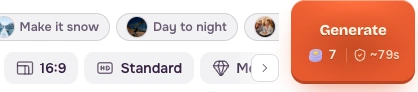
Use 16:9, Standard (the 1024px / 1k tier), Medium and one output for a small direction study. Read the actual button quote before requesting your own test. The recorded form showed 7 credits on November 7, 2026; it is a dated quote, not historical production spend or a future price promise.
Five full English prompts
Each prompt uses Image 1: poppie-reference.png. These are translated production prompts; GPT Image 2.5 Sunburst is a present-day test option, not a claim about the unrecorded historical backend. The existing PNGs remain the pitch examples.
Oil
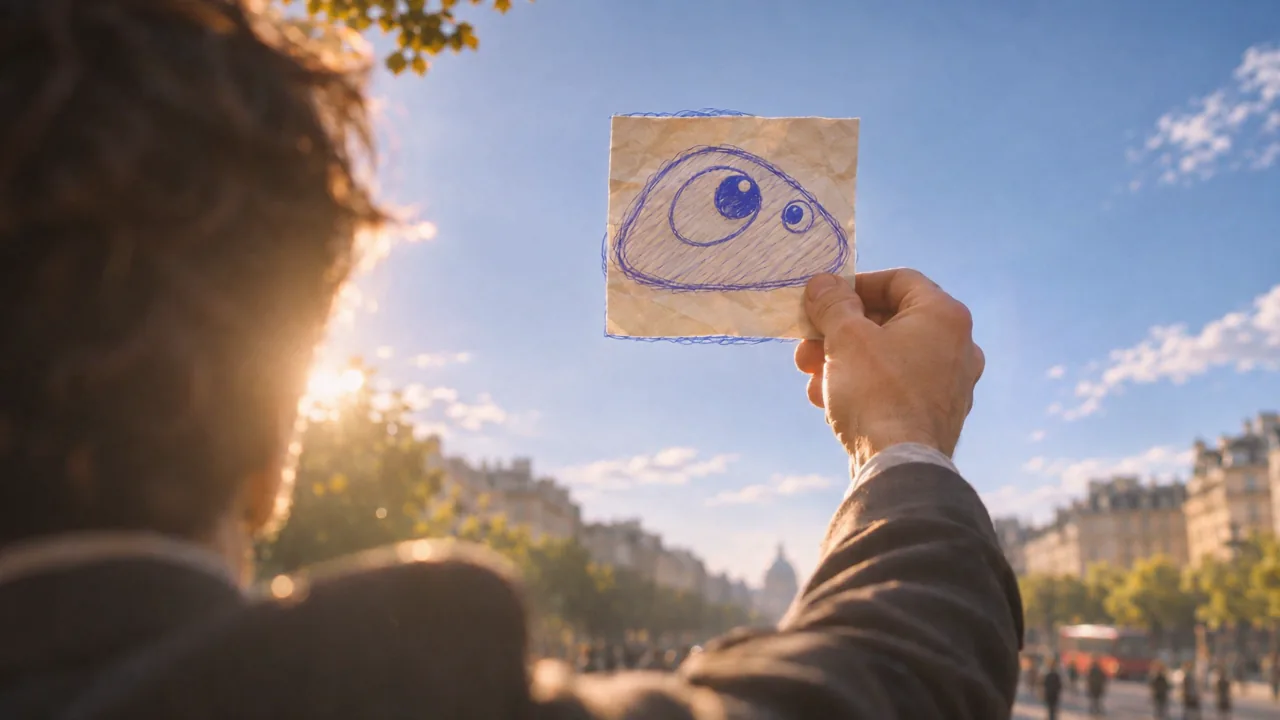
An impasto oil painting with tangible palette-knife ridges, visible canvas and glossy paint. A storm lifts an old sailing ship on a large wave. Sailors grip ropes; one shaft of light breaks through the cloud. Compose for a slow lateral camera move. One clearly pink bubble is the connecting motif, rendered in this medium. Poppie follows Image 1: a small rounded pale-lilac creature, larger left eye and smaller right eye, no mouth, no orange, no arms or legs. Render the same proportions using this medium, about seven percent of frame height, away from the visual centre. Make the craft visible and the medium unmistakable. Use original worlds and fictional characters, primarily Western faces. No existing characters, logos, interface elements, readable text, speech balloons, sound-effect lettering or numbers.
Glass
A handmade Gothic stained-glass window: lead divisions, coloured blown glass with small bubbles, sunlight passing through. The glass depicts a knight and a dragon; the pink bubble is a glass shape too. Coloured light falls across stone pillars. Compose from a low angle. One clearly pink bubble is the connecting motif, rendered in this medium. Poppie follows Image 1: a small rounded pale-lilac creature, larger left eye and smaller right eye, no mouth, no orange, no arms or legs. Render the same proportions using this medium, about seven percent of frame height, away from the visual centre. Make the craft visible and the medium unmistakable. Use original worlds and fictional characters, primarily Western faces. No existing characters, logos, interface elements, readable text, speech balloons, sound-effect lettering or numbers.
Shadow
A handmade shadow-puppet scene. Dark silhouettes before a warm illuminated screen, visible joint rivets and cut edges, layered translucent coloured paper behind. A flute player walks along a mountain path beneath a crescent moon, followed by animals. Compose for flat lateral movement. One clearly pink bubble is the connecting motif, rendered in this medium. Poppie follows Image 1: a small rounded pale-lilac creature, larger left eye and smaller right eye, no mouth, no orange, no arms or legs. Render the same proportions using this medium, about seven percent of frame height, away from the visual centre. Make the craft visible and the medium unmistakable. Use original worlds and fictional characters, primarily Western faces. No existing characters, logos, interface elements, readable text, speech balloons, sound-effect lettering or numbers.
Clay
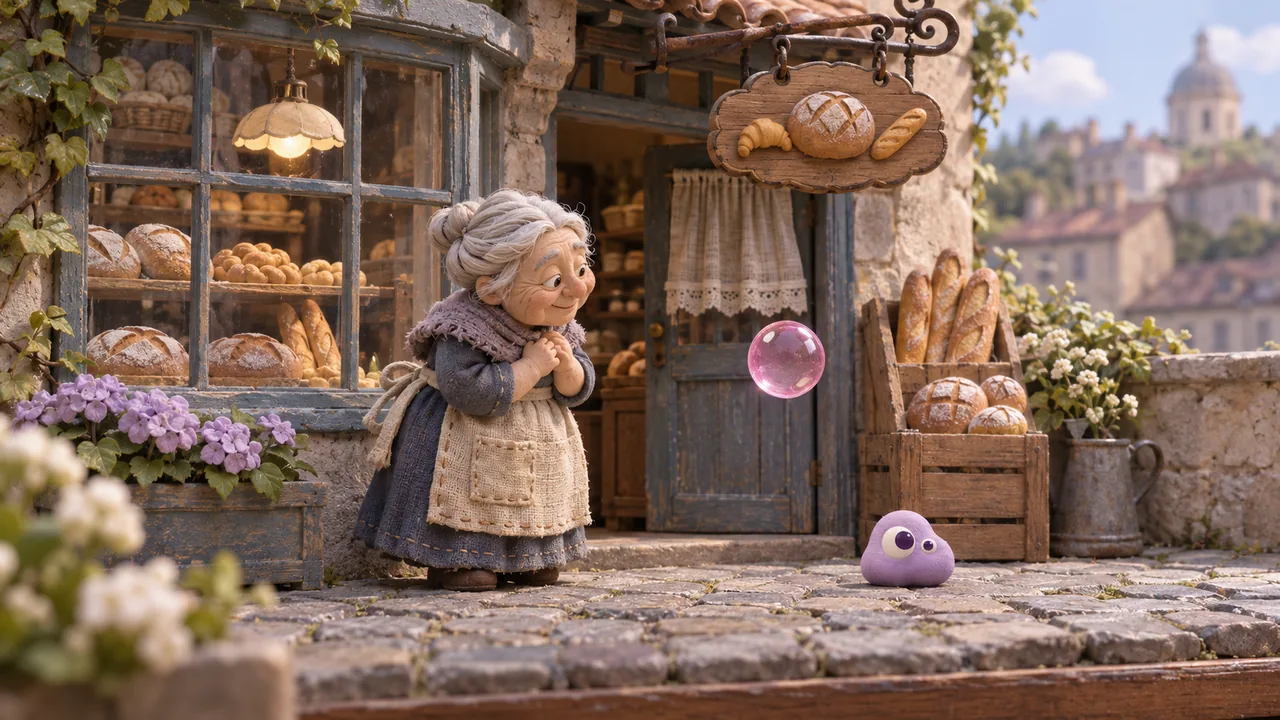
A physical clay stop-motion miniature. Hand-shaped characters with fingerprints, small wooden and fabric props, studio lighting, shallow depth of field and a tabletop-set feeling. An elderly woman puppet stands outside a bakery; bread and sign shapes are handmade. Compose for a miniature dolly move. One clearly pink bubble is the connecting motif, rendered in this medium. Poppie follows Image 1: a small rounded pale-lilac creature, larger left eye and smaller right eye, no mouth, no orange, no arms or legs. Render the same proportions using this medium, about seven percent of frame height, away from the visual centre. Make the craft visible and the medium unmistakable. Use original worlds and fictional characters, primarily Western faces. No existing characters, logos, interface elements, readable text, speech balloons, sound-effect lettering or numbers.
Ink
A traditional ink landscape on textured rice paper, bleeding washes and dry-brush strokes, bold empty space with an unmarked area for a seal. A mountain town and bridge stand in mist; a traveller with an umbrella crosses. The pink bubble is a light rose-coloured wash. Compose as a slowly unrolling horizontal scroll. One clearly pink bubble is the connecting motif, rendered in this medium. Poppie follows Image 1: a small rounded pale-lilac creature, larger left eye and smaller right eye, no mouth, no orange, no arms or legs. Render the same proportions using this medium, about seven percent of frame height, away from the visual centre. Make the craft visible and the medium unmistakable. Use original worlds and fictional characters, primarily Western faces. No existing characters, logos, interface elements, readable text, speech balloons, sound-effect lettering or numbers.
Step 4: Let the real failure choose the motion test
A compelling still does not establish a continuous reunion. Play the earlier clay edit and the later clay passage once each at 1×, with sound. The earlier production master changes views and passes through a bright haze. In the later passage, follow the encounter and the exit continuously. Check whether you retain your place in the bakery scene.
The actual source ranges are V4 158.1666667–165.5416667s and the specified clean, uncaptioned finished master 176.25–191.25s. The first file is 7.375s and the second 15s, both at 24fps. The lesson's 30fps edit displays 221 frames of the first passage, approximately 8ms shorter; it plays at its original speed. The finished film also retains the ink bridge into colour, 170.875–176.25s.
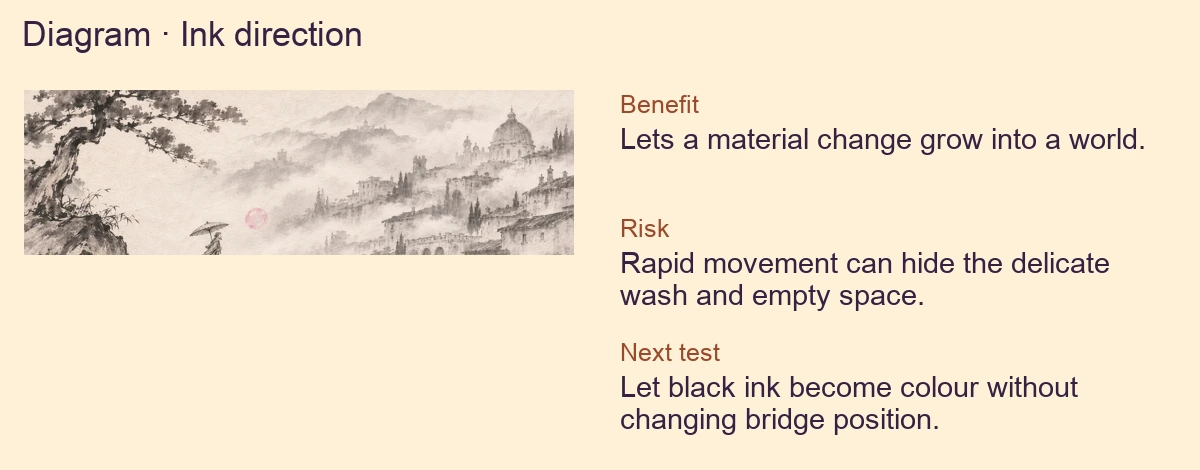
For this brief, lead with Clay for the reunion, and use Ink as the material bridge. This is the course author's recommendation based on the shown story jobs; it is not a record of client approval.
Step 5: Save something a collaborator can use
Fill Lead direction and Next test. Keep the full images one click away. Choose Save HTML, save the downloaded HTML beside the five supplied PNGs, then reopen that saved file and confirm your edited notes remain. Unsaved fields reset on refresh or closing. The supplied template offers Save HTML; a browser reopen test remains pending in this recording session.
Choose Print for a meeting copy. Its print rules replace textareas with full-text blocks and use two columns. Inspect all long Benefit, Risk and Next test fields in your own print preview before relying on the copy. Browser print preview and long-note pagination were not captured here.
Checklist
- Write one shared idea before five prompts.
- Name a material variable and its visible story job.
- Open each complete original before judging the detail crop.
- Put a concrete risk and a next test on every card.
- Recommend a lead for this brief and keep the evidence with it.
- Save the edited HTML beside the images before refreshing.
- Inspect the meeting copy for clipped long fields.
- Use the existing studies to decide the idea before commissioning motion.
Recipe
Deliverable: one five-direction pitch page, five usable English prompts, a lead recommendation and a test that answers its risk. Tool: supplied standalone HTML worksheet. Optional reproduction: Image, GPT Image 2.5 Sunburst, supplied Poppie reference, 16:9, 1k, medium, one output. Recommendation: Clay for the reunion, Ink for the connection. Evidence: the actual earlier and later clay edits at 1×.
Download the complete English recipe. It includes all prompts, settings, card records, the editable worksheet template and the checklist. Downloads remain a publication gate; this preparation does not make them live.
FAQ
Do I need to generate five new images?
No. All five production studies are supplied. Complete the decision page with these files first. Reproduce one direction only when you have a concrete new question and accept the current quote.
Is the pitch worksheet a PopNow export feature?
It is a standalone HTML file included in the kit. Save it next to its PNG files. Save HTML is provided by that worksheet, while Image supplies the optional reproduction form.
Why lead with Clay rather than calling one model best?
The brief needs a tactile reunion and a readable encounter. Clay serves that job, and the later continuous production passage is evidence to inspect. A different brief can favour another direction.
Will the downloaded file keep my unsaved notes?
Use Save HTML before refreshing or closing. Reopen the saved file beside the images to verify your own notes. Print is a separate meeting copy; inspect its long fields in preview.