
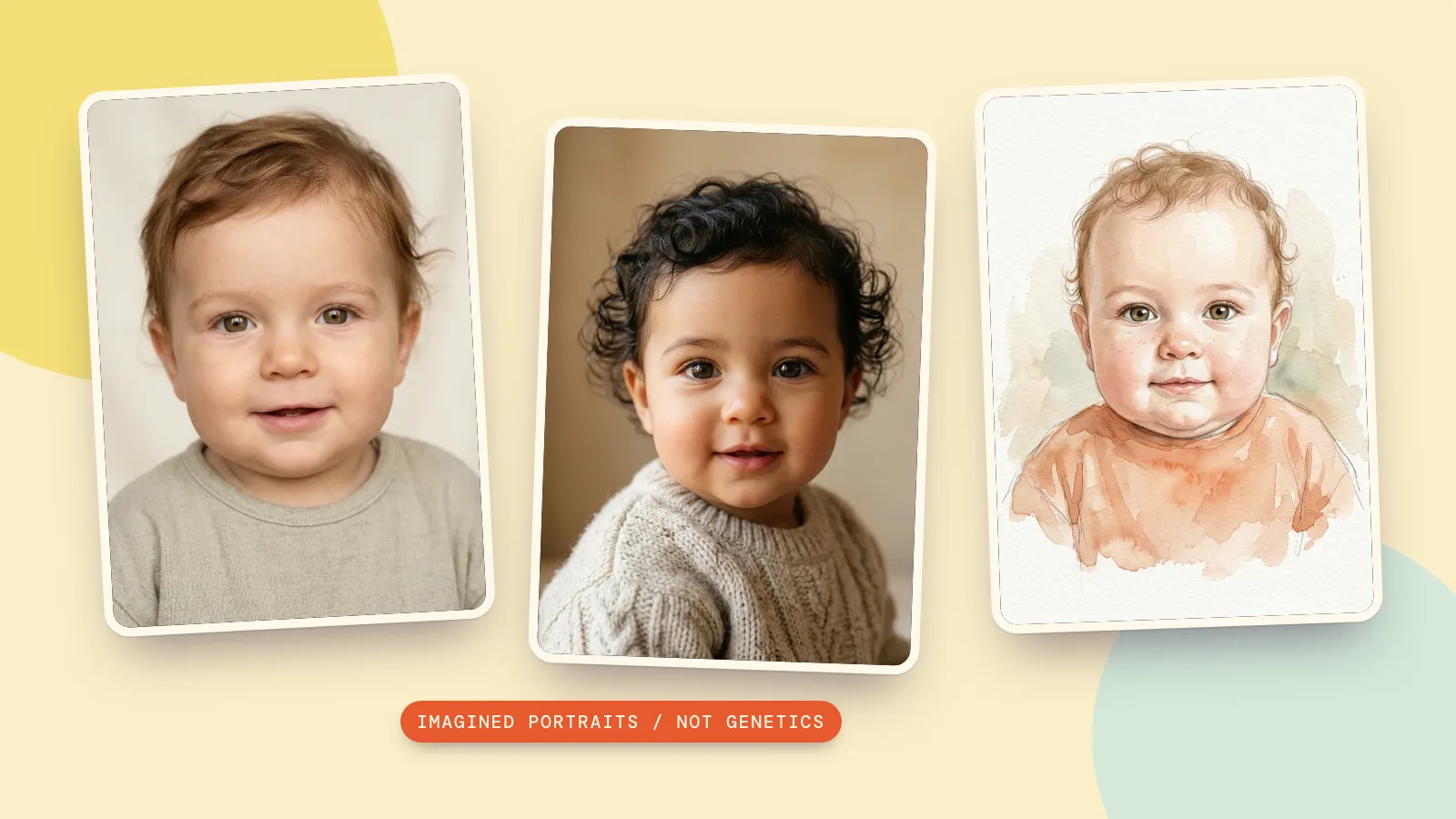
What will my baby look like? An AI baby generator can offer a playful portrait inspired by two adult photos, but it cannot predict a real child's appearance. The picture is an imagined possibility, not a genetics test or evidence about your future family.
We tried PopNow's AI baby generator with three pairs of fictional adults made for this guide. On October 29, 2026, we generated one baby portrait per pair using the page's Standard engine, Nano Banana 2.1. No real parents or real children appear in these samples, and we kept all three results to show what the chosen inputs produced.
How do you make a baby portrait from two photos?
- Add a clear adult portrait to Photo 1 and another to Photo 2. Use one person per picture, with the face looking toward the camera and evenly lit. Only upload your own photo or a photo whose subject agreed to this use.
- Choose Baby under Age, the setting used for all three samples here. It means about 9 months in the tool. Choose Boy, Girl or Surprise me; this is an artistic choice, not a prediction.
- Leave Looks more like on Both for balanced references. Pick a Style such as Studio, Cosy knit or Watercolour. These are backgrounds and rendering choices, not different genetic calculations.
- Under More options, check Expression and Quality. We used Smile, Standard, a 4:5 shape and one portrait at a time. The Standard engine uses Nano Banana 2.1 at 1K; its catalog image price is 48 credits. Check the tool's displayed quote before submitting.
- Press Create baby portrait, then inspect the result. Compare visible cues against both references, check the clothing and eyes, and download the portrait you want to keep. A plausible-looking face still does not make the image a prediction.
Start with similar lighting in both reference photos so that one picture is not much darker than the other. Avoid sunglasses, heavy filters, tiny faces and strong side profiles. If the result seems to borrow mostly from one reference, first improve the photos rather than treating the outcome as a statement about which parent's traits are stronger.
What did three fictional parent pairs produce?
We created the adult references with Seedream 5.0 Pro, generating each pair as two separate portrait panels and cropping them into individual files before upload. The baby requests used the tool's own prompt builder, the same two-photo order shown below, resolution=1k and aspect_ratio=4:5. Each gallery contains two adult inputs followed by the imagined output; the prompt card repeats the exact generation prompt, and you must add the two references when recreating it.
1. Studio: dark waves and auburn hair
Pair A combines a fictional woman with dark wavy hair and a fictional man with short auburn hair. We chose Boy, Both, Smile and Studio, keeping the other settings listed above. This plain background makes it easy to look at the face without a busy scene competing for attention.
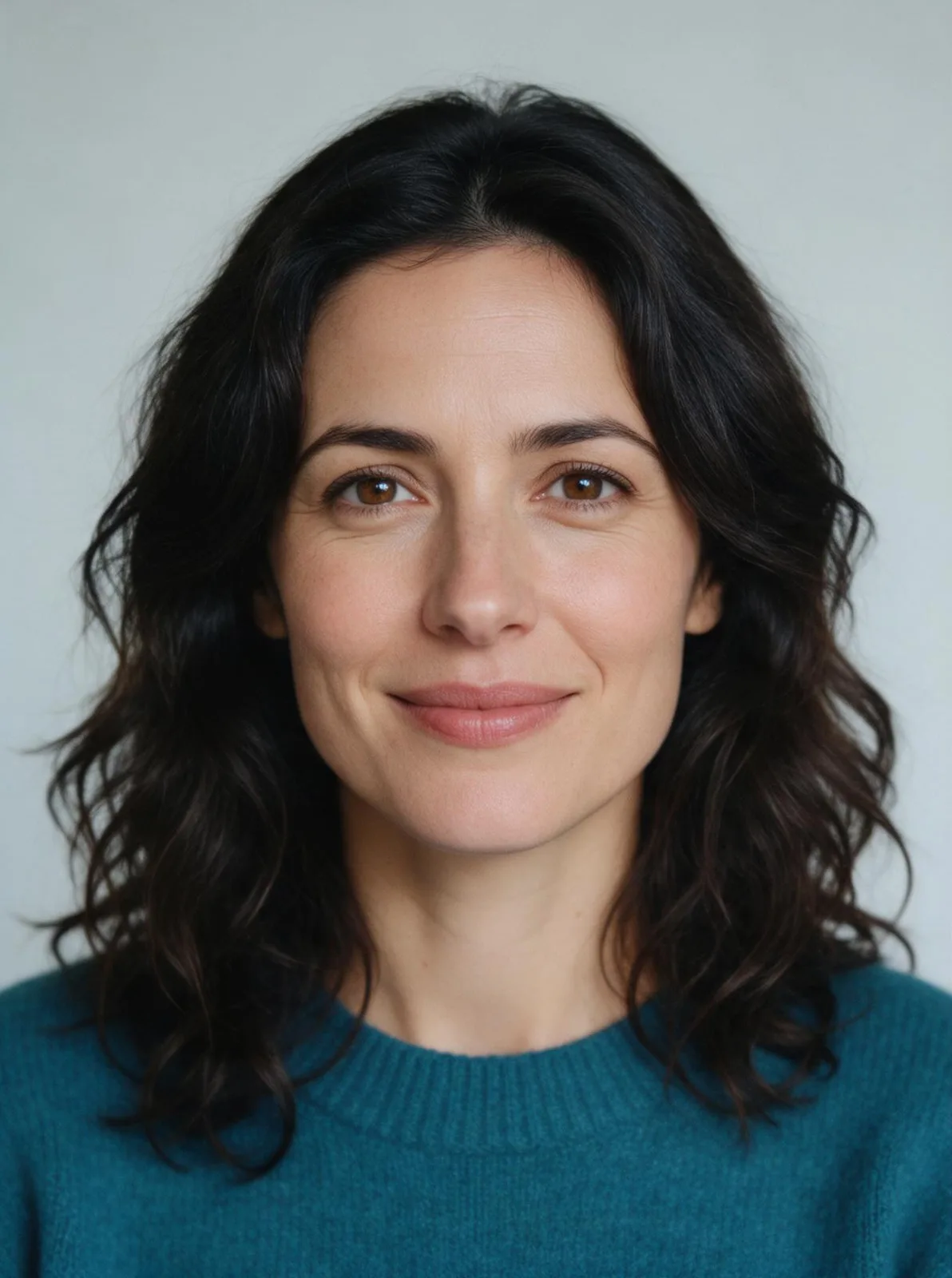 Photo 1
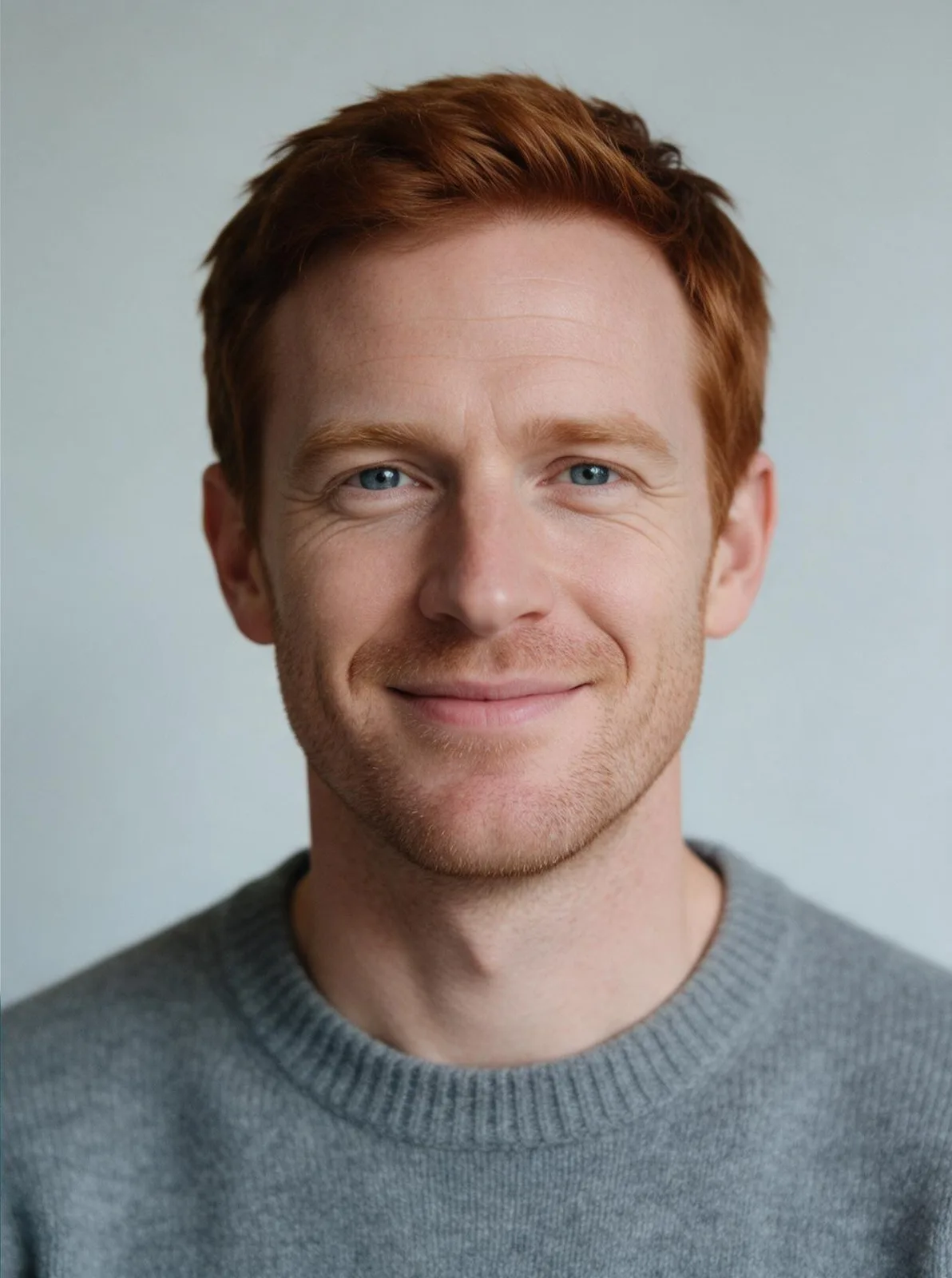 Photo 2
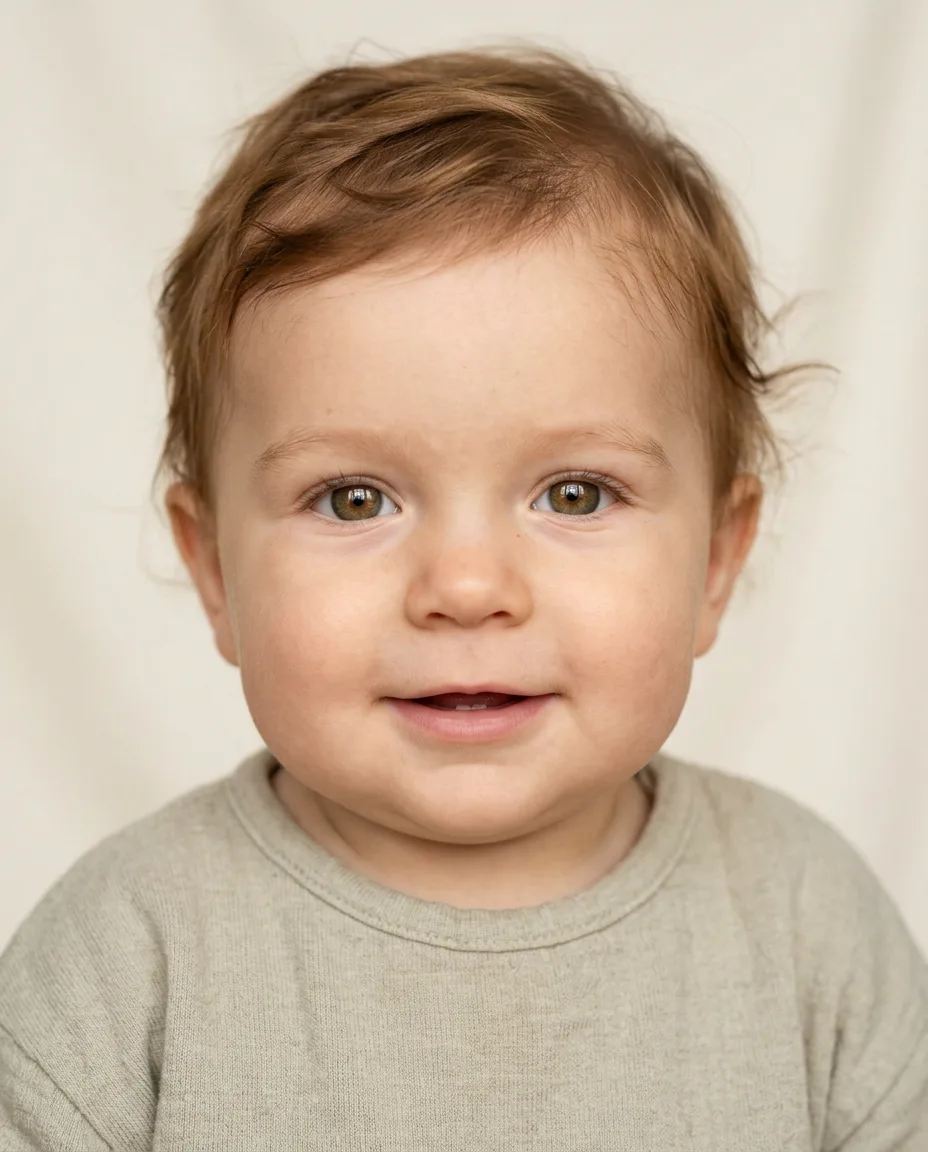 Studio
Image 1 and image 2 each show one adult. Imagine the child these two adults could have together and make a portrait of that child: a baby boy (baby about 9 months old). The child's face is an even mix of both adults: blend their skin tones, eye shape and eye colour, eyebrows, nose, lips, face shape, and hair colour and texture, so that someone who knows both adults would see each of them in the child. It must look like a real baby about 9 months old with age-appropriate proportions, not a small copy of either adult. Head-and-shoulders portrait of the child only, fully clothed in a plain soft cotton top, looking at the camera with a gentle smile, in front of a soft cream studio backdrop. Soft, warm light, sharp focus on the eyes. Photorealistic portrait photo. No adults, no other people, no text, no watermark.
2. Cosy knit: curls and straight dark hair
Pair B uses a fictional woman with black curls and a fictional man with straight dark hair. We chose Girl and Cosy knit, retaining Both and Smile. Compare this result with its own references rather than with Pair A: the inputs and selected portrait styling both changed, so this is not a controlled test of the style setting alone.
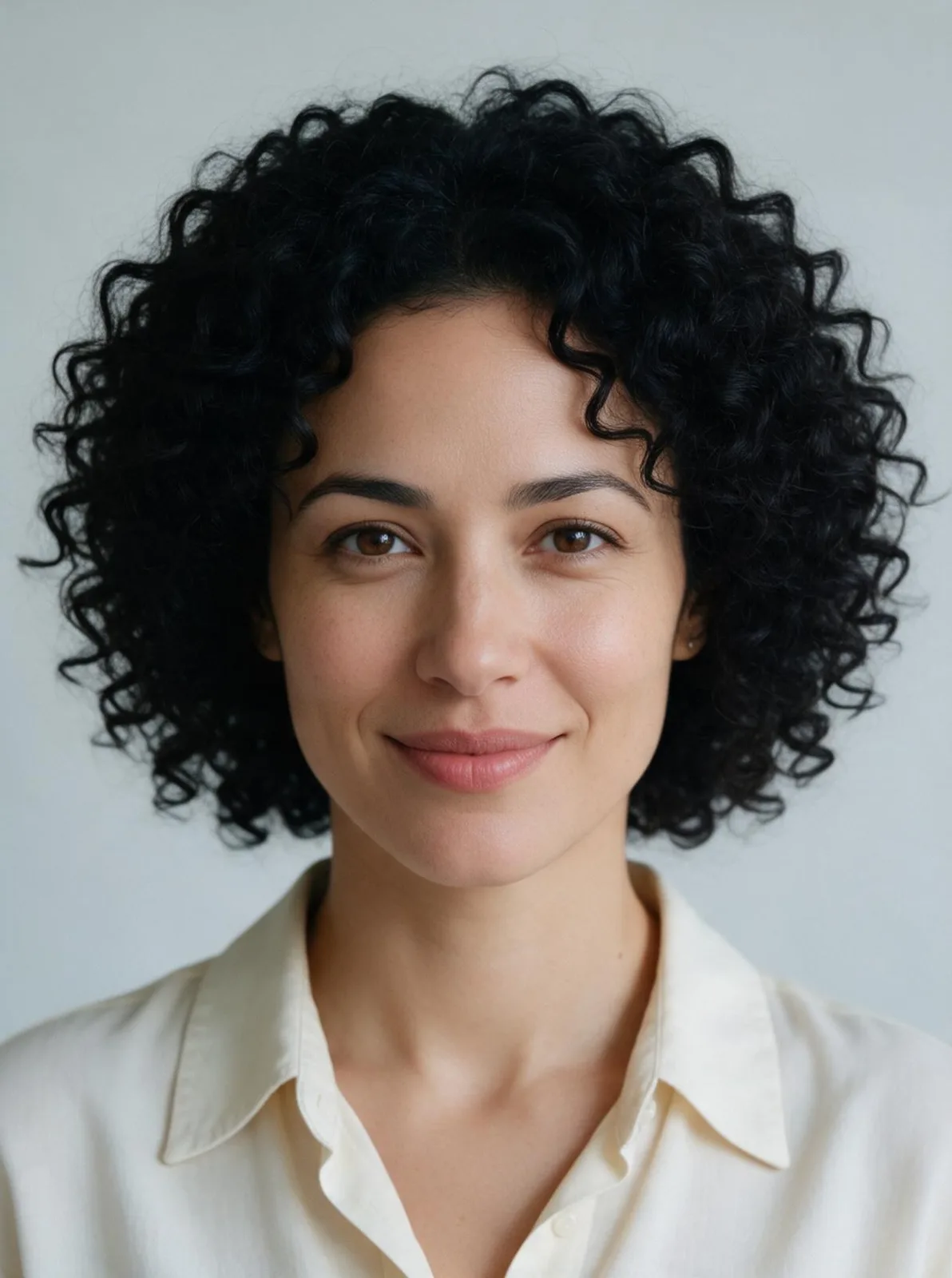 Photo 1
 Photo 2
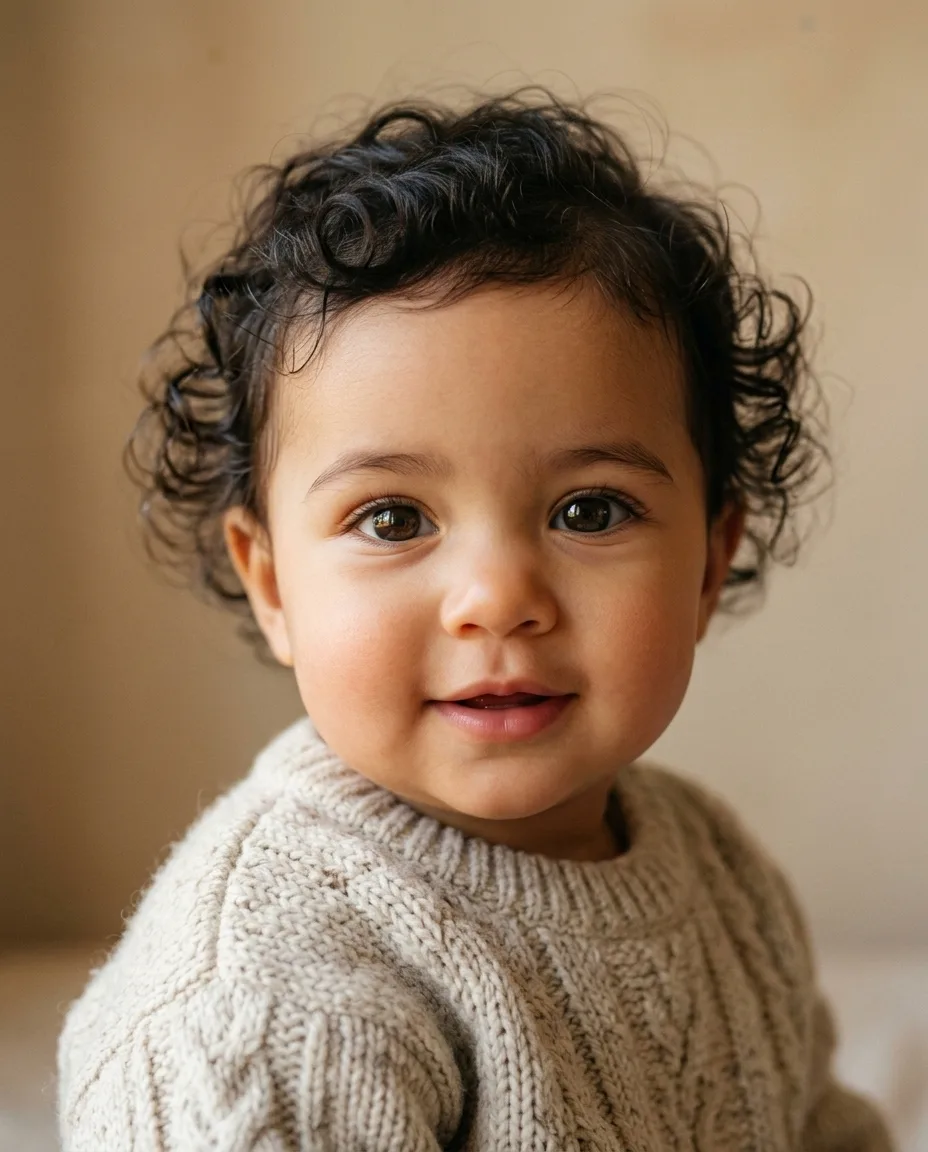 Cosy knit
Image 1 and image 2 each show one adult. Imagine the child these two adults could have together and make a portrait of that child: a baby girl (baby about 9 months old). The child's face is an even mix of both adults: blend their skin tones, eye shape and eye colour, eyebrows, nose, lips, face shape, and hair colour and texture, so that someone who knows both adults would see each of them in the child. It must look like a real baby about 9 months old with age-appropriate proportions, not a small copy of either adult. Head-and-shoulders portrait of the child only, fully clothed in a cosy knit sweater, looking at the camera with a gentle smile, in front of a warm beige backdrop. Soft, warm light, sharp focus on the eyes. Photorealistic portrait photo. No adults, no other people, no text, no watermark.
3. Watercolour: an illustrated keepsake
Pair C uses a fictional woman with short light brown hair and freckles and a fictional man with dark curls. We chose Boy and Watercolour, again keeping Both and Smile. An illustration is useful when you want an obviously imagined keepsake; it also simplifies details, so it is less suitable for judging small differences in resemblance.
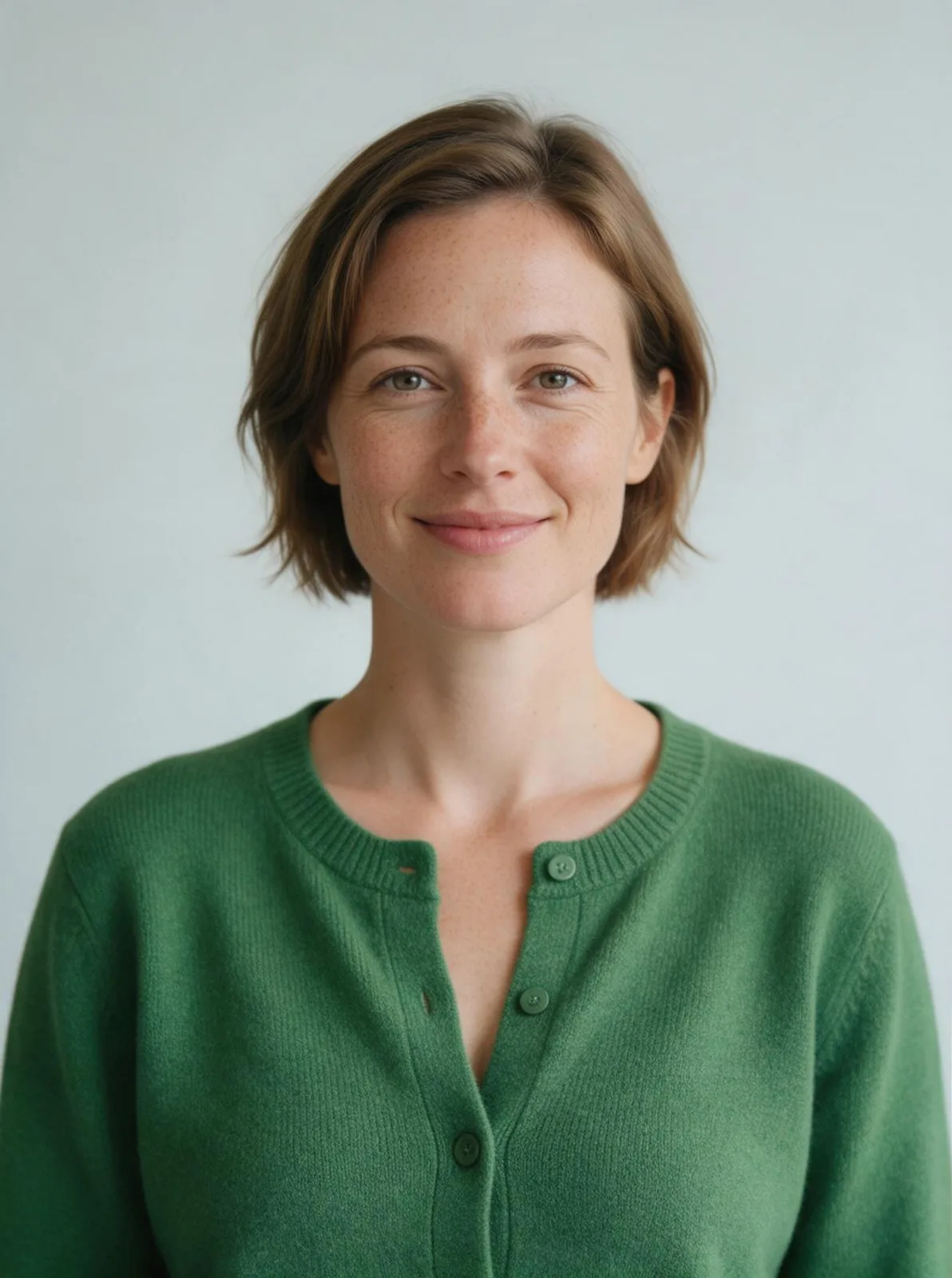 Photo 1
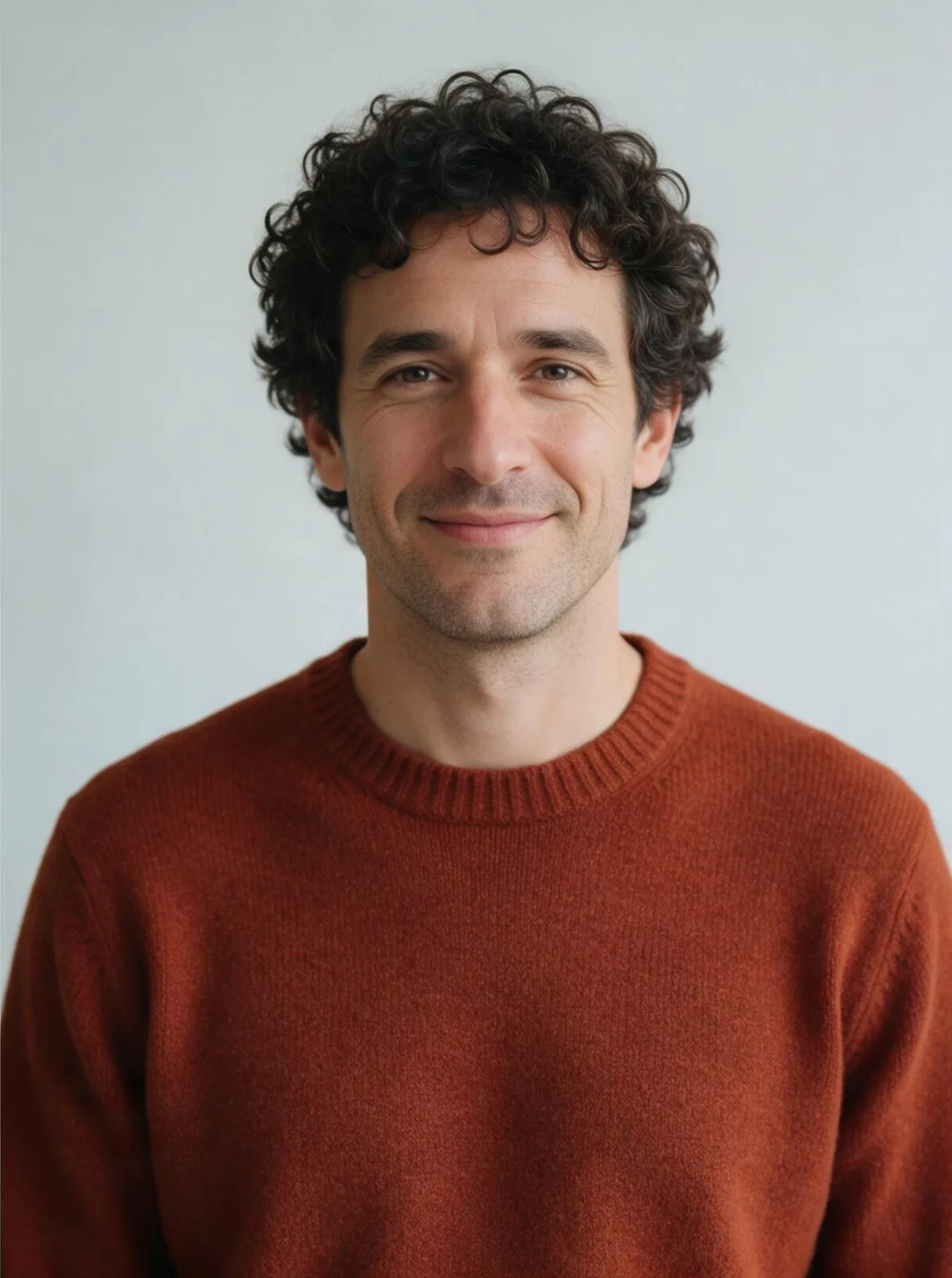 Photo 2
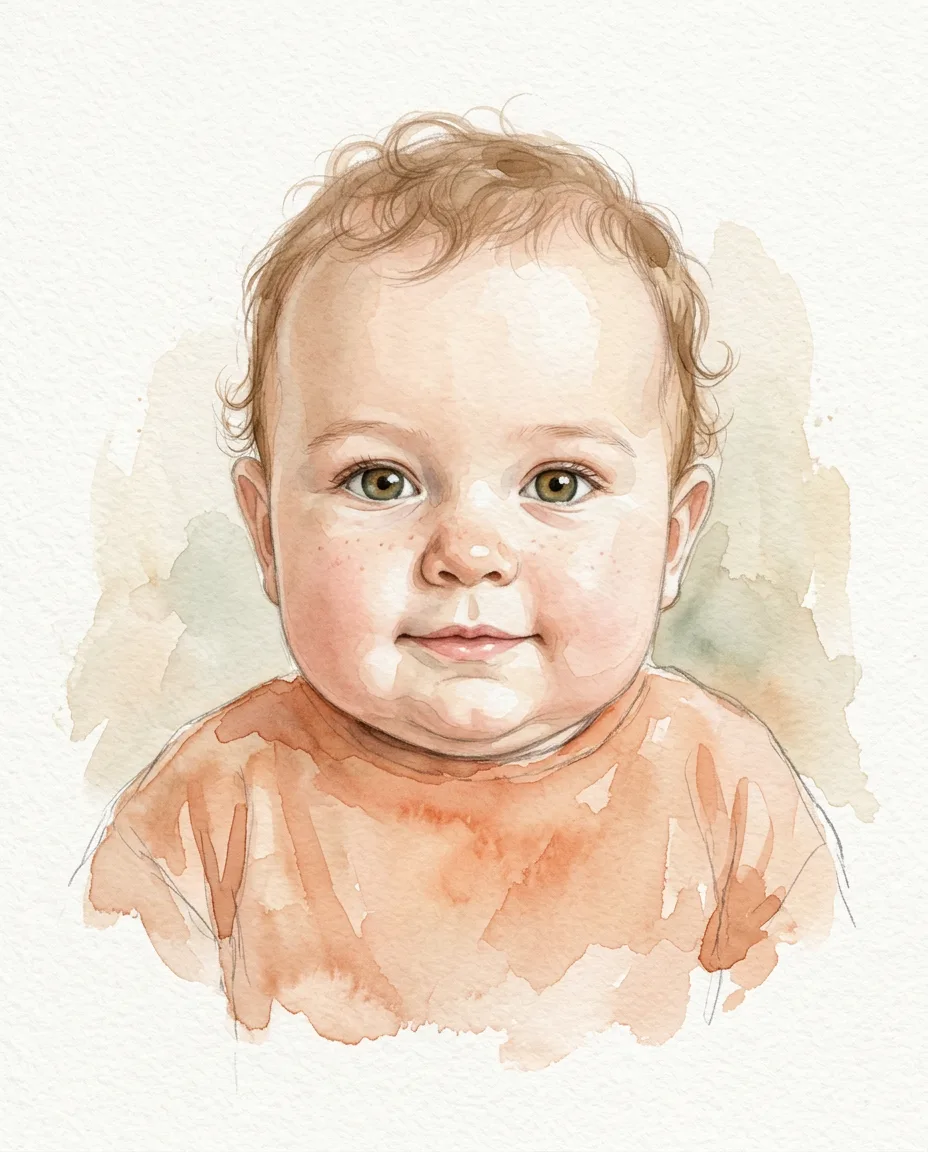 Watercolour
Image 1 and image 2 each show one adult. Imagine the child these two adults could have together and make a portrait of that child: a baby boy (baby about 9 months old). The child's face is an even mix of both adults: blend their skin tones, eye shape and eye colour, eyebrows, nose, lips, face shape, and hair colour and texture, so that someone who knows both adults would see each of them in the child. It must look like a real baby about 9 months old with age-appropriate proportions, not a small copy of either adult. Head-and-shoulders portrait of the child only, fully clothed in a simple cotton top, looking at the camera with a gentle smile, in front of a plain paper background. Soft, warm light, sharp focus on the eyes. Soft watercolour painting on textured paper. No adults, no other people, no text, no watermark.
What actually determines a baby's appearance?
Inherited genetic variation contributes to appearance, and many familiar traits involve several genes. MedlinePlus Genetics explains that both eye color and hair color involve multiple genes; a simple rule about one parent's color being dominant does not capture the whole picture. See the background on eye-color genetics and hair-color genetics. We checked the MedlinePlus explanations and these references on October 29, 2026.
Two face photos do not reveal all the genetic variants someone may pass on. This tool uses visible image references and a written instruction to imagine a portrait; it does not read DNA or calculate inherited probabilities. Asking for Both is a request about the image's resemblance, not a promise of an exact biological mixture. Do not use the output to draw conclusions about parentage, health or a future child's traits.
How can you compare the same prompt across models?
For a fair image comparison, keep the two references, prompt, shape and output size unchanged, then assess which features each model interprets differently. PopNow's comparison page helps you explore supported model comparisons. In the baby tool, Standard, Budget and Best detail are different quality/model choices. We used only Standard here, so the three galleries show different pairs and styles, not evidence that one model is best.
Results in the baby tool stay in your library, are excluded from public galleries and have no public share-link option. These blog examples were generated separately from fictional references for this article; they are not private customer results. If you want a different playful experiment with your own adult photo, the age filter imagines an older appearance. That result is also a creative interpretation.
FAQ
Can AI tell me what our baby will look like?
It can make a portrait inspired by both photos. It cannot tell you what a real baby will look like, even if the result seems convincingly similar to you. Use it as an imagined picture to discuss, not as evidence of future appearance.
What would our baby look like if we run it twice?
Another run can produce a different imagined face from the same references and settings. That variation reflects image generation, not a range of medically calculated probabilities. Start with one result before spending on more versions.
Can I choose who the baby looks more like?
Yes. Looks more like offers Photo 1, Both and Photo 2. These names refer to the upload positions. If you swap the photos, check the selected position again. The setting guides resemblance in the image rather than assigning a genetic percentage.
Can this show what our kids will look like as they grow?
The tool has age choices, but separately generated portraits are not a reliable growth sequence or a record of the same child's future. This guide tests only Baby, about 9 months. Do not interpret different results as stages in a real child's development.
Are my photos and results publicly shared?
The tool keeps results out of public galleries and disables public share links. You can download a result yourself. Use photos of consenting adults and check the current Privacy Policy for the service's data practices; private results do not mean the generator runs entirely on your device.