A pet portrait painting can turn a clear animal photo into an oil portrait, watercolor or graphic print while using the original markings as a reference. Pick a style to match both your pet's character and the place you want to display it. PopNow's pet portrait tool offers all 12 looks below; the last two are festive photo styles rather than paintings.
Which 12 pet portrait painting styles can you choose?
Start with the same source photo when comparing styles. For this guide we generated one fictional adult beagle and one adult tuxedo cat with Seedream 5.0 Flash, then made four dog versions and one cat version on October 29, 2026 with the tool's default Nano Banana 2.1 engine, Standard (1K), portrait 4:5. Each result uses 48 credits; the five examples use 240 credits in total.
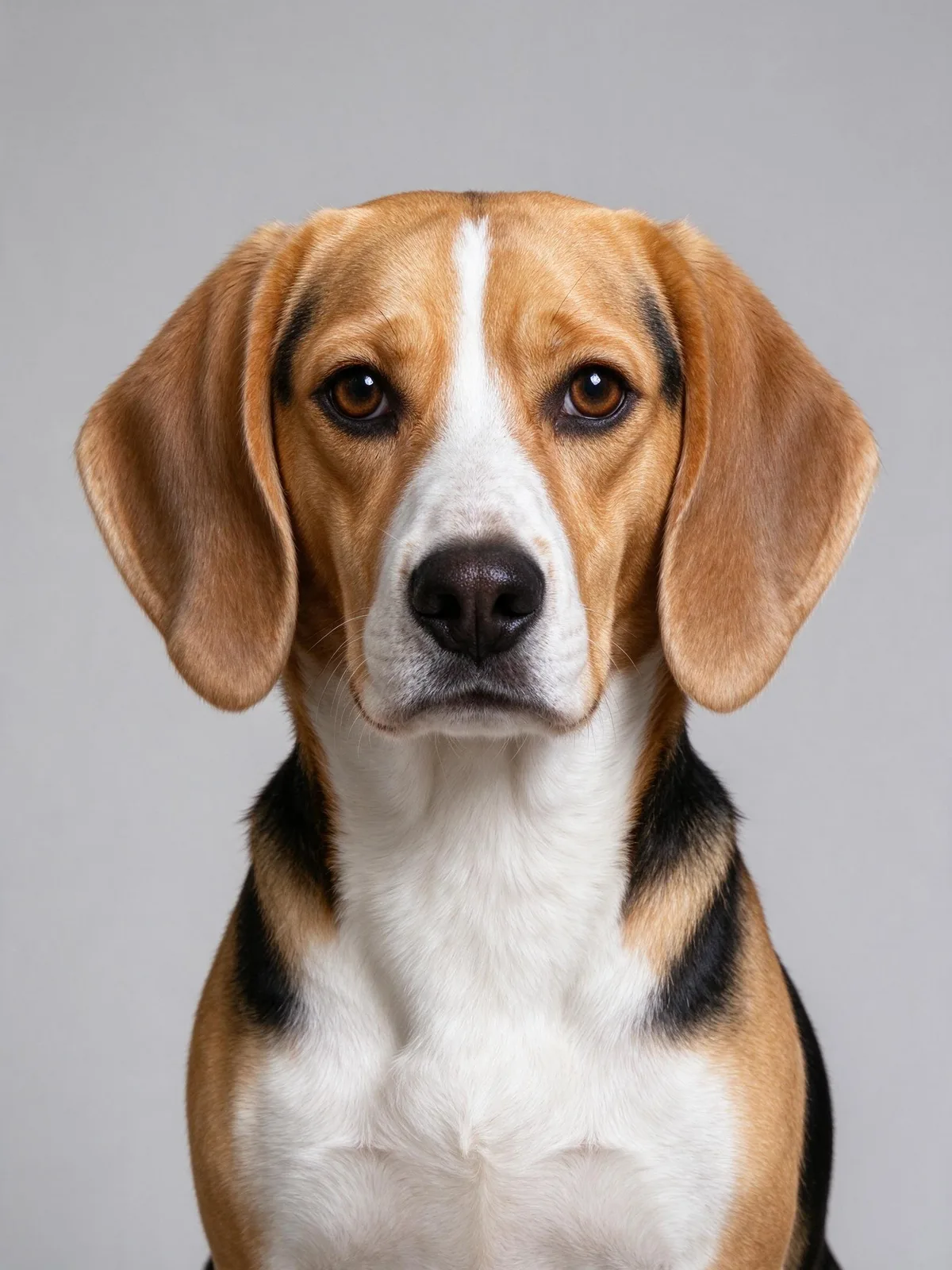 Dog source photo
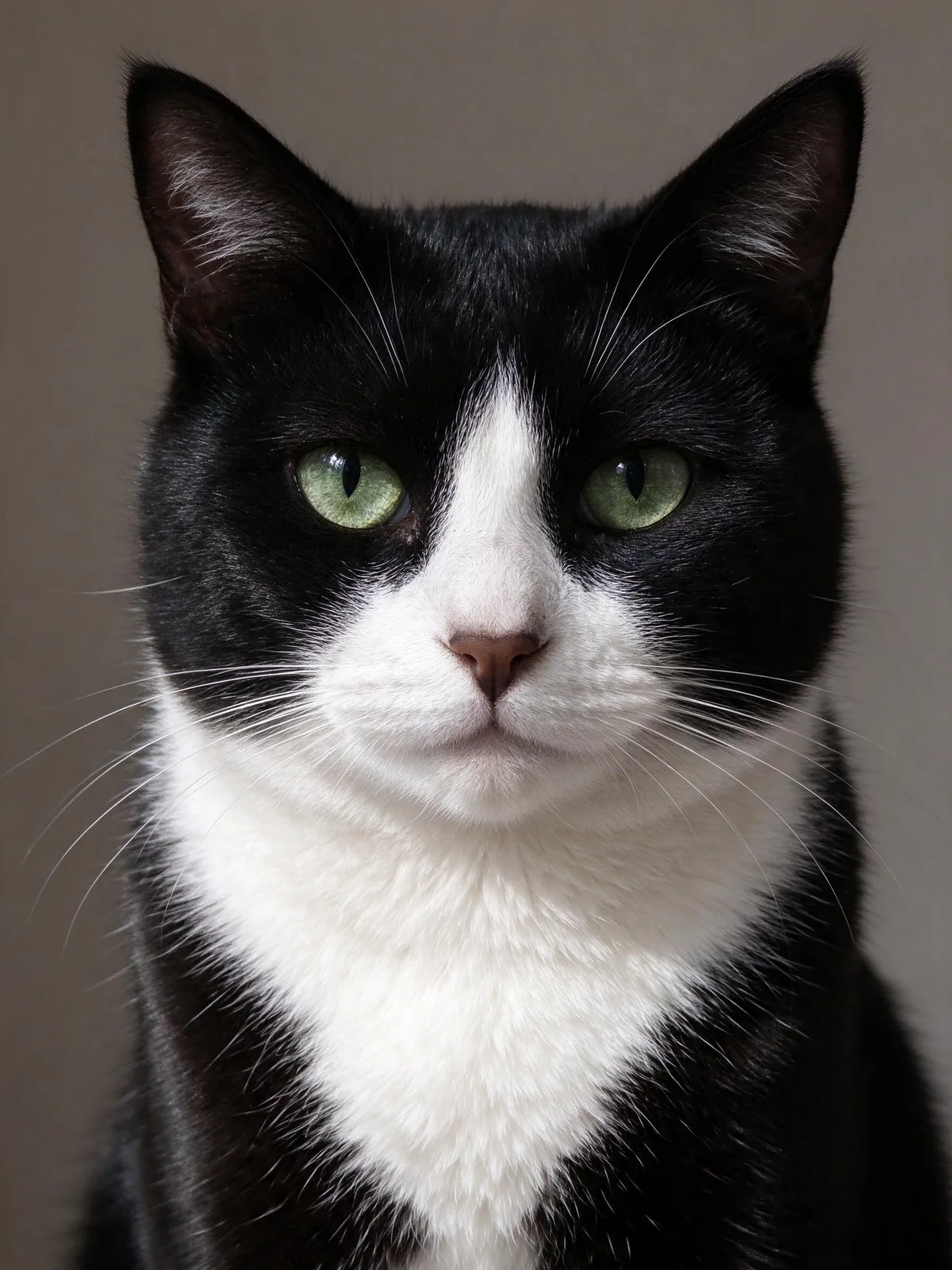 Cat source photo
1. Renaissance noble
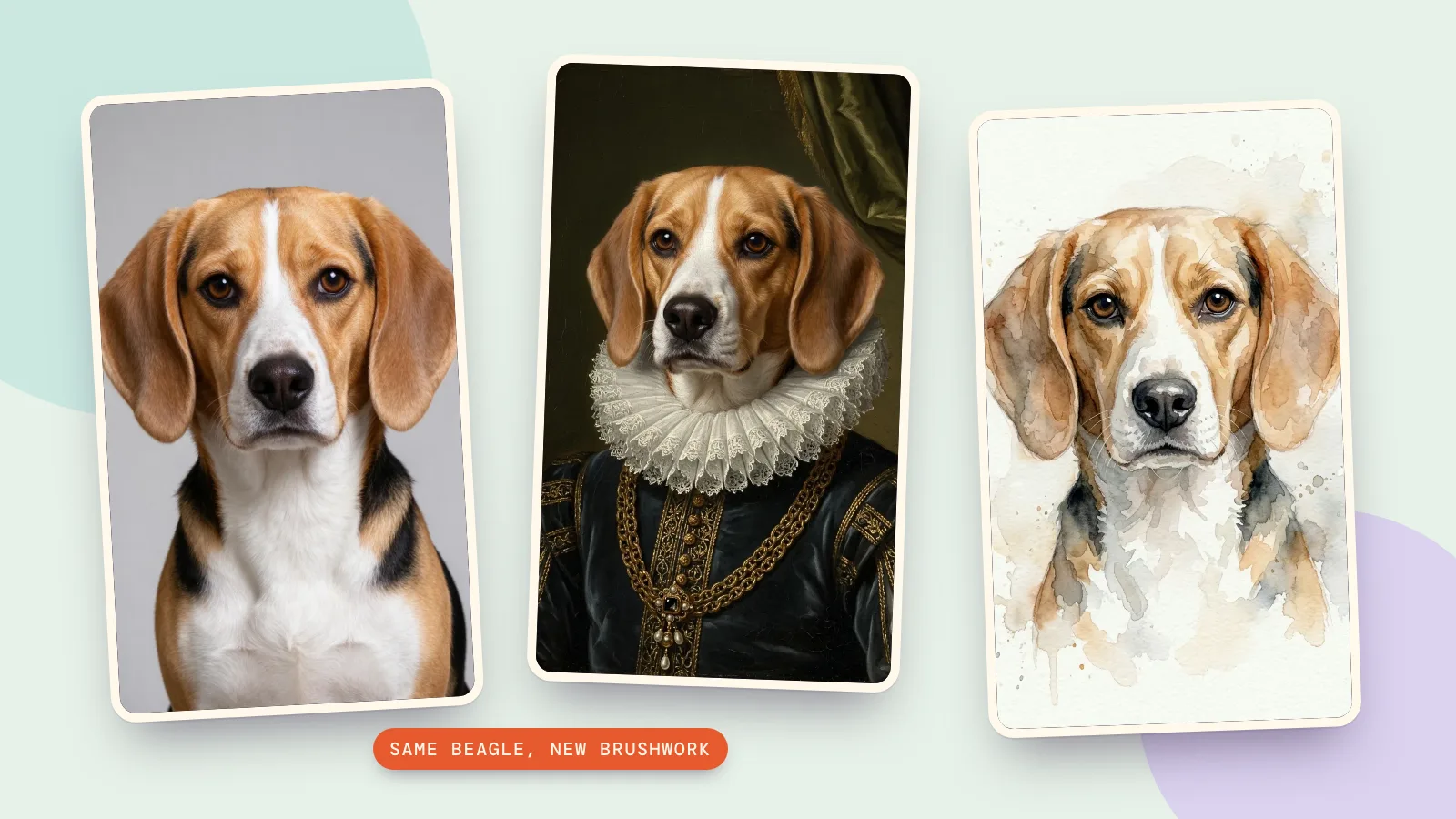
Dark velvet, a lace ruff and an olive background give a dog portrait painting the feel of an old family heirloom. The beagle's hanging ears and white blaze remain easy to compare with the source, while the costume ends below its own neck. This is the tool's starting style.
Before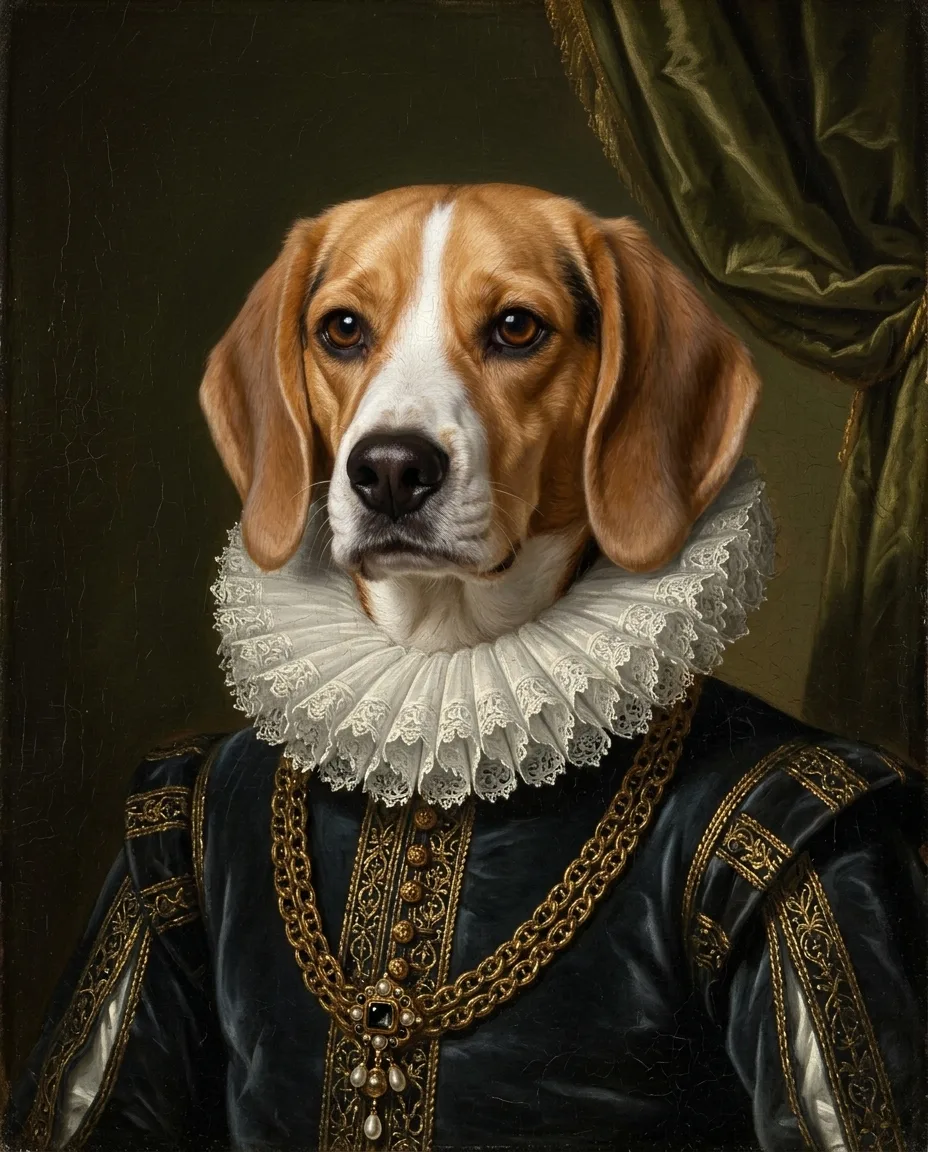 Renaissance noble
2. King or queen
A crown and crimson robe suit the pet who already owns the sofa. We tried this one on the tuxedo cat instead of the dog: compare its green eyes, white muzzle and chest before getting distracted by the gold throne. Small pale markings can be easier to miss in a busy costume.
Before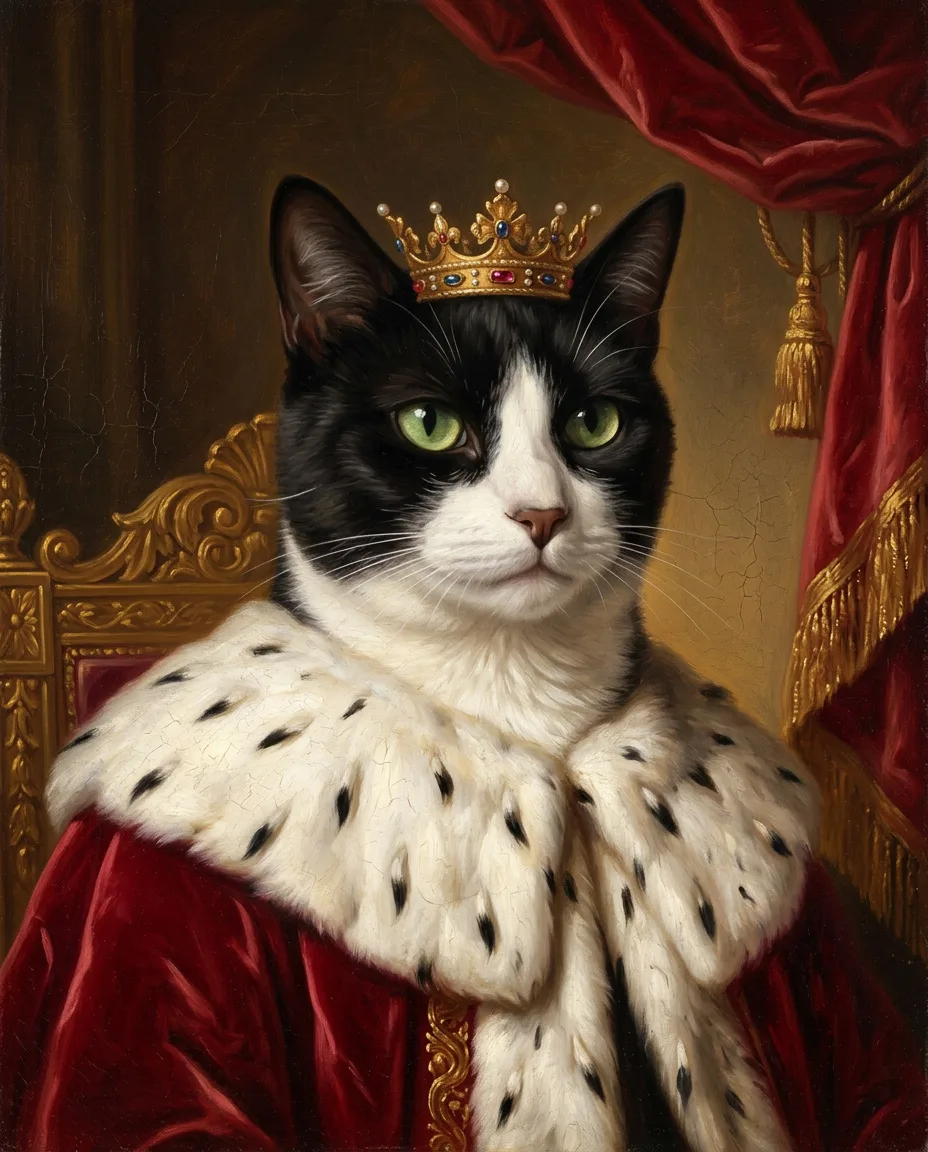 King or queen
3. Victorian oil
Choose a velvet armchair, wood-panelled room and warm lamplight for a quieter traditional portrait. This is a useful alternative when you want pet paintings with an old-fashioned setting but less costume. We did not make a new sample of this style for this guide.
4. The general
Gold epaulettes and a navy coat create a theatrical oil portrait before a stormy sea. The prompt asks for invented medals and excludes real flags or insignia. Choose it for playful grandeur, and keep the animal's eyes and ears visible in the source.
5. Watercolor
Soft washes leave white paper around the head, which works well in a light room or a small gift frame. Our beagle version changes the fur into pigment rather than adding clothing. Check that tan patches have not spread into areas that were white.
Before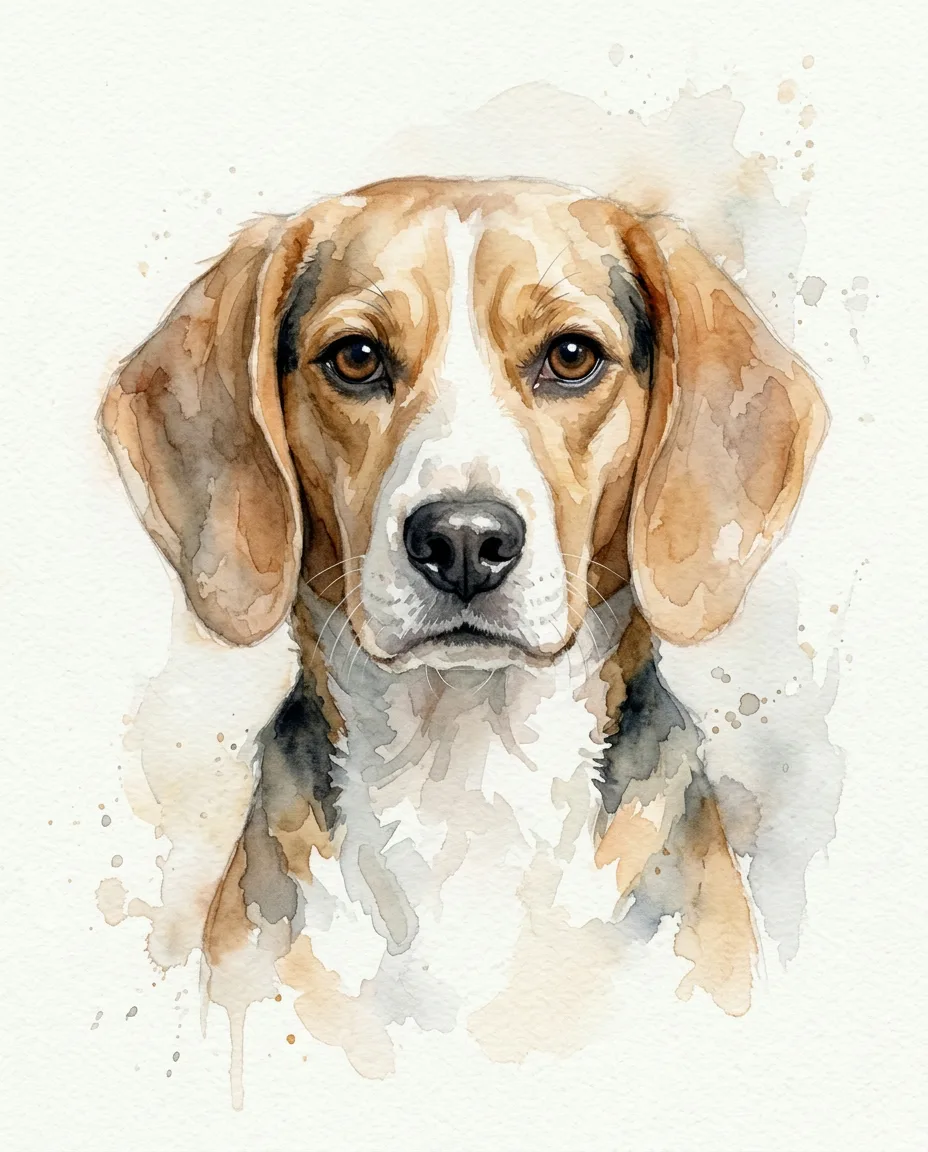 Watercolor
Create a portrait of the pet in this photo as a loose, airy watercolor painting on cold-press paper: soft wet-in-wet washes, delicate pigment blooms, crisp fine detail around the eyes and nose, white paper left showing around the edges and a simple pale background with a few soft splashes. Keep this exact animal instantly recognizable: the same species and breed, the same head shape, ear shape and ear position, muzzle length, the exact fur or feather colors, and the exact pattern and placement of every marking, patch, spot and stripe, the same fur length and texture, and the same eye color (if the two eyes are different colors, keep each eye its own color). It stays a real animal with its natural anatomy: no human hands, no human face, no extra limbs. No text, no signature, no watermark.
6. Ink line art
Contours and light hatching make the ears, nose and expression do most of the work. A colored wash follows the real fur, so this preset is not strictly black and white. It suits a simple gallery arrangement where a detailed oil background would feel too busy.
Before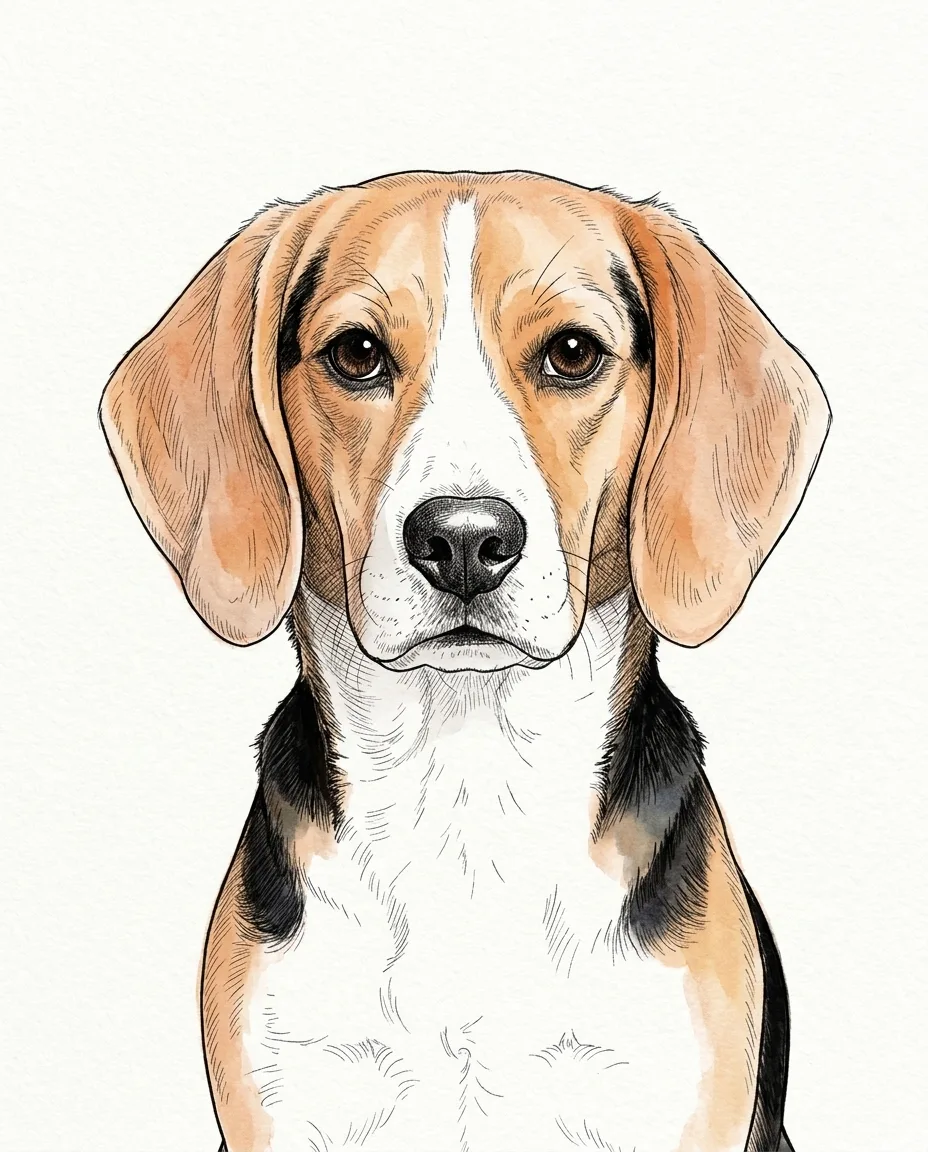 Ink line art
7. Pop art
A hot-pink background, thick outlines and halftone dots make a brighter print. The beagle's markings become flat shapes, so likeness depends more on the arrangement of colors than on individual hairs. Try this for a desk or a colorful room.
Before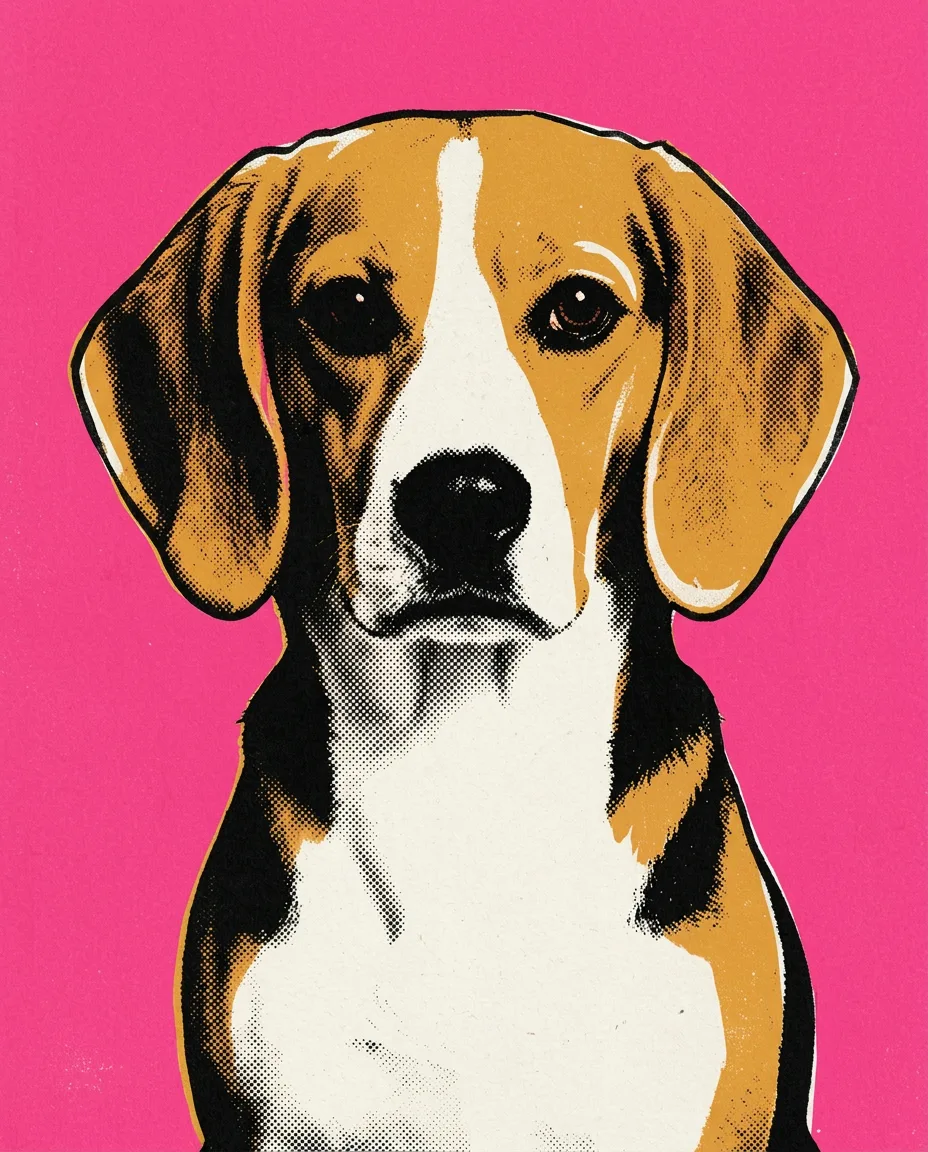 Pop art
8. Ukiyo-e print
Flat colors, carved outlines, a stylized wave and cherry blossom suggest a woodblock print. The preset requests no lettering or seals. Consider it when you want animal portraits with a decorative setting rather than a costume, and inspect the fur colors after the palette changes.
9. Astronaut
A clear helmet and a view of Earth make a storybook space portrait. Start with both ears entirely visible so the helmet has room around them. This is a digital painting idea rather than a claim that your pet wore any real equipment.
10. Steampunk
Brass goggles, leather and copper pipes suit a curious-looking animal. The goggles sit above the eyes in the preset. Keep the source simple: the workshop already brings plenty of detail, and extra instructions can compete with the features you want preserved.
11. Christmas sweater
This preset makes a realistic festive photo with knitwear, lights and presents. Choose it for a seasonal card rather than a painted finish. It is one of the 12 pet styles, but should not be mistaken for a new painting medium.
12. Birthday party
A striped hat, balloons and a little cake create a bright birthday photo. No writing is requested on the cake. Use this for a pet celebration, or choose one of the painted styles above when your goal is a lasting wall print.
How to turn your pet photo into a painting?
- Upload one clear photo with the whole head, ears and both eyes visible. Use a picture you own or have permission to edit.
- Choose Style, starting with one. Try 4 styles at once lets you pick up to four for a side-by-side comparison; each is a separate paid result.
- Keep the same source and Shape while comparing. Portrait 4:5 is the starting shape. Under More options, the default engine is Nano Banana 2.1; Standard uses 48 credits and HD for print uses 72 credits per result.
- Press Paint my pet, then compare the eyes, ear shape and patches with the photo. Four Standard results use 192 credits. Keep the one that feels recognizable before choosing a frame.
- Preview a frame under On the wall, or choose Print for 8×10 inches, 11×14 inches or A4. Read the sharpness note: a 300 dpi export alone does not add original detail. Choose HD or upscale before making a larger print.
What makes a better source photo for animal portraits?
- Light: use a window or open shade. For dark fur, make sure you can still see the eyes and individual patches instead of a black silhouette.
- Eye level: lower the camera rather than looking down from standing height. Keep ears in the frame and avoid a wide-angle lens very close to the nose.
- Head or whole animal: a head-and-chest photo gives facial detail more space. A full-length photo can suit a seated scene, but costume presets deliberately use a chest-up composition.
- One pet: make separate portraits in the same style for a matching pair. Several animals in one source may lead to altered markings or one animal receiving more attention.
How can you compare the same prompt on different models?
The pet tool also offers Seedream 5.0 Flash. We used Nano Banana 2.1 for all five finished examples, so this is a style comparison, not a controlled engine comparison. Use Compare with the same photo, prompt and compatible shape if you want to judge a second model yourself.
For different painting media on an entire photograph, try photo to painting. For a broader set of visual looks beyond paintings, explore image styles. The pet page is the focused choice when keeping fur patterns and animal features matters most.
FAQ
What size should I print a pet painting as a gift?
The tool exports 8×10 inches, 11×14 inches and A4. At 300 pixels per inch, 8×10 needs 2400×3000 pixels; a Standard result has less native detail. Choose HD or upscale, check the sharpness note and order a proof before a large gift print.
Does it keep my pet's markings?
Every preset asks to preserve breed, fur colors, patch positions, ear shape and eye color. That instruction is not a guarantee. Compare both sides of the face and any distinctive chest patch with the original before printing.
Does it work for cats as well as dogs?
Yes. Our cat sample uses the same Nano Banana 2.1 engine and royal preset available on the page. Start with visible eyes and a well-lit coat; choose the style for the room or recipient rather than for a particular breed.
Can I put multiple pets in one painting?
The tool works best with one animal. A shared photo may change one pet more than the other. For a matching set, use separate photos with the same style, shape and quality, then hang the prints together.
Are these physical hand-painted portraits?
No. These are AI-generated digital images inspired by painting and print styles. You download the file and arrange printing yourself; a frame preview helps you judge the display but is not a shipped frame.