


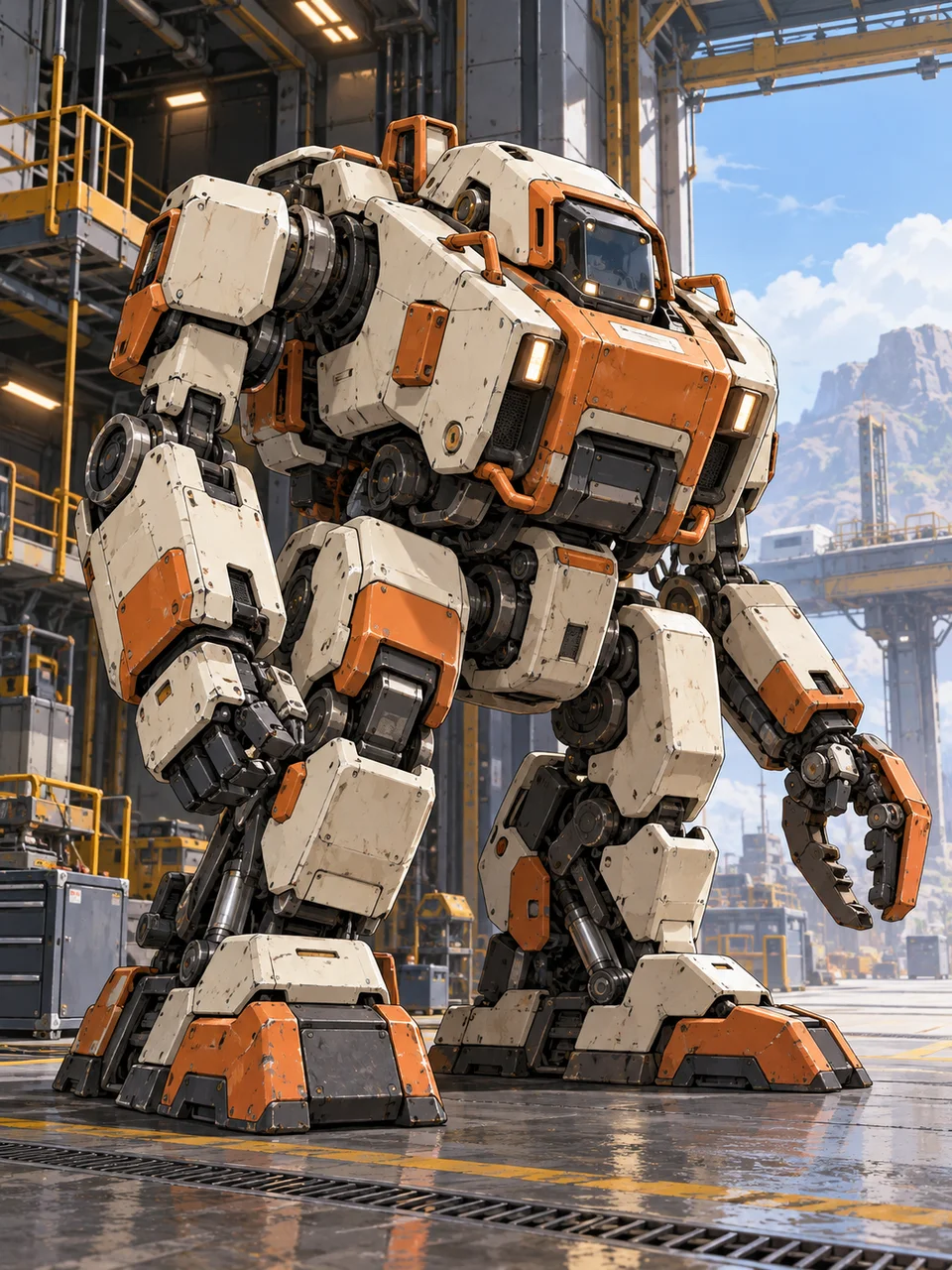
Robot Design AI Art Generator: Industrial Mecha
Functional mechanical design with crisp cel-painted planes.
- From a description only
- Best shape: 3:4 · 4:5 · 1:1
Works on
- Seedream 5.0 Pro
- Qwen Image 3.0
- Nano Banana 2.1
- Seedream 5.0 Flash
About Industrial Mecha
Industrial Mecha approaches science-fiction machinery as equipment with a job to do. The look combines mechanical design drawing with precise cel-animation planes: joints connect moving sections, structural members appear to carry weight, and access panels belong to readable surfaces. A restrained painted palette and selective wear suggest use without burying the design in scratches. Three-quarter framing reveals front and side together, helping a machine feel solid while keeping its overall silhouette clear against a grounded setting.
A harbor lifting robot, a compact greenhouse maintenance walker, a tracked machine moving crates, or an articulated repair unit beside a rail carriage all offer useful design problems. Explain the task, the load, and how the machine stands or moves. The design starts with a written description. A nearby door, railing, or shipping container helps establish scale; specifying broad feet and a low lifting point can make a heavy working machine feel more convincing.
Try “a harbor robot lifting a cargo crate with two broad gripping arms”, “a compact greenhouse maintenance walker carrying water tanks between rows”, or “a rail repair unit with articulated tools beside a stationary carriage”. The job gives each panel and joint a reason to exist. Larger feet and thicker supports imply a heavier load; a smaller chassis with narrow wheels feels suited to light indoor work. Keep the main mechanism visible in a three-quarter view.
Tips
- Lead with the machine's task and cargo. A lifting robot needs a different stance and arm arrangement from a unit built to inspect pipes.
- Name the main joint types you want to see, such as hinged elbows or a rotating shoulder mount, without adding a tangle of loose cables.
- Include a familiar scale cue beside the machine: a doorway for compact equipment or a shipping container for a larger loader.
- Concentrate wear on foot edges, gripping surfaces, and access-panel corners where contact would plausibly happen.
- Use contrasting painted planes to separate the chassis from moving arms, and keep the three-quarter silhouette free of unnecessary attachments.
What the style adds
Your words go where it says “your subject”. Everything else is added for you.
your subject. Render original industrial science-fiction design in precise cel animation. Make joints, access panels and load-bearing structures mechanically coherent, with a restrained painted palette and selective weathering. Keep a clear three-quarter silhouette and grounded scale; avoid franchise emblems, decorative cables or weapon focus.
Models and price
- Seedream 5.0 Pro36 credits
- Qwen Image 3.030 credits
- Nano Banana 2.148 credits
- Seedream 5.0 Flash29 credits
One 1K image from a description. The button always shows the exact price before you spend anything.
How to use Industrial Mecha
- Describe itWrite who or what should be in the picture. A small action and a clear place work best.
- Pick a shapeKeep the suggested ratio and model, or change them in the bar at the bottom.
- Paint itPress “Paint it”. The price is on the button before you spend anything.
Questions about Industrial Mecha
Can I use Industrial Mecha on my own photo?
Not yet. This style works from a description: write what you want to see and the style adds the look.
How much does one Industrial Mecha image cost?
29 credits for one 1K image on Seedream 5.0 Flash. 2K costs more, and the button shows the exact price before you run it.
Can it create a machine that would actually work?
It can suggest coherent joints, weight distribution, and serviceable panels, but the result is a visual concept. Hidden mechanisms and structural connections may still be inconsistent. Use an engineering review before treating any generated machine as a buildable design.
How does Industrial Mecha differ from Limited Cel?
Both use crisp painted shapes, but Industrial Mecha puts machinery and functional relationships first. Limited Cel concentrates on expressive character posture. Choose Industrial Mecha when joints, access panels, material wear, and believable scale should explain the subject.
Do I need a battle scene to make the design interesting?
Working equipment provides plenty of character. A greenhouse walker, dock loader, or maintenance unit has a clear purpose and useful moving parts. Describe a practical task and one environmental obstacle to give the machine an engaging pose.
Similar styles
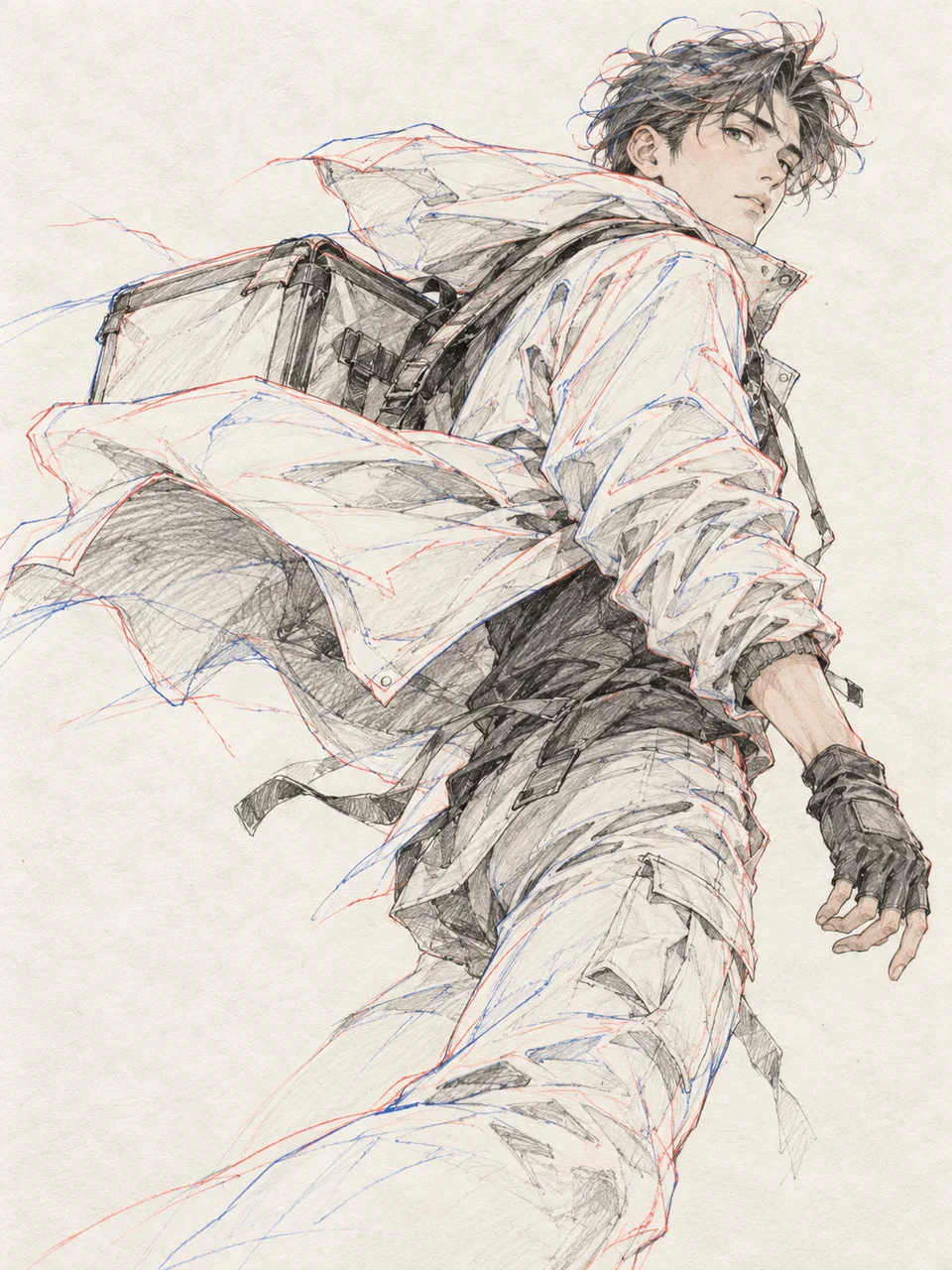 Genga Pencil
 Limited Cel
 Brush Ink Manhua
 Painted Graphic Novel
Bring it to life
Effects that turn a still in this look into a short video.
 Hero Shot
 360 Turntable