

Layered Pencil AI Art Generator: Chromatic Pencil
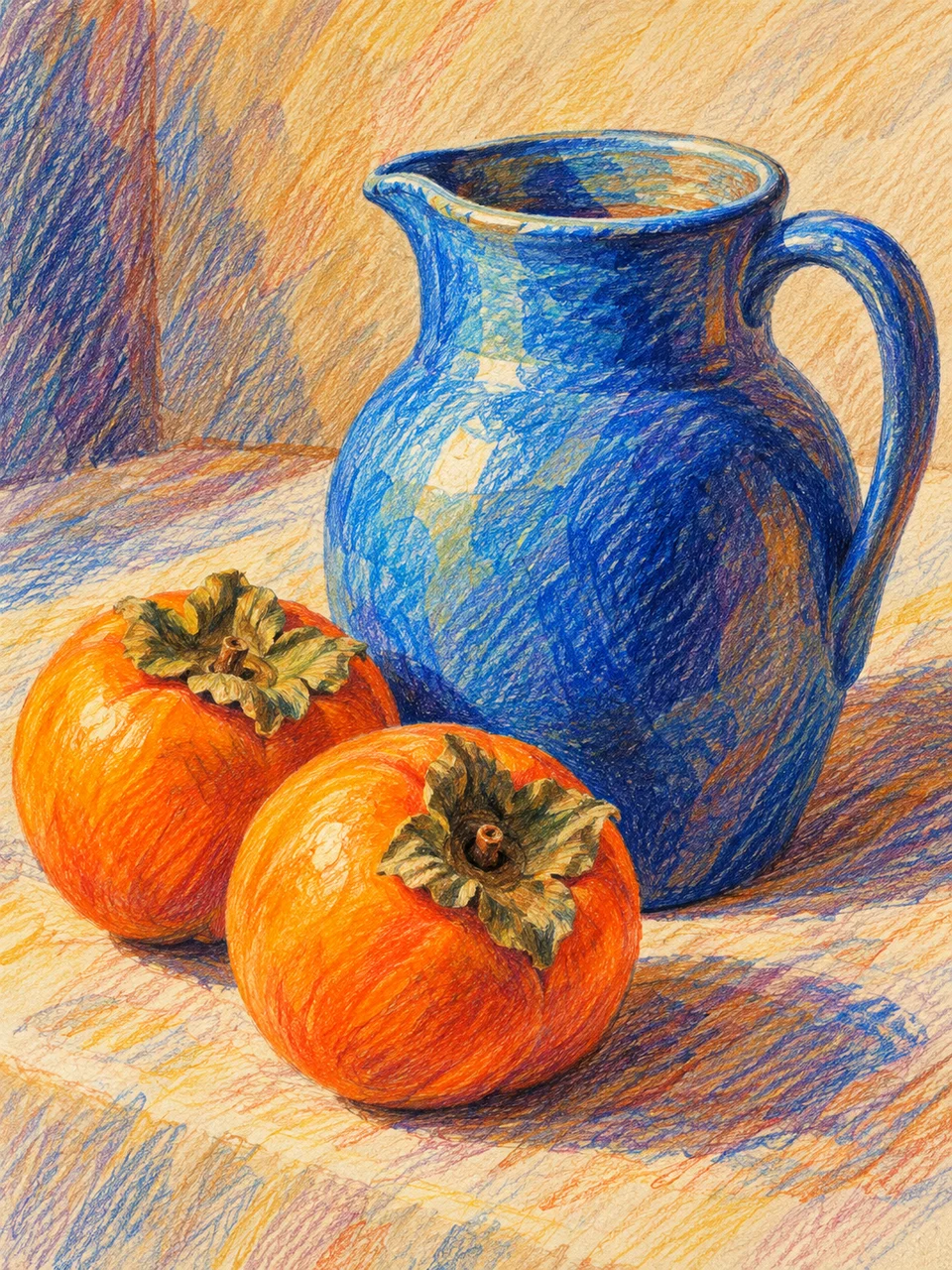
Layered colored lines build form without smooth blending.
- From a description only
- Best shape: 3:4 · 4:5 · 1:1
Works on
- Seedream 5.0 Pro
- Qwen Image 3.0
- Nano Banana 2.1
- Seedream 5.0 Flash
About Chromatic Pencil
Chromatic Pencil uses colored marks as the building blocks of light and volume. It draws on layered colored-pencil practice, where repeated strokes accumulate value and contrasting hues can create lively shadows. Individual directions remain visible: lines curve around a pear, follow a sleeve, or cross the plane of a wall. Warm paper shows between the strokes, and the surface avoids a polished blend. Color relationships supply the depth that black outlines or smooth gradients might otherwise provide.
Try subjects with rounded volumes and changing surfaces: a bowl of persimmons, a person in a blue sweater, a tabby asleep on folded cloth, or a street corner with terracotta roofs. Describe the light direction and the form of the main object. This is a drawing made from a written description. Broad curved surfaces let colored strokes wrap around volume, while textiles and fur give those marks a second purpose as descriptions of texture.
Consider “a bowl of orange persimmons on a blue cloth by a window”, “a seated person in a cobalt sweater holding a yellow mug”, or “a tabby curled on a folded violet blanket”. Each places neighboring colors in a useful relationship. Blue or violet in an orange fruit's shadow makes the warm side feel brighter; a closer crop enlarges the pencil marks and makes their changing direction more apparent across the curved surface.
Tips
- Pair a warm object with a cool support, such as orange fruit on blue cloth, so overlapping hues can build a lively shadow.
- Ask for strokes following the curve of a cheek, sleeve, or bowl. Directional marks explain volume even without smooth blending.
- Keep the darkest areas colored by describing violet, indigo, or deep green shadows instead of solid black patches.
- A close still life gives the pencil marks room to remain visible; a distant crowd tends to compress them into indistinct specks.
- Choose brushed fabric, fur, or ribbed pottery when you want the pencil direction to describe both shape and surface texture.
What the style adds
Your words go where it says “your subject”. Everything else is added for you.
your subject. Construct the image from overlapping colored pencil strokes in complementary hues, leaving individual directional marks visible. Build shadows through layered color rather than black. Keep warm paper and observed proportions; avoid smooth airbrush blending, heavy wax shine or a simple outline-and-fill coloring-book treatment.
Models and price
- Seedream 5.0 Pro36 credits
- Qwen Image 3.030 credits
- Nano Banana 2.148 credits
- Seedream 5.0 Flash29 credits
One 1K image from a description. The button always shows the exact price before you spend anything.
How to use Chromatic Pencil
- Describe itWrite who or what should be in the picture. A small action and a clear place work best.
- Pick a shapeKeep the suggested ratio and model, or change them in the bar at the bottom.
- Paint itPress “Paint it”. The price is on the button before you spend anything.
Questions about Chromatic Pencil
Can I use Chromatic Pencil on my own photo?
Not yet. This style works from a description: write what you want to see and the style adds the look.
How much does one Chromatic Pencil image cost?
29 credits for one 1K image on Seedream 5.0 Flash. 2K costs more, and the button shows the exact price before you run it.
Will the finished image have smooth blended shading?
Visible strokes are part of the result. Layers overlap to suggest volume, but small paper gaps and shifts in direction remain. If you describe a round object with clear side light, the form can still feel solid without a smooth finish.
How is Chromatic Pencil different from Watercolor?
Watercolor lets transparent washes spread and merge across paper. Chromatic Pencil constructs its color from accumulated linear marks. It offers more visible direction and a drier surface, especially in fabric folds, fur, and shadows built from complementary colors.
Does this work for a portrait with natural proportions?
Yes, a clearly described pose and facial structure can support an observed drawing. Skin will still be interpreted through colored strokes. A single face with gentle side light gives the drawing more room than several small faces in one frame.
Similar styles
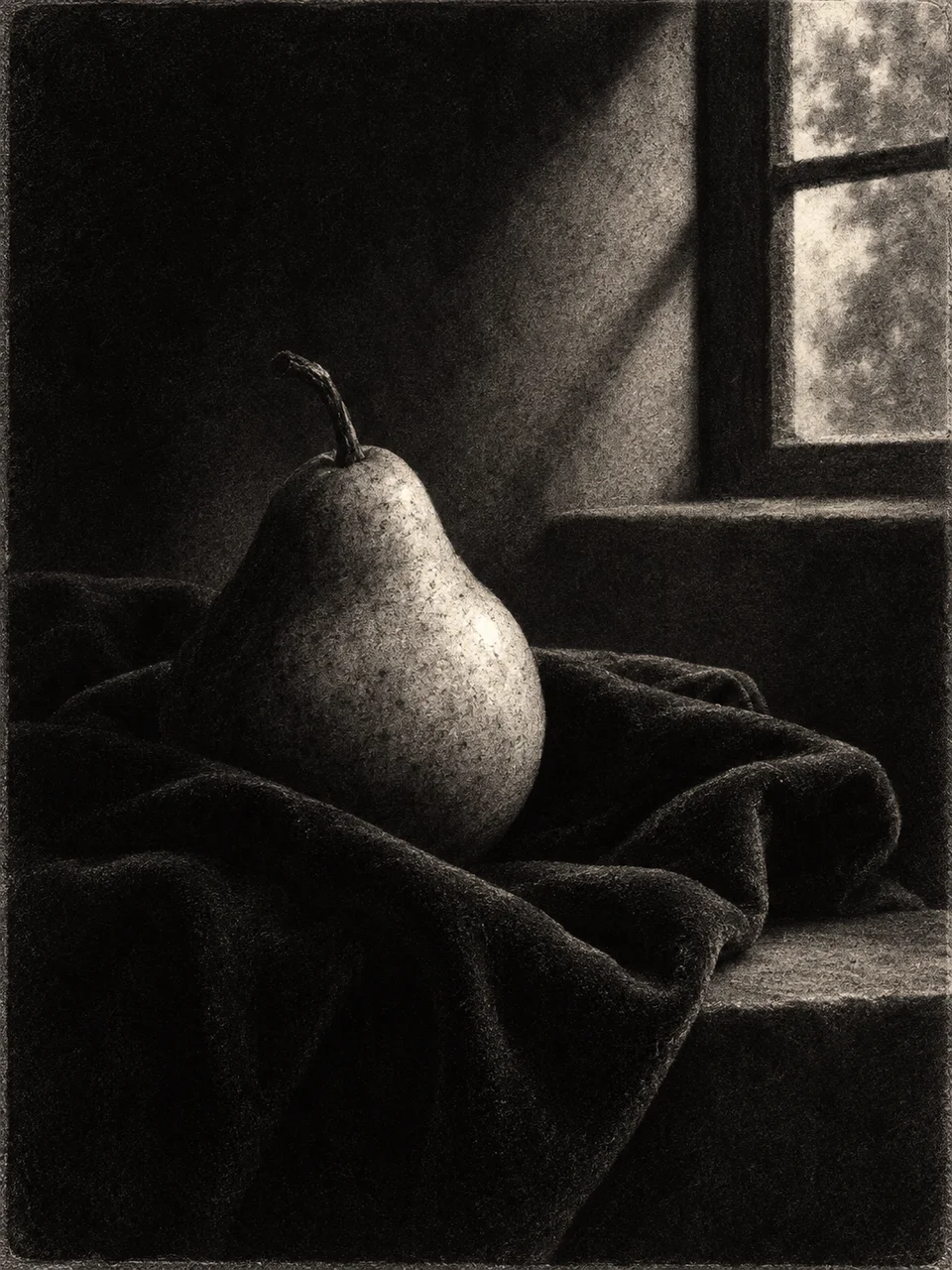 Mezzotint Velvet
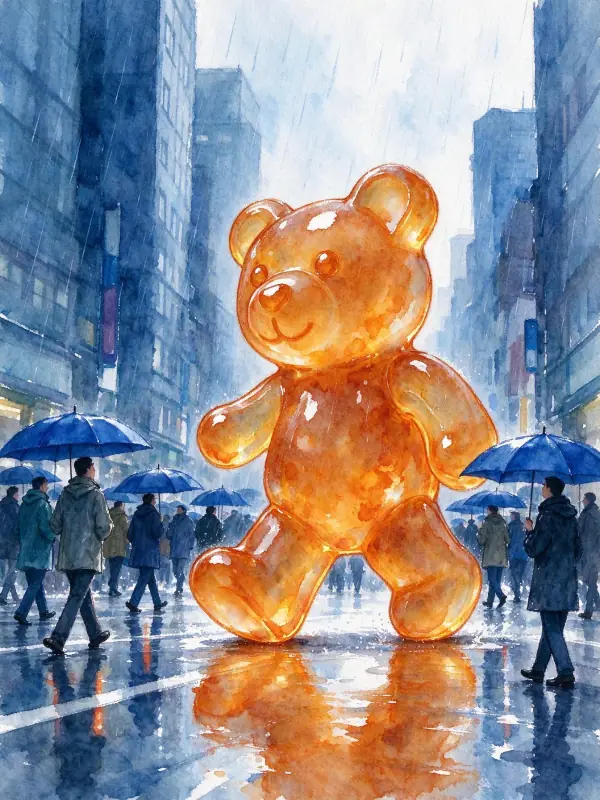 Watercolor
 Paper collage
 Aquatint Atmosphere
Bring it to life
Effects that turn a still in this look into a short video.
 The Turn
 Hair in the Wind