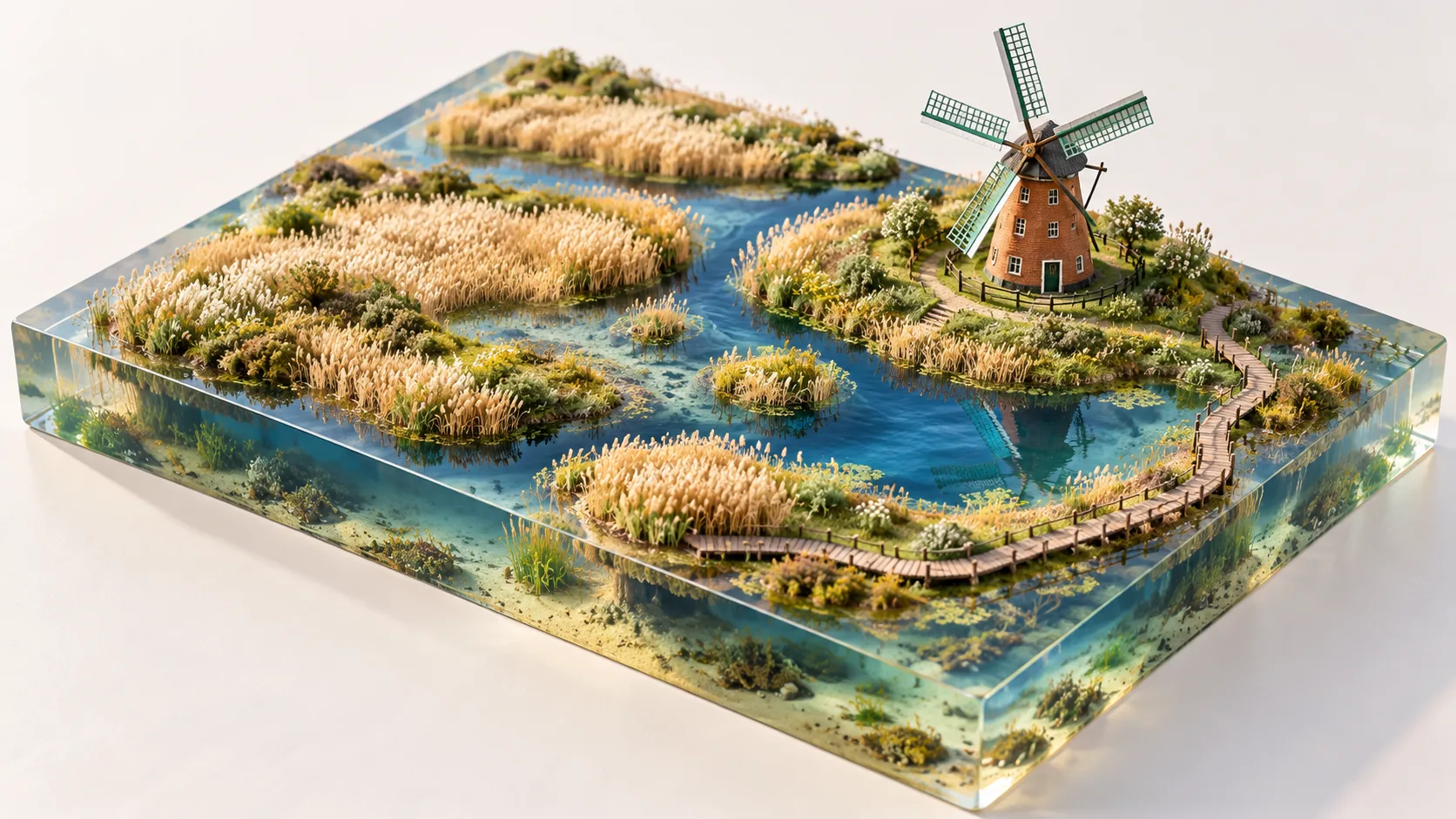
Resin Windmill Marsh, made with GPT Image 2.5 Sunburst
Example made with GPT Image 2.5 Sunburst

Text to image3D & miniatures

GPT Image 2.5 Sunburst isometric miniature promptResin Windmill Marsh

The exact text-to-image prompt behind this picture, made with GPT Image 2.5 Sunburst.

Prompt

Wide 16:9 landscape frame. A small isometric marsh landscape sits in a shallow clear resin slab, with cream reeds, cobalt channels and a single terracotta drainage windmill whose mint blades catch the light. A narrow wooden path follows the irregular island edge. Precision 3D diorama rendering, bright spring studio illumination, translucent water depth and matte sculpted vegetation, clear simple shapes and a restful miniature geography, no text.

Prompts are kept in their original English to help reproduce the example. Copy one as it is, or adapt it for your project.

Opens GPT Image 2.5 Sunburst with this prompt and the settings below filled in.

135 tested GPT Image prompts →

Settings

Mode
Text to image
Aspect ratio
16:9
Quality
high
Price
From 2 credits

The exact price shows before you generate.

Make your own version

  1. Precision 3D diorama rendering sets the whole feel of the shot. Swap it for another camera style to change the vibe.
  2. The prompt ends with no text. Leave that in, or the model may add random lettering.

Style prompt guide

Style traits to keep

A tabletop resin diorama pairs an isometric marsh island with a miniature terracotta windmill, cast inside a pristine block of clear resin. GPT Image 2.5 Sunburst renders the interplay between translucent aquatic depths and matte clay textures with clean edge separation. The composition succeeds by contrasting architectural precision against organic wetlands under soft, diffuse studio lights.

This miniature diorama style relies on toy-like simplification combined with clean, tactile physical materials.

Palette
Curated pastel and mineral tones like cream, cobalt, terracotta, and mint replace realistic swamp hues, keeping the scene feeling modern and intentional.
Texture
High contrast between clear glossy resin water and chalky matte foliage produces a convincing crafted model look rather than digital CGI gloss.
Composition
An isometric floating island view isolates the scene against a clean plane, turning a natural ecosystem into a collectible art object.
Light
Bright spring studio illumination wraps gently around miniature features, creating clean edge highlights on tiny blades without blowing out subtle resin refraction.

What defines this look

  1. Format and scene anchorWide 16:9 landscape frame. A small isometric marsh landscape sits in a shallow clear resin slab,

    It defines the angled tabletop perspective and encases the diorama within transparent resin. Omitting this causes the model to generate a sprawling realistic landscape instead of a self-contained miniature object.

  2. Focal subject and palettewith cream reeds, cobalt channels and a single terracotta drainage windmill whose mint blades catch the light.

    This specifies the primary mechanical landmark alongside distinct color cues. Without these specific pigment pairings, the wetland default shifts toward murky greens and browns, losing the stylized designer palette.

  3. Secondary scale indicatorA narrow wooden path follows the irregular island edge.

    The tiny walkway grounds the human scale against the windmill while tracing the boundary of the landmass. Removing it leaves the terrain looking like an abstract land blob rather than an engineered diorama.

  4. Rendering medium and lightingPrecision 3D diorama rendering, bright spring studio illumination,

    This locks in the clean commercial 3D aesthetic and neutral, shadow-softened lighting. Swapping this for natural sunlight will introduce harsh directional shadows that obscure subtle resin transparencies.

  5. Material finishes and stylingtranslucent water depth and matte sculpted vegetation, clear simple shapes and a restful miniature geography, no text.

    It forces a tactile contrast between glossy liquid surfaces and clay-like plant foliage while preventing clutter. Cutting this phrase prompts the generator to add hyper-detailed, noisy realism that breaks the calm miniature look.

Same style, new subjects

Resin City Crossroad

Applies the clean resin diorama style to an urban street corner for an architectural showcase.

Prompt

Wide 16:9 landscape frame. A small isometric city intersection sits in a shallow clear resin slab, with charcoal asphalt, ochre crosswalks and a single brick corner bakery whose striped awning catches the light. A narrow sidewalk follows the block edge. Precision 3D diorama rendering, bright spring studio illumination, translucent glass windows and matte sculpted brickwork, clear simple shapes and a restful miniature geography, no text.

Resin Cat Garden

Translates the miniature cast-resin treatment into a peaceful garden scene featuring a sleeping domestic pet.

Prompt

Wide 16:9 landscape frame. A small isometric backyard patio sits in a shallow clear resin slab, with slate pavers, cobalt ceramic pots and a single resting tabby cat whose curled tail catches the light. A narrow gravel path follows the lawn edge. Precision 3D diorama rendering, bright spring studio illumination, translucent resin pond depth and matte sculpted foliage, clear simple shapes and a restful miniature geography, no text.

Resin Tea Station

Uses the diorama slab aesthetic for a stylized still life setup focused on tabletop objects.

Prompt

Wide 16:9 landscape frame. A small isometric tea ceremony setup sits in a shallow clear resin slab, with bamboo slats, white porcelain cups and a single cast-iron kettle whose steam vents catch the light. A narrow tray rim follows the wooden base edge. Precision 3D diorama rendering, bright spring studio illumination, translucent tea liquid depth and matte sculpted stoneware, clear simple shapes and a restful miniature geography, no text.

Model and settings

Keep the 16:9 aspect ratio to provide enough horizontal clearance for the wide isometric resin slab and its borders. Set quality to high so GPT Image 2.5 Sunburst resolves the delicate boundaries where clear resin meets sculpted clay banks without smearing. Because this is standard text-to-image creation, run in t2i mode without input pictures. If you switch to portrait 9:16 for mobile wallpapers, reduce the horizontal expanse to keep the floating island centered.

  • Seedream 5.0 ProPick Seedream 5.0 Pro when you want to feed in reference photos of physical resin casting crafts or custom diorama models, leaning into its strength with multi-reference guidance.
  • FLUX.2 ProChoose FLUX.2 Pro if you need exact hex color calibration for the cobalt water and terracotta structure while maintaining crisp studio photorealism.

When the style drifts

The marsh looks like an ordinary outdoor photo instead of a tabletop craft model.
Reassert shallow clear resin slab and add isometric miniature scale model sitting on a neutral studio workbench to enforce physical object boundaries.
Water appears murky or opaque, hiding submerged marsh features.
Replace translucent water depth with crystal-clear transparent poured epoxy resin with visible submerged sediment layers.
The model adds tiny text, signs, or scale figures that clutter the clean design.
Strengthen the ending by specifying pure geometric diorama, completely unpopulated, clean surfaces, no signage, no text.

Questions about this style prompt

How do I make the resin slab look completely transparent?

Emphasize physical materials by specifying clear poured epoxy or acrylic glass slab. Mention that internal terrain features and water channels remain visible through the sides of the block.

Can I swap the windmill for a modern building in this style?

Yes. Replace the terracotta windmill clause with your chosen architecture, such as a modernist concrete cabin or a tiny glass pavilion, keeping the matte sculpted finish and designated accent colors intact.

Why are the colors turning out muddy instead of clean and stylized?

Natural marsh prompts often pull in drab greens and browns. Counteract this by explicitly naming contrasting designer hues like cobalt, cream, terracotta, or mint, and retaining studio lighting prompts to prevent dark shadows.