
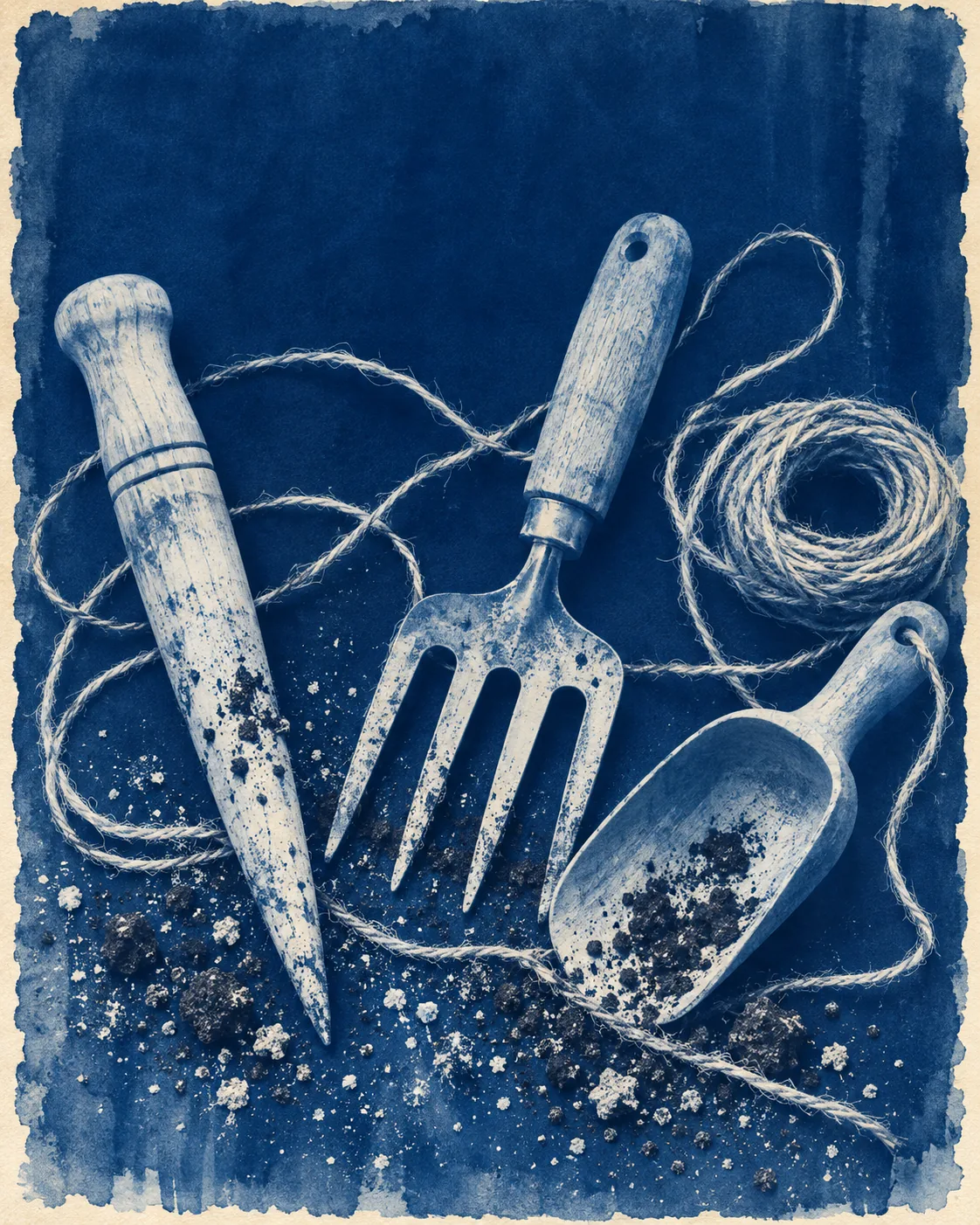
Tools In Blue, made with GPT Image 2.5 Sunburst
Example made with GPT Image 2.5 Sunburst

Text to imageArt & posters

GPT Image 2.5 Sunburst art style promptTools In Blue

The exact text-to-image prompt behind this picture, made with GPT Image 2.5 Sunburst.

Prompt

Vertical 4:5 portrait frame. A cyanotype print records the overlapping silhouettes of a wooden dibber, hand fork, seed scoop and loose lengths of garden twine on rich cobalt paper. Small clumps of soil create delicate pale speckles near the bottom, while the upper margin stays open. Direct sunlight exposure with imperfect cream edges and subtle washing streaks, tactile handmade photographic art, orderly practical beauty and springtime possibility, no logos, no text.

Prompts are kept in their original English to help reproduce the example. Copy one as it is, or adapt it for your project.

Opens GPT Image 2.5 Sunburst with this prompt and the settings below filled in.

135 tested GPT Image prompts →

Settings

Mode
Text to image
Aspect ratio
4:5
Quality
high
Price
From 2 credits

The exact price shows before you generate.

Make your own version

  1. The prompt ends with no text. Leave that in, or the model may add random lettering.

Style prompt guide

Style traits to keep

Gardening hand tools cast stark, sun-printed silhouettes across deep Prussian blue paper in a classic botanical cyanotype aesthetic. GPT Image 2.5 Sunburst handles the distinct chemical process look by combining sharp negative-space shapes with analog imperfections like water wash marks and speckled soil textures. This balance gives the composition an authentic 19th-century darkroom feeling.

The historical cyanotype look relies on photochemical contact-printing traits rather than modern digital blues. These four visual characteristics ensure the output feels genuine and handcrafted.

Palette
Dominated by deep ferric cobalt and Prussian blue tones contrasted against raw, off-white and cream negative spaces. Any stray modern hues ruin the monochrome chemical illusion.
Texture
Subtle paper fibers, uneven water washing streaks, and natural granular speckles mimic hand-brushed emulsion on heavy watercolor paper.
Light
Characterized by flat, contact-print silhouettes formed by harsh direct sunlight, leaving crisp object outlines without complex 3D studio shadows.
Composition
Layered tool silhouettes with deliberate negative margins preserve the orderly, scientific specimen arrangement popular in historic archival prints.

What defines this look

  1. medium and format setupVertical 4:5 portrait frame. A cyanotype print records

    It forces the generator to emulate historical sun-printing techniques rather than a digital graphic illustration. Removing this results in a standard color photograph of garden tools on a blue background.

  2. subject and color basethe overlapping silhouettes of a wooden dibber, hand fork, seed scoop and loose lengths of garden twine on rich cobalt paper.

    It defines the core items and commands the deep Prussian cobalt tone characteristic of iron-salt emulsions. Changing these objects alters the theme while keeping the negative-exposure stencil effect intact.

  3. composition and grit detailsSmall clumps of soil create delicate pale speckles near the bottom, while the upper margin stays open.

    It anchors the base with organic texture and leaves negative space at the top for visual breathing room. Omitting it leads to an overly sterile, evenly spaced placement across the sheet.

  4. analog process artifactsDirect sunlight exposure with imperfect cream edges and subtle washing streaks,

    It introduces darkroom realism through contact-print edge fading and chemical rinse gradients. Without this phrase, the background turns flat digital blue without handcrafted paper flaws.

  5. mood and negative constraintstactile handmade photographic art, orderly practical beauty and springtime possibility, no logos, no text.

    It reinforces paper texture and rustic mood while ensuring no unwanted typographic watermarks or modern branding appear on the print. Removing the text ban often causes AI-generated labels on the tools.

Same style, new subjects

Culinary Utensil Cyanotype

Swaps gardening tools for vintage cooking utensils and flour speckles to create a culinary wall-art print.

Prompt

Vertical 4:5 portrait frame. A cyanotype print records the overlapping silhouettes of an antique chef knife, wire whisk, wooden rolling pin and sprigs of rosemary on rich cobalt paper. Scattered flour dust creates delicate pale speckles near the bottom, while the upper margin stays open. Direct sunlight exposure with imperfect cream edges and subtle washing streaks, tactile handmade photographic art, rustic kitchen aesthetic, no logos, no text.

Feline Silhouette Cyanotype

Replaces tools with an animal profile framed by delicate botanical flora for a pet portrait.

Prompt

Vertical 4:5 portrait frame. A cyanotype print records the sharp profile silhouette of a sitting cat surrounded by pressed fern fronds and dandelion seeds on rich cobalt paper. Tiny airborne seed fibers create delicate pale speckles across the center, while the margins stay open. Direct sunlight exposure with imperfect cream edges and subtle washing streaks, tactile handmade photographic art, calm natural mood, no logos, no text.

Architectural Key Cyanotype

Uses industrial and architectural drafting items to produce an antique technical keepsake.

Prompt

Vertical 4:5 portrait frame. A cyanotype print records the overlapping silhouettes of ornate wrought-iron keys, vintage pocket watch gears, and architectural drafting rulers on rich cobalt paper. Fine metal shavings create delicate pale speckles near the bottom, while the upper margin stays open. Direct sunlight exposure with imperfect cream edges and subtle washing streaks, tactile handmade photographic art, vintage mechanical wonder, no logos, no text.

Model and settings

Set the creation mode to text-to-image with an aspect ratio of 4:5, matching standard vintage art prints and framing dimensions. Keep quality set to high so GPT Image 2.5 Sunburst renders fine paper grain, subtle rinse streaks, and crisp tool edges without compression noise. If you want a wide desktop banner, switch the aspect ratio to 16:9 while retaining high quality.

  • FLUX.2 ProChoose FLUX.2 Pro when you need strict hex color control over the exact Prussian blue shade and photoreal paper grain textures.
  • Nano Banana ProPick Nano Banana Pro when you want complex, mathematically precise layouts of multiple overlapping tools or added diagrammatic blueprints.

When the style drifts

The image generates as a standard full-color photograph of real tools lying on blue craft paper instead of a flat contact print.
Strengthen medium cues by moving 'A cyanotype photogram print' to the front and explicitly adding 'flat silhouette exposure without 3D shading'.
The cobalt blue background appears completely flat, digital, and neon rather than an authentic chemical wash.
Replace 'rich cobalt paper' with 'Prussian blue emulsion on heavy watercolor paper with visible wash gradients and rinse stains'.
The tool shapes become overly complex with internal 3D details and realistic reflections, ruining the silhouette look.
Add 'pure opaque silhouette contact shadows' and remove words describing 3D textures like 'wooden' if the model misinterprets them as surface grain.
Random AI gibberish or fake botanical labels appear across the edges.
Ensure 'no logos, no text' remains at the end of the prompt and add 'unlabeled negative space' to protect margins.

Questions about this style prompt

How do I make the cyanotype look more aged or sun-bleached?

Add terms like 'tea-toned highlights', 'faded sun exposure', or 'warm sepia tinting on the cream paper margins'. This softens the harsh Prussian blue into the weathered tones of an antique print.

Can I replace garden tools with real botanical leaves and flowers?

Yes, replace the tool list with pressed botanical elements such as 'pressed fern leaves, wild grasses, and delicate poppy petals'. Sunburst will render their translucent stems and veins with authentic contact-print fidelity.

Why are my tool edges appearing blurry instead of sharp silhouettes?

Cyanotypes made with bulky objects have soft edges if contact is loose. To sharpen them, add 'sharp high-contrast contact photogram' and ensure your quality setting is set to high.