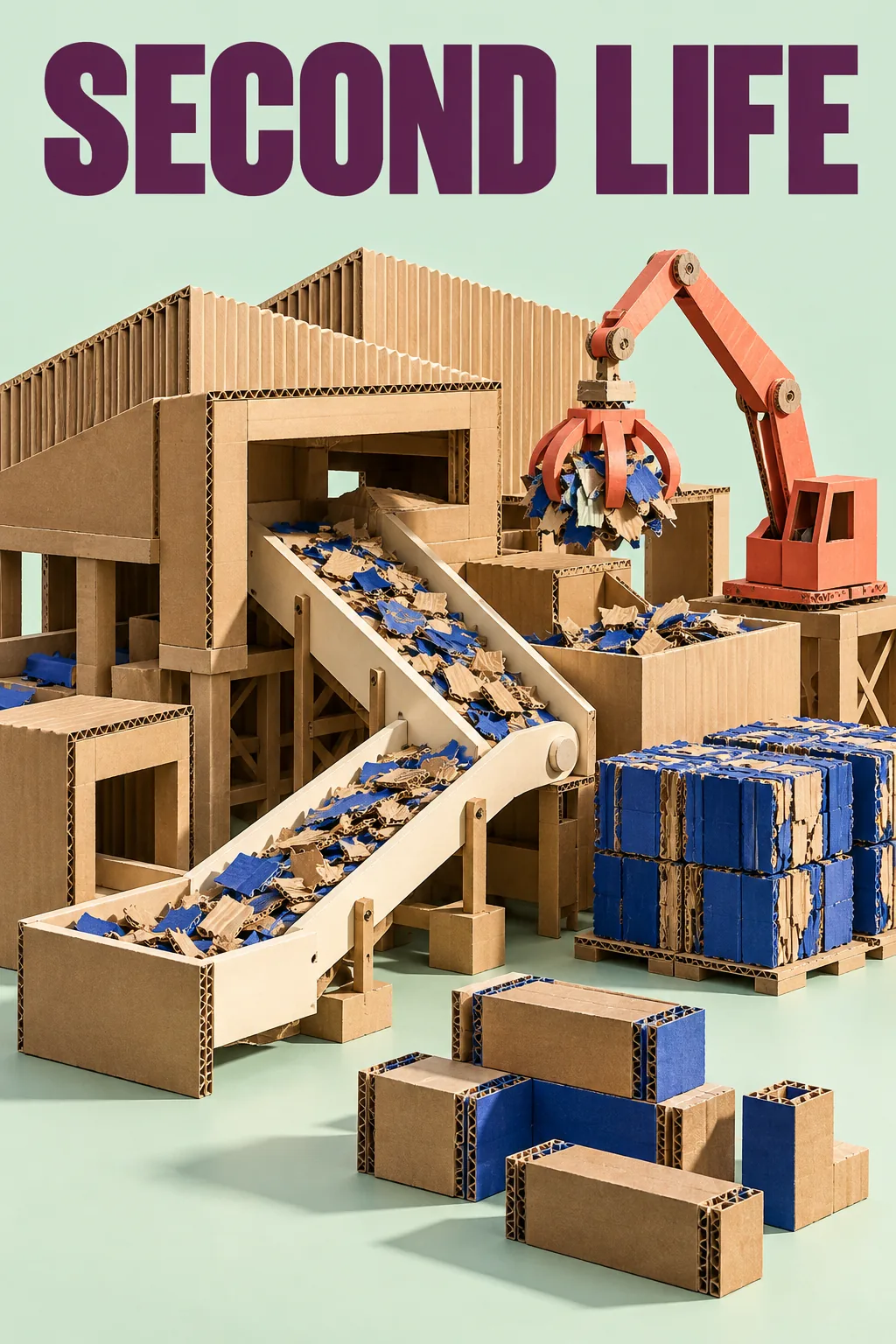
Cardboard Recycling Depot, made with GPT Image 2.5 Sunburst
Example made with GPT Image 2.5 Sunburst

Text to image3D & miniatures

GPT Image 2.5 Sunburst poster design promptCardboard Recycling Depot

The exact text-to-image prompt behind this picture, made with GPT Image 2.5 Sunburst.

Prompt

Vertical 2:3 poster frame. A compact recycling depot is built entirely from folded corrugated cardboard, with a cream conveyor, cobalt paper bales and a small coral crane arranging offcuts into new building blocks. Keep the model large and simple on a pale mint ground. The upper margin carries a bold plum title that reads "SECOND LIFE". Raking studio light, tactile physical diorama photography, optimistic circular design, no logos, no other text.

Prompts are kept in their original English to help reproduce the example. Copy one as it is, or adapt it for your project.

Opens GPT Image 2.5 Sunburst with this prompt and the settings below filled in.

135 tested GPT Image prompts →

Settings

Mode
Text to image
Aspect ratio
2:3
Quality
high
Price
From 2 credits

The exact price shows before you generate.

Make your own version

  1. The words in quotes, "SECOND LIFE", are printed in the picture. Keep them short and change them to your own.
  2. For a different mood, rewrite only the light: Raking studio light.
  3. Vertical 2:3 poster frame sets the whole feel of the shot. Swap it for another camera style to change the vibe.

Style prompt guide

Style traits to keep

Folded corrugated cardboard craft and clean editorial graphics merge in this diorama scene, producing an inventive tactile model with sharp typography. GPT Image 2.5 Sunburst handles this balance reliably, capturing fibrous paper edges, fluted ridges, and directional studio shadows while printing the upper title cleanly without letter distortion.

The cardboard diorama aesthetic relies on tactile paper engineering and controlled graphic design rather than photoreal CGI.

Texture
Visible fluted edges, score lines, and fibrous matte brown card give the scene the look of a handcrafted table-top build.
Light
Low-angle raking studio light casts defined miniature shadows across creases, emphasizing depth and physical scale.
Palette
Contrasting accents of cobalt, cream, coral, and plum pop against neutral kraft card and a calm pale mint base.
Composition
Poster-ready negative space at the top preserves legibility for bold display lettering without crowding the diorama.

What defines this look

  1. core subject and mediumVertical 2:3 poster frame. A compact recycling depot is built entirely from folded corrugated cardboard,

    Establishes the miniature craft material and structural framing. Omitting the corrugated cardboard specification turns the scene into a generic digital 3D render instead of a physical workshop model.

  2. accent elements and actionwith a cream conveyor, cobalt paper bales and a small coral crane arranging offcuts into new building blocks.

    Adds narrative movement and precise color anchors. Without these specific color calls, the generator tends to render every item in plain brown kraft paper, muddying the focal details.

  3. composition and backdrop isolationKeep the model large and simple on a pale mint ground.

    Ensures the diorama sits cleanly against an untextured studio surface. Removing this phrase invites cluttered workbench backgrounds or messy factory floors that compete with the central subject.

  4. typography and layout specificationThe upper margin carries a bold plum title that reads "SECOND LIFE".

    Directs the model to place a single graphic title in empty negative space. Altering this string changes the header copy or causes text to wander into the diorama structure.

  5. lighting and quality constraintsRaking studio light, tactile physical diorama photography, optimistic circular design, no logos, no other text.

    Commands realistic table-top photography cues like shallow depth and hard surface highlights while suppressing unwanted filler captions, faux brands, and sticker clutter.

Same style, new subjects

Cardboard City Street

Applies the miniature paper craft aesthetic to urban architecture and vehicles for an editorial transit theme.

Prompt

Vertical 2:3 poster frame. A bustling city intersection is built entirely from folded corrugated cardboard, with a cream tram, cobalt streetlamps and a small coral bicycle waiting beside cut-out pedestrian silhouettes. Keep the model large and simple on a pale mint ground. The upper margin carries a bold plum title that reads "TRANSIT". Raking studio light, tactile physical diorama photography, optimistic circular design, no logos, no other text.

Cardboard Domestic Cat

Adapts the folded cardboard diorama technique into an expressive animal portrait with simple playful accessories.

Prompt

Vertical 2:3 poster frame. A stylized domestic cat is built entirely from folded corrugated cardboard, with a cream collar, cobalt yarn ball and a small coral scratching tower made from layered fluted rolls. Keep the model large and simple on a pale mint ground. The upper margin carries a bold plum title that reads "CURIOSITY". Raking studio light, tactile physical diorama photography, optimistic circular design, no logos, no other text.

Cardboard Breakfast Still Life

Uses the craft diorama style for a tabletop food still life, trading mechanical machines for delicate folded tableware.

Prompt

Vertical 2:3 poster frame. A morning breakfast table is built entirely from folded corrugated cardboard, with a cream coffee carafe, cobalt ceramic mug and a small coral folded croissant resting on a scalloped plate. Keep the model large and simple on a pale mint ground. The upper margin carries a bold plum title that reads "MORNING". Raking studio light, tactile physical diorama photography, optimistic circular design, no logos, no other text.

Model and settings

Keep the aspect ratio set to 2:3 so the vertical poster has sufficient headroom for the title without crowding the diorama base. Set quality to high so the AI accurately draws individual cardboard flutes, crease lines, and sharp letterforms. For horizontal desktop mockups, switch the ratio to 16:9 and prompt the plum title to sit in the left or right third rather than along the upper margin.

  • Nano Banana ProChoose Nano Banana Pro if you plan to add secondary captions or detailed infographic arrows, since it plans the poster layout and dense typography first.
  • FLUX.2 ProSelect FLUX.2 Pro when you want exact hex color control over the mint, cobalt, and plum accents while keeping studio reflections photoreal.

When the style drifts

The cardboard depot looks like a smooth digital 3D model with plastic sheen instead of paper craft.
Reinforce the medium by adding phrases like 'exposed fluted card edges, scored matte paper creases, visible brown paper pulp' directly after the opening sentence.
The generator scatters fake logos, bar codes, or unrequested labels across the cardboard walls.
Strengthen the negative instruction by changing 'no logos, no other text' to 'plain unprinted cardboard surfaces, zero labels, zero packaging stamps, no extra words'.
The title text bleeds directly into the crane mechanism or gets cut off at the frame edge.
Specify the layout margin by inserting 'with twenty percent empty negative space reserved below the top edge' right before the title description.

Questions about this style prompt

How do I make the paper textures look genuinely handcrafted?

Use tactile phrasing such as folded corrugated cardboard, fluted edges, and scored creases. Pairing these terms with raking studio light forces the model to render physical surface relief and small cast shadows characteristic of cut paper.

Can I replace the title text with my own custom phrase?

Yes, swap the text inside the quotation marks with your chosen phrase, keeping it to two or three short words. GPT Image 2.5 Sunburst excels at short display text, but sentences longer than four words often suffer letter crowding.

Why does the background sometimes turn into a busy workshop?

The model defaults to contextual clutter if the backdrop is vague. Explicitly requesting a pale mint ground and keeping the instruction simple on a flat studio surface prevents tools, cutting mats, or messy tables from appearing.