
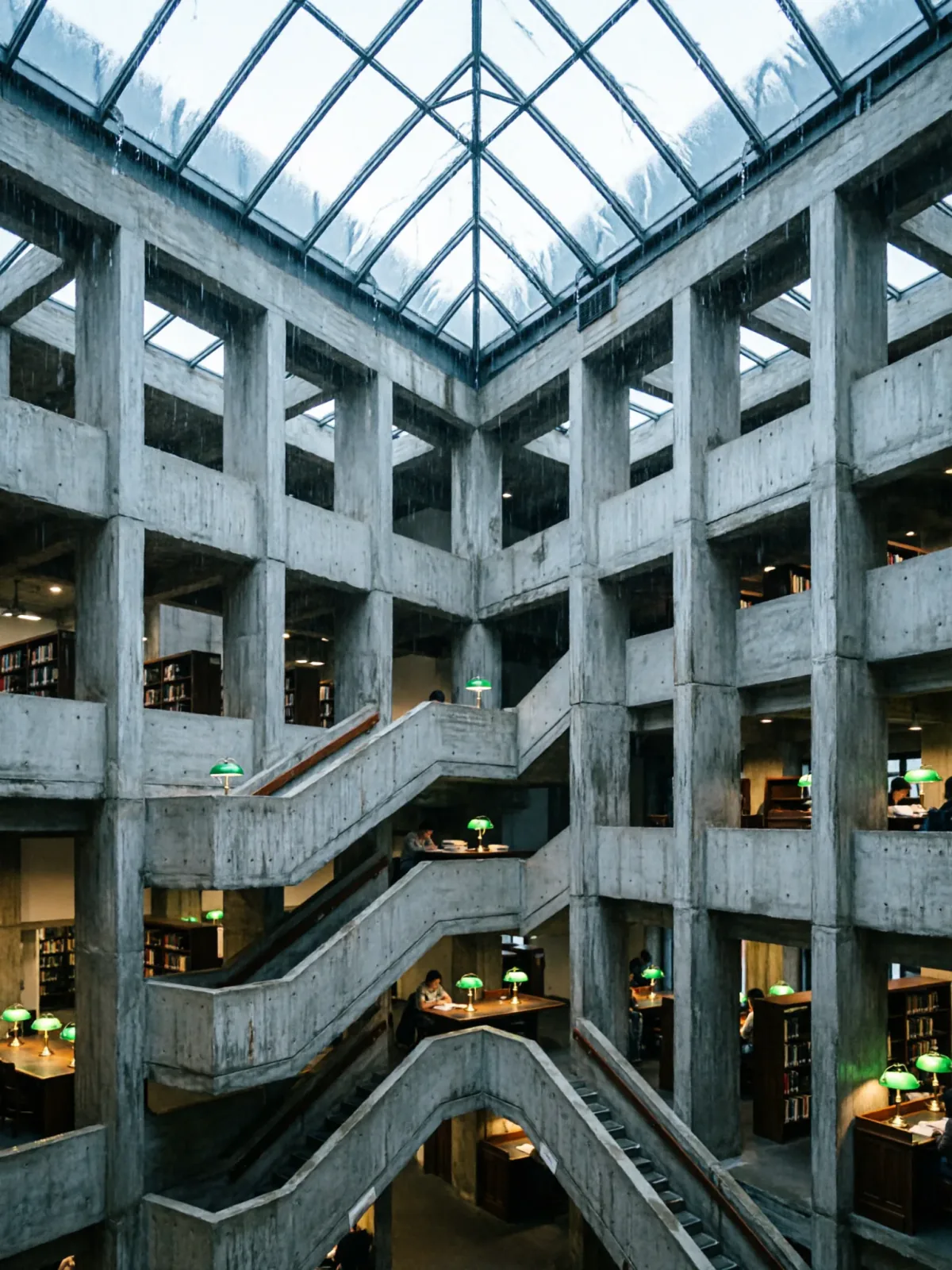
Brutalist library atrium under a rain-sheeted glass roof
Qwen Image 2Make oneCreate


Text to imageArchitecture & interiors
The exact text-to-image prompt behind this picture, made with GPT Image 2.5 Sunburst.
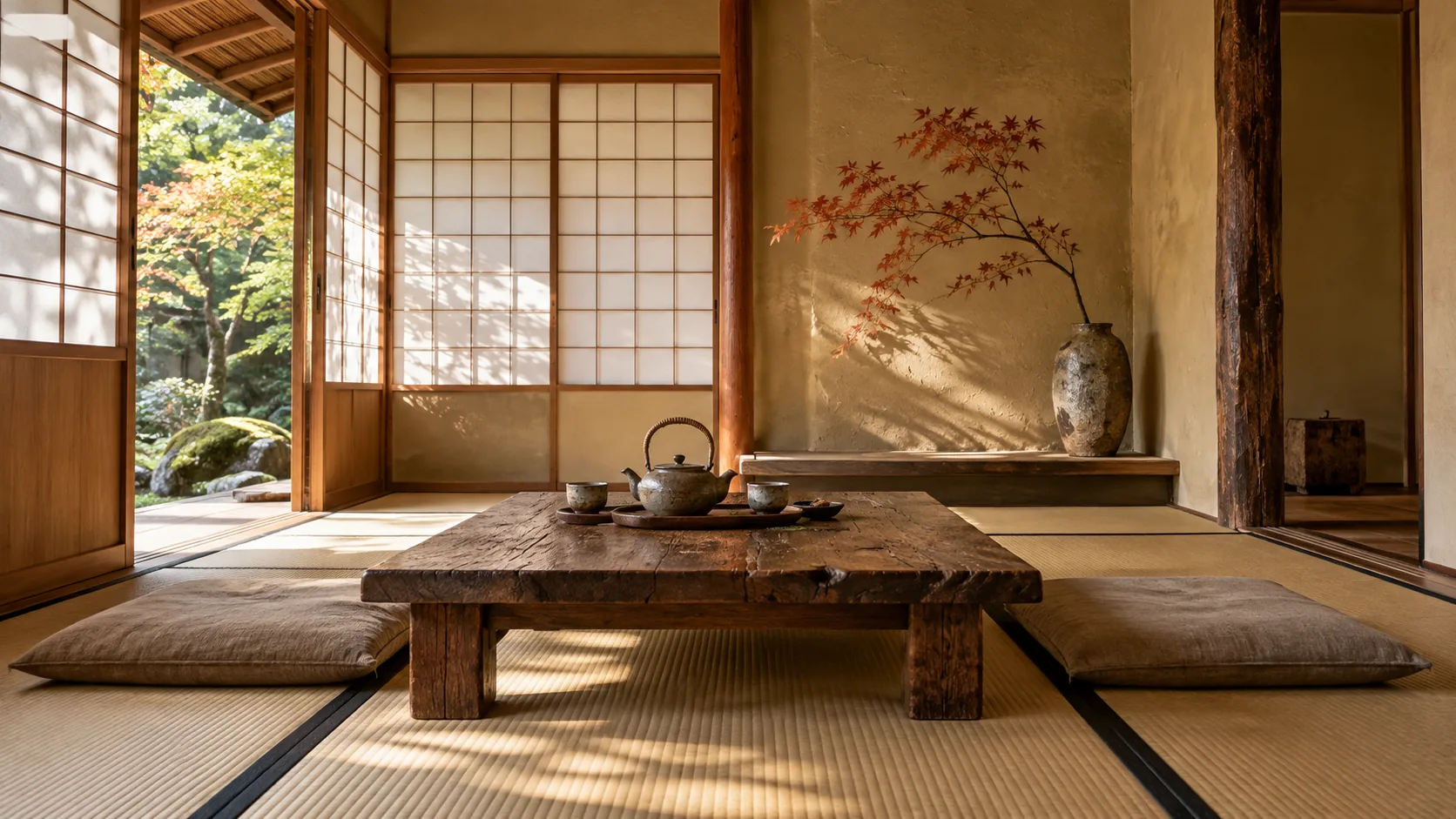
Wide 16:9 landscape frame. Interior of a small wabi-sabi guesthouse room: tatami floor, a low wooden table with a ceramic tea set, lime-plaster walls, a single maple branch in a stoneware vase, soft garden light filtering through paper screens, calm minimal architectural photography, no people, no text.
Prompts are kept in their original English to help reproduce the example. Copy one as it is, or adapt it for your project.
Opens GPT Image 2.5 Sunburst with this prompt and the settings below filled in.
135 tested GPT Image prompts →
The exact price shows before you generate.
soft garden light filtering through paper screens.calm minimal architectural photography sets the whole feel of the shot. Swap it for another camera style to change the vibe.no text. Leave that in, or the model may add random lettering.Inspired by an idea from Leah, collected in YouMind-OpenLab/awesome-seedream-4.5 under CC BY 4.0. PopNow wrote this prompt and made the example above.
Scene prompt guide
A serene, Japanese-inspired tearoom balances muted earth tones, woven textures, and soft architectural shadows. GPT Image 2.5 Sunburst renders tactile surfaces like textured lime plaster and woven tatami grass with high fidelity while keeping negative space intact. The prompt succeeds because it pairs precise material descriptors with restraint instructions, stopping the room from turning into a cluttered boutique.
Wide 16:9 landscape frame. Interior of a small wabi-sabi guesthouse room:Sets the architectural context and intimate scale of the room. Removing this phrase risks an ungrounded or overly spacious hotel lobby rather than a quiet, compact retreat.
tatami floor, a low wooden table with a ceramic tea set, lime-plaster walls,Dictates traditional architectural textures and organic surfaces. If altered to modern drywall or polished tile, the tactile, weathered aesthetic central to wabi-sabi dissolves completely.
a single maple branch in a stoneware vase,Serves as the primary seasonal touchpoint and asymmetrical centerpiece. Swapping this for a colorful flower bouquet shifts the tone from contemplative minimalism to conventional Western decor.
soft garden light filtering through paper screens,Creates diffused, gentle illumination and soft cast shadows across the floor. Without this, the model may introduce harsh indoor ceiling spotlights that ruin the meditative ambiance.
calm minimal architectural photography, no people, no text.Locks the shot into a clean, editorial composition while barring figures, signage, or decorative wall prints that would disrupt the peaceful emptiness.
The composition relies on diffuse directional illumination and an eye-level or low-slung vantage point typical of traditional Japanese living.
Shifts the time to dusk with rain outside to create deeper blue shadows and a cooler interior mood.
Wide 16:9 landscape frame. Interior of a small wabi-sabi guesthouse room at rainy dusk: tatami floor, a low wooden table with an unglazed ceramic teapot, lime-plaster walls, wet garden bamboo visible through sliding paper screens, dim blue twilight, calm minimal architectural photography, no people, no text.
Introduces a traditional raised alcove as the central feature under cold, pale winter morning illumination.
Wide 16:9 landscape frame. Interior of a small wabi-sabi guesthouse room in winter: tatami floor, a tokonoma alcove holding a bare winter branch in a bronze vase, lime-plaster walls, pale morning light filtering through paper screens, calm minimal architectural photography, no people, no text.
Pulls the camera closer to the tea set for an intimate still-life arrangement within the room.
Wide 16:9 landscape frame. Close architectural interior view of a wabi-sabi guesthouse corner: low wooden table with two celadon tea bowls, woven tatami floor, raw lime-plaster wall, soft garden light filtering through paper screens, calm minimal architectural photography, no people, no text.
The 16:9 landscape aspect ratio matches standard horizontal editorial photography, accommodating both the floor plane and the sliding screens without vertical compression. High quality ensures clean delineation across fine tatami weaves, matte plaster grain, and delicate paper screen lattices. If you want a vertical mobile wallpaper or print portrait, switch the ratio to 9:16 or 4:5 while retaining text-to-image mode.
Specify traditional architectural materials and explicitly add no electric lights or no modern appliances. Naming specific traditional items like shoji screens and tatami helps the model avoid contemporary furnishings.
Yes, specify the exact foliage visible just beyond the screens, such as snowy pine branches or golden autumn ginkgo. Describing the outdoor season automatically tints the interior daylight to match.
Keep the quality setting on high and describe rectangular woven rush mats with dark fabric borders. Pulling the camera back slightly gives the generator enough room to render parallel weave patterns accurately.