

 Create Image
 Edit Image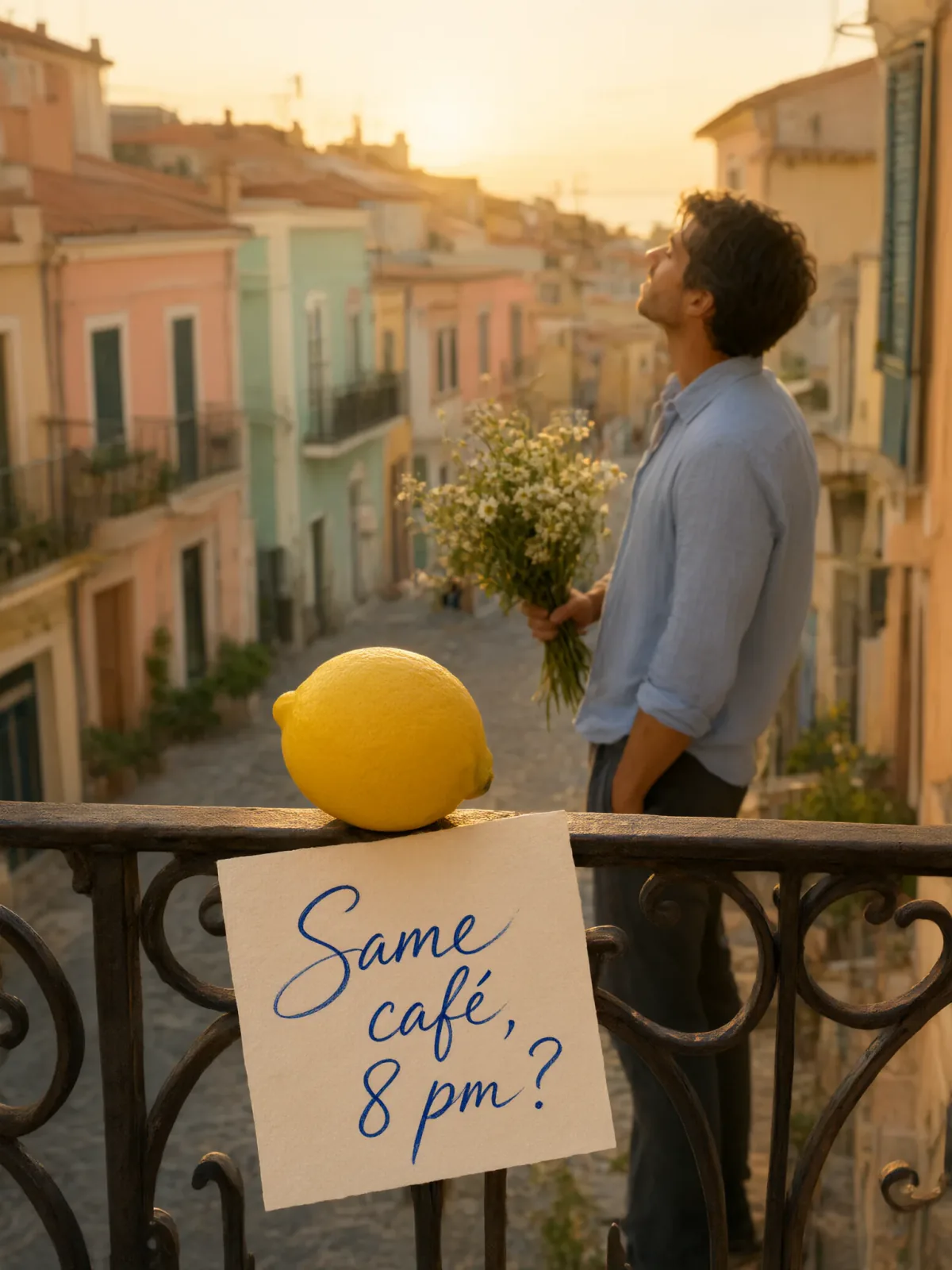
About Qwen Image 3.0
Qwen Image 3.0 is Alibaba's text-rendering image model: 5,000-character prompts, eight aspect ratios, a 1K or 2K tier, and an editing endpoint that reads one to three references.
Call it with the model name alibaba/qwen-image-3.0/text-to-image on POST /jobs/createTask, from 5 credits per image ($0.05). New accounts get 30 free credits to try it in the Playground first.
Introduction
Qwen Image 3.0 Text to Image turns a written brief into one image per request. Its distinguishing behaviour is typography: strings you put in quotes — a door hanger, a bar sign, a poster headline — are rendered as text rather than as letter-shaped texture.
Qwen Image 3.0 is Alibaba's text-rendering image model: 5,000-character prompts, eight aspect ratios, a 1K or 2K tier, and an editing endpoint that reads one to three references.
Choose a Qwen Image 3.0 mode by starting material
| Starting material | Mode |
|---|---|
| A written art direction or design brief | Qwen Image 3.0 Text to Image |
| An approved source image to revise | Qwen Image 3.0 Image Editing |
Key features
Text-aware image composition
Qwen Image 3.0 is useful for visual concepts in which supplied wording, composition and image treatment must be considered together. Treat generated lettering as a design draft and proofread it before publication.
New composition and source-led revision are separate jobs
Use text-to-image to establish a visual from a written brief. Use image editing when an existing image supplies the identity, layout or material that must be retained while a defined change is made.
Review hierarchy before decorative detail
For posters, packaging and campaign concepts, decide the message hierarchy and focal area first. A visually appealing result still fails the assignment if the approved copy or product facts are not represented correctly.
Request parameters
| Parameter | Required | Description |
|---|---|---|
seed | No | Reuse the same number to get a repeatable result. ≥ 0 · ≤ 2147483647 |
prompt | Yes | Describe the subject, composition, lighting, and any text to render. |
resolution | No | Output size. Bigger sizes look sharper and cost more. 1k · 2k · Default: 2k |
num_outputs | No | How many results to make in one go. ≥ 1 · ≤ 1 · Default: 1 |
aspect_ratio | No | The shape of the frame: wide, square or tall. 1:1 · 16:9 · 9:16 · 4:3 · 3:4 · 3:2 · 2:3 · 21:9 · Default: 1:1 |
negative_prompt | No | Things you don't want to see. |
enable_prompt_expansion | No | Lets the model add detail to a short prompt. Default: true |
prompt_optimization_mode | No | How prompt expansion rewrites the brief: single pass, or a multi-step agent rewrite. direct · agent · Default: direct |
Pricing
Prices are in credits, the same credits you use on the website (1 credit = $0.01). The hold is taken when the task is accepted and settled to the actual charge when it finishes; failed tasks are refunded.
| Option | Credits per image | ≈ USD |
|---|---|---|
| Standard | 4.5 | $0.045 |
Each task is rounded up to whole credits, so one run at the lowest tier costs 5 credits per image ($0.05).
For an exact number before you run, send the same body to POST /jobs/quote.
Use cases
Start from a written brief
Use this mode when the picture has no source yet and some of its wording has to read: a sign, a label, a headline. Choose the ratio you will publish at, keep resolution at 2k, and put each string in single quotes inside the prompt.
Character sets and fashion series
Pin the seed that gave you the character, then change one detail per request — wardrobe, light, pose — for a coherent set rather than a pile of unrelated draws.
Poster and packaging comps
Headline, subhead and a legal line, all rendered in the frame at 2k, in the ratio the placement actually uses. Useful for pitching a layout before a designer sets real type over a clean plate.
Hospitality and set-dressing plates
Hotel rooms, bars and lobbies where a specific sign has to read correctly: door hangers, room numbers, cocktail menus, neon above the back bar. Generate the plate with the wording already in place instead of compositing type over a render afterwards.
Prompt guide & pro tips
Choose the ratio and the tier first
aspect_ratio composes the frame, it does not crop one, so pick the shape you will publish at. Leave resolution at 2k whenever the image contains text; drop to 1k only for layout roughs where nothing has to be readable.
Write the scene and quote the wording verbatim
Describe subject, wardrobe, light and lens, then put each exact string in single quotes and keep it to roughly eight words. enable_prompt_expansion is on by default and rewrites detailed prompts, so turn it off once your wording is a precise shot description.
Adapt the included example
Start with the published example using aspect_ratio: 3:4, resolution: 2k. Replace the subject and creative direction while keeping the input contract for this mode intact.
The exact request behind the published still: a 3:4 hotel scene at the 2k tier with the door-hanger wording quoted in the prompt.
Check the result before iterating
Short quoted strings are the reliable case: a masthead, a sign, a label, roughly eight words or fewer per element. Paragraph-length body copy still degrades into plausible-looking nonsense, and dense small type is the first thing to break at the 1k tier — generate typography at 2k. Non-Latin scripts render, but proofread them; the model is more confident than it is correct on rare glyphs.
API quick start
Call the Qwen Image 3.0 API in three steps
- Create an API key. Sign in to PopNow and create a key in the API console. Keys start with sk-popnow- and use the same credits as the website.
- Send the request. POST /jobs/createTask with model alibaba/qwen-image-3.0/text-to-image and an input object that follows the parameter table. The response returns a task ID straight away.
- Get the result. Poll GET /jobs/recordInfo with the task ID, or pass a callBackUrl and we post the result to it. Download the output links when the task succeeds.
# 1. Create the task. Keep the Idempotency-Key if you retry after a network error.
export IDEMPOTENCY_KEY="$(uuidgen)"
curl -X POST https://api.popnow.ai/api/v1/jobs/createTask \
  -H "Authorization: Bearer $POPNOW_API_KEY" \
  -H "Content-Type: application/json" \
  -H "Idempotency-Key: $IDEMPOTENCY_KEY" \
  -d '{
  "model": "alibaba/qwen-image-3.0/text-to-image",
  "input": {
    "prompt": "A ceramic teapot on a linen cloth, soft window light, muted palette",
    "aspect_ratio": "1:1",
    "resolution": "2k",
    "num_outputs": 1
  }
}'

# 2. Copy data.taskId from the response, then poll until state is succeeded, failed, canceled or expired.
TASK_ID="TASK_ID_FROM_RESPONSE"
curl "https://api.popnow.ai/api/v1/jobs/recordInfo?taskId=$TASK_ID" \
  -H "Authorization: Bearer $POPNOW_API_KEY"
Replace the prompt and any links with your own. The API tab has the response, polling and callback reference.
Qwen Image 3.0 API questions
How much does the Qwen Image 3.0 API cost?
Qwen Image 3.0 starts at 5 credits ($0.05) per image with Create Image, its cheapest task. Credits are the same as on the website (1 credit = $0.01), new accounts get 30 free credits, and failed tasks are refunded.
What is the model name for Qwen Image 3.0 in the API?
Put alibaba/qwen-image-3.0/text-to-image for Create Image; alibaba/qwen-image-3.0/edit for Edit Image in the model field of POST /jobs/createTask.
How much text can it actually render inside an image?
Short strings hold up well: a masthead, a sign, a product label, a headline of roughly eight words or fewer. Full paragraphs still break down. Generate anything with type at the 2k tier.
How many images can one request return?
One. num_outputs is fixed at 1, so each request returns a single image and is quoted and settled on its own. For several draws of one brief, send parallel requests without a seed.
How is image-to-image different from text-to-image?
Image editing adds a required image_urls array of one to three sources and keeps every other field. Say in the prompt which reference contributes what; the model does not assign roles for you.
Does it read prompts in Chinese?
Yes, natively, and there is no language parameter to set. The 5,000-character budget is the same either way, as is the way quoted strings are handled.
Can I reproduce the same image twice?
A fixed seed helps control variation; identical results are not guaranteed.
What are the limits of the Qwen Image 3.0 API?
Resolutions: 1K · 2K; Aspect ratios: 1:1 · 16:9 · 9:16 · 4:3 · 3:4 · 3:2 +2; Prompt length (characters): 5,000. Requests outside these limits are rejected before anything is charged.
Can I try Qwen Image 3.0 without writing code?
Yes. The Playground runs Qwen Image 3.0 on your PopNow credits, needs no API key, and shows the matching code for every run.
All Qwen Image models
Qwen Image 3.0 Pro raises the ceiling on multi-line typography and fine texture for the final frame.
- Qwen Image 2.1 Pro APIUp to six detailed 2K images from one promptFrom 6 credits per image
- Qwen Image 2.1 Turbo APIFast 8-step renders, up to six per promptFrom 3 credits per image
- Qwen Image 2.1 APIOpen model with 2K output and transparent backgroundsFrom 4 credits per image
- Qwen Image 2.1 LoRA APIQwen Image 2.1 images and edits with up to three of your LoRAsFrom 5 credits per image
- Qwen Image 3.0 Pro APIFine typography plus lifelike skin, fabric and glassFrom 6 credits per image
- Qwen Image 3.0 APIReadable signs and headlines rendered into the imageFrom 5 credits per image
- Qwen Image 2 APISimple prompt-to-image and one-photo editsFrom 6 credits per image
- Qwen Image 2512 LoRA APIQwen Image 2512 renders and edits with your own LoRAsFrom 5 credits per image
- Qwen Image Edit 2509 LoRA APIMulti-photo Qwen edits that load your own LoRAsFrom 5 credits per image
- Qwen Image 1.0 LoRA APIOriginal Qwen-Image with clean lettering and your own LoRAsFrom 5 credits per image
Other image APIs
- Nano Banana 2.1 APIGoogle's newest Nano Banana, sharp text and 4K outputFrom 8 credits per image
- Nano Banana Pro APIPlans the layout first: dense text, diagrams and 4K editsFrom 17 credits per image
- GPT Image 2.5 Sunburst APIOpenAI's quality-first model, up to 4K with clean textFrom 1 credit per image
- Seedream 5.0 Pro APIHigh-detail images and edits from up to ten referencesFrom 6 credits per image
- FLUX.2 Max APITop-tier FLUX: photoreal light and exact brand colorsFrom 11 credits per image

